
You can wire a bonsai in spring, but March carries a higher risk than many growers expect. Rapid thickening, soft bark, and unpredictable weather increase the chance of wire bite and long-term scarring if timing or species choice is wrong, especially once buds begin to swell.
Early spring often triggers the urge to wire as buds swell and branches regain flexibility. In the UK, March sits in an unstable transition period where growth can accelerate quickly while cold snaps still occur. That combination makes timing far more important than enthusiasm.
This guide explains when spring wiring is safe, when it becomes risky, and which bonsai trees tolerate early work best. It also shows when delaying wiring or using gentler alternatives leads to better long-term results.
Beginners wiring for the first time: Do not start with a deciduous tree in March. The combination of fast growth, soft bark, and the learning curve of applying wire correctly creates too many variables at once. Start with a Juniper or Scots Pine instead. Conifers grow more slowly in spring, which gives you more time to check and remove wire before damage occurs. Apply loose coils, aim for gradual bends rather than sharp angles, and check the wire every seven days from the moment you apply it.
Growers with deciduous trees showing active bud swell: If buds have already begun to swell on your Maple, Elm, or Hornbeam, the window for safe wiring has narrowed significantly. You have two options. Wire immediately using loose aluminium coils on primary branches only, and commit to checking every five to seven days. Or defer wiring until late summer when growth has hardened and the risk of wire bite drops substantially. The second option produces cleaner results for most growers.
Growers who repotted in March: Do not wire. Repotting already places significant demand on the tree as it rebuilds fine roots and restores water balance. Adding wiring stress at the same time compounds recovery demands and frequently results in weaker spring growth. Wait a minimum of four to six weeks after repotting and look for strong new shoot extension before considering any structural work.
Experienced growers refining established trees: March suits light corrective wiring on conifers and careful repositioning of single branches on dormant deciduous trees before buds fully open. Keep bends gentle, use the appropriate wire gauge, and limit the session to primary or secondary branches rather than fine ramifications. Save detailed work for late summer when growth is predictable, and the tree responds more evenly to held positions.
Growers who saw wire damage last spring: If you experienced wire bite in a previous spring, the cause was almost certainly one of three things: the wire was left on too long, the gauge was too light for the branch, or growth accelerated faster than expected after a warm spell. The fix is not to avoid spring wiring entirely. It is to check more frequently, use a slightly heavier gauge on fast-growing species, and remove wire proactively at the first sign of bark movement rather than waiting until damage is visible.

Spring wiring sits between opportunity and risk. Branches feel flexible, but growth speeds up fast. The best time to wire depends more on what your tree is doing than the date on the calendar, especially with variable UK springs.
You notice buds swelling and branches waking up after winter. That visual change makes you want to act before growth “gets away from you”.
After winter dormancy, many branches bend more easily. Cold-stiff wood softens, which gives the impression that wiring will be easier and safer now.
There is also a strong urge to get ahead of the season. You may want to set the structure early so new shoots grow in the right direction.
Common reasons spring feels right:
That temptation makes sense, but it does not confirm safety. Flexibility alone does not define the best time to wire. Growth speed matters more than how a branch feels in your hand.
As spring progresses, sap flow increases. You see this as rapid bud extension and thicker shoots within weeks.
That fast growth causes branches to swell quickly. Wire that looked loose in March can bite by April.
Wire bite happens because the branch thickens faster than expected. Damage can appear suddenly, not gradually.
Watch for these warning signs:
In the UK, a warm early spring can accelerate this risk. A cold March may slow things down, while an April heat spike can catch you out.
Spring wiring demands close monitoring. If you cannot check the wire every 7–10 days, the risk rises sharply.
In early spring, light pruning usually carries less risk than wiring. You remove unwanted growth without restricting swelling branches.
Pruning works well when:
Wiring may still suit certain cases. Dormant or slow-growing trees can handle gentle wiring before strong growth begins.
Use this simple comparison:
| Task | Risk level in March | Why |
|---|---|---|
| Light pruning | Lower | No swelling restriction |
| Structural wiring | Moderate | Rapid thickening possible |
If you wire, choose looser coils and softer bends. Check often. The best time to wire arrives when growth is predictable, not just when spring starts.
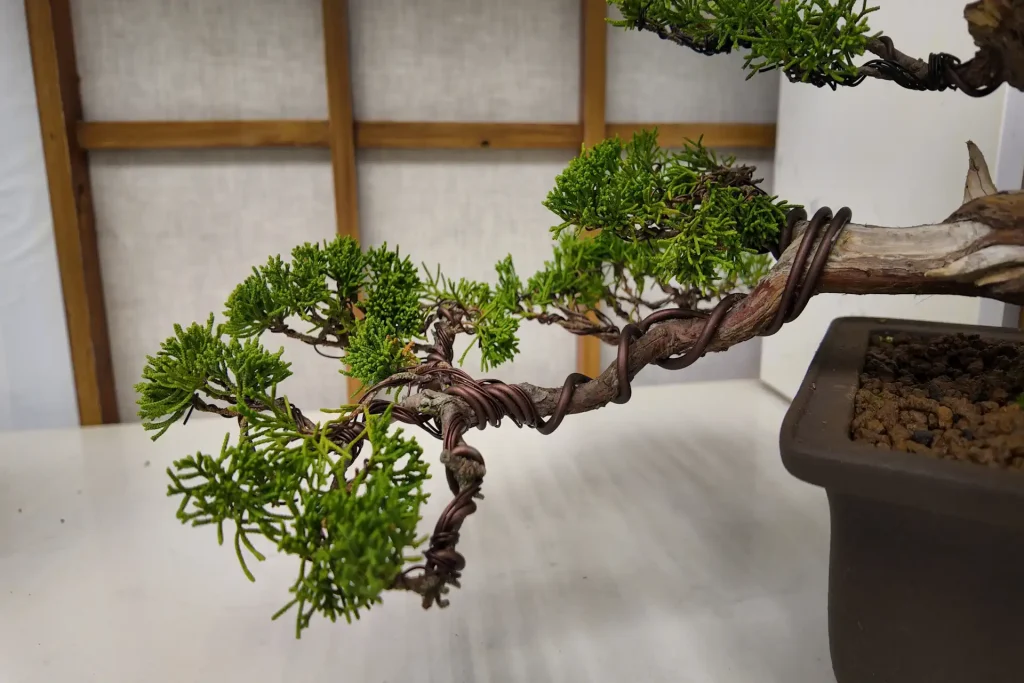
March sits in a risky middle ground in the UK. Growth starts to accelerate, yet weather and tissue strength remain unstable. Many wiring problems begin now but only become obvious later in spring or early summer.
In March, sap flow increases quickly as daylight lengthens. Branches can thicken fast, sometimes within a few weeks rather than months. When you wire at this stage, the branch can outgrow the wire gauge before you expect it.
Wire bite happens when the wire presses into expanding tissue. It often starts shallow, then deepens fast.
Common causes include:
By the time you reach for a wire cutter, the damage may already be set. Even a brief wire bite can leave lasting marks on smooth-barked species.
Early spring buds swell before branches harden. At the same time, bark remains soft and easily bruised. When you bend or anchor wire during this phase, pressure spreads unevenly along the branch.
This creates a higher risk of:
Species like maple, beech, and hornbeam scar more easily at this stage. Wiring just as buds open often causes damage that stays invisible until leaves harden and growth slows.
March wiring adds stress at the same time trees face unpredictable cold snaps. In the UK, late frosts remain common, even after visible growth begins.
When you wire before the weather settles:
The combination matters. A tree handling both wiring stress and cold recovery often responds with weaker growth or uneven bud strength. You may not notice this until weeks later, when extension growth stalls or looks patchy.
Many March wiring errors hide well. The tree keeps growing, leaves look healthy, and the structure appears stable. The real signs tend to emerge later.
Typical delayed issues include:
By the time these problems appear, removal with a wire cutter only stops further damage. It cannot reverse what happened earlier. March wiring often teaches lessons late, long after the work felt finished.
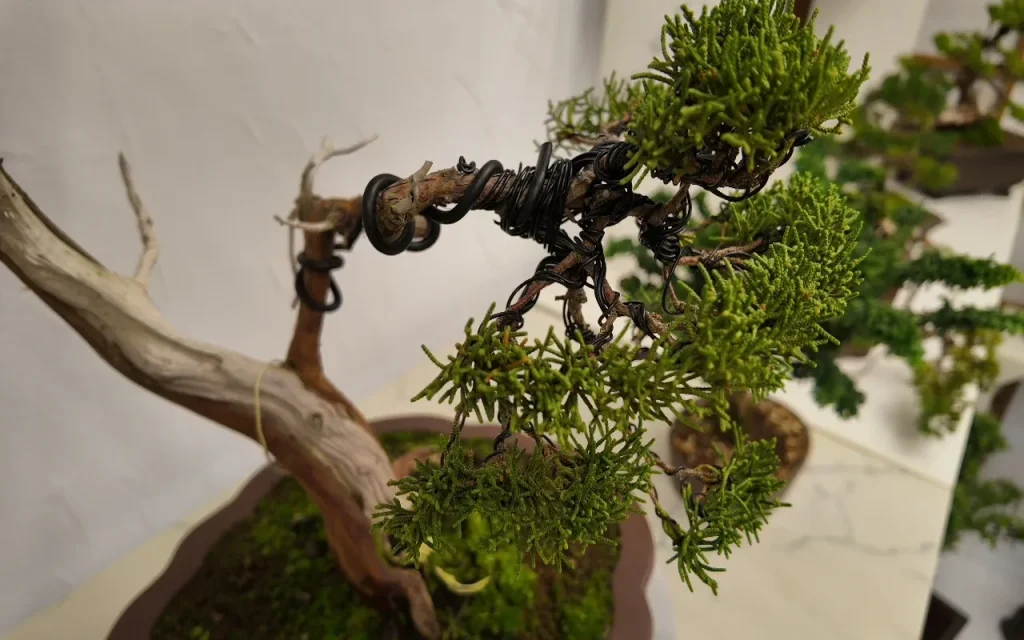
Early spring wiring works well for some bonsai and poorly for others. Species choice matters more than confidence level, because growth speed, bark type, and recovery rate vary widely between trees.
Conifers and deciduous trees react very differently to early spring wiring. You need to adjust your wiring techniques to match that behaviour.
Deciduous trees enter a short window before buds fully open. Branches stay flexible, but growth accelerates fast. Wire can bite into bark within weeks, especially in March. You must check wires often and remove them early.
Conifers grow more slowly and hold their shape longer. Their needles also slow sap flow changes, which reduces swelling. This makes early spring a safer time for controlled bends.
Key differences to keep in mind:
| Factor | Conifers | Deciduous |
|---|---|---|
| Spring growth speed | Slow to moderate | Fast |
| Bark damage risk | Lower | Higher |
| Wire holding time | Longer | Shorter |
Copper bonsai wire suits conifers well because it sets bends quickly with less wrapping. Aluminium wire gives more forgiveness on deciduous trees when learning how to wire a bonsai safely.
Some species handle early spring wiring with fewer problems. These trees combine flexible branches with predictable growth.
Common UK-friendly choices include:
These species recover reliably when you apply steady pressure and avoid repeated bends. Focus on primary branches and trunk lines rather than fine twigs. This approach reduces damage while you refine the structure.
March wiring carries a higher risk for certain bonsai types. Rapid growth and fragile bark cause most problems, not poor technique.
Avoid wiring these in March:
These trees often look dormant but push growth suddenly. Wire marks can form in days, not weeks. Delay wiring until late winter dormancy or after spring growth hardens. You protect bark health and avoid permanent scars without slowing long-term development.
Use this checklist before you wire in the spring. Even hardy or “safe” species can suffer damage when timing or tree condition is wrong, and mistakes often lead to scars, dieback, or the need to remove bonsai wire too early.
Avoid wiring once buds have opened and leaves start to expand. At this stage, branches stiffen and sap flow increases, which raises the risk of cracking or tearing when you bend them.
Fresh leaves also get in the way. You lose precise control over branch placement, and small adjustments can damage petioles or crush soft growth. Deciduous species show this problem most clearly.
There is also a scarring risk. Spring thickening happens fast, and wire can bite in within weeks. If you notice swelling around the wire, remove the bonsai wire immediately rather than waiting for the branch to set.
Risk factors once leaves appear:
Do not wire a bonsai that you repotted this spring. Repotting already places heavy demand on the tree as it rebuilds fine roots and restores water balance.
Adding wiring at the same time compounds stress. You restrict sap flow while the tree tries to recover, which slows growth and delays stabilisation. In some cases, branches weaken instead of setting.
Most species need a recovery window. For healthy trees, wait at least 4–6 weeks after repotting before you consider wiring, and only if you see strong new growth.
Best practice in spring:
Skip wiring if your tree shows signs of winter stress. Wiring forces structural change, and weak trees lack the energy to respond safely.
Look for clear warning signs:
Cold damage, root loss, or poor light over winter often cause these issues. Wiring at this point increases failure risk and may force you to remove bonsai wire before any shape holds.
Wait until growth becomes even and consistent. Strong colour, firm shoots, and steady extension signal that the tree can handle bending and holding tension again.
Spring growth gives you leverage without forcing branches into place. You can guide shape, direction, and structure while reducing the risk of bark damage and wire bite during this fast-growing period.
Clip-and-grow uses pruning, not wire, to control shape. You cut back to a bud or side shoot that already points in the direction you want, then let spring growth do the work.
This method suits spring because shoots extend quickly and set direction within weeks. You avoid wrapping wire around swelling branches, which lowers the risk of scarring.
Key points to apply it well:
Clip-and-grow works best on deciduous trees like maple, elm, and beech. You trade speed for safety, but you gain clean branch lines and natural movement.
Directional pruning guides growth by deciding what stays and what goes. In spring, sap flow pushes energy to the strongest tips, so your cuts matter more.
You shape branches by:
This approach gives you control without worrying about wire thickness or timing wire removal. Branches thicken naturally without pressure points on the bark.
Directional pruning works well for fine branch structure. It also pairs well with clip-and-grow, especially on young or recently repotted trees.
Guy wires pull branches into position instead of wrapping them. You anchor a thin wire or cord from the branch to the pot, soil anchor, or a strong root.
This reduces bark damage because:
In spring, use a lighter wire thickness than traditional wiring. Thin aluminium wire or coated wire works well for young branches.
Guy wires suit thicker or brittle branches that resist bending. They give steady control while allowing the branch to expand safely as growth accelerates.
| Season | Wiring Safety | Growth Behaviour | Risk Level | Best For |
|---|---|---|---|---|
| Late Winter | Very good | Low, predictable | Low | Structural wiring, deciduous trees before buds open |
| March (Early Spring) | Variable | Rapid, uneven | Moderate to high | Light shaping on conifers or dormant deciduous trees |
| Late Spring | Poor | Fast, vigorous | High | Usually avoid wiring; use pruning instead |
| Late Summer | Excellent | Slower, hardened growth | Low | Refinement wiring, setting branch memory |
| Autumn | Good | Stable, slowing | Low to moderate | Evergreens, gentle adjustments before winter |
This comparison highlights why early spring wiring feels tempting but often carries more risk than late winter or late summer, especially in the UK’s variable climate.
Late winter and late summer often give you more control than spring. Growth pressure stays lower, which reduces the risk of wire bite and sudden swelling.
Late winter works well because:
Late summer also suits wiring because:
Both periods let you shape with intention. You guide form rather than react to fast growth, which supports long-term health and cleaner lines.
Different bonsai species respond best at different times. Matching timing to tree type avoids unnecessary damage.
Deciduous trees respond well to:
At these times, branches bend smoothly, and scars stay minimal.
Evergreen trees prefer:
Needle and scale foliage hides wire marks better, but growth still thickens slowly. That gives you time to adjust. Always watch individual response, as junipers, pines, and spruces differ even within the same group.
Branches “remember” their position based on when you set them. Timing controls how well that memory forms.
When you wire during slower growth:
Fast spring growth pushes branches against the wire. That creates scars before the wood sets. Slower seasons allow you to bend gradually and hold shape with lighter wire.
This approach improves structure over the years, not weeks. You trade speed for stability, which pays off in cleaner trunks and stronger branch placement.
Wiring a bonsai in spring is possible, but March sits in a narrow and often unforgiving window. In the UK, growth can accelerate quickly while the weather remains unstable, increasing the risk of wire bite, bark damage, and delayed scarring. Success depends less on the calendar and more on growth stage, species behaviour, and your ability to monitor changes closely.
For many deciduous trees, wiring is safest before buds swell or after spring growth hardens. Conifers tend to tolerate early spring work better, provided bends remain light, and wire is checked frequently. When conditions feel uncertain, pruning, clip-and-grow, or gentle positioning offer safer control without long-term damage.
Spring wiring rewards patience and restraint. Waiting for predictable growth often produces cleaner lines, fewer scars, and stronger branch memory than acting too early. In bonsai, timing shapes results just as much as technique, and knowing when not to wire is often the most valuable skill of all.
Miyagi Bonsai stocks a carefully chosen range of bonsai wiring supplies, including aluminium wire, copper wire, wire cutters, and branch benders, alongside indoor and outdoor bonsai trees suited to UK growing conditions, with next working day UK delivery available on most orders. Every tree comes with a personalised care guide tailored to the species and your growing environment. We are rated 5 stars across over 100 Google reviews, and our team is on hand by email and phone if you have any questions about spring wiring timing, species-specific technique, or wire gauge selection.
Thinking about wiring your bonsai in spring? Learn whether March wiring is safe, which trees tolerate it best, and the risks to avoid in the UK climate.
The best time to wire a bonsai is usually late winter or late summer, when growth is slower and more predictable. Late winter suits structural work before buds open, while late summer is ideal for refinement once spring growth has hardened. Both periods reduce wire bite and allow branches to set cleanly.
Yes, spring wiring can harm a bonsai if done too late or without close monitoring. As growth speeds up, branches thicken quickly and can scar or suffer wire bite. Damage often appears weeks later. Wiring is safest only before buds swell or on slow-growing species that tolerate early spring work.
Species react very differently to spring wiring. Deciduous trees often push growth quickly and scar easily once buds swell. Many conifers grow more slowly and tolerate early spring wiring better. Bark thickness, growth speed, and recovery rate matter more than experience level when deciding whether spring wiring is safe.
A bonsai may be ready for spring wiring if buds are still tight, growth has not accelerated, and branches bend easily without cracking. The tree should look healthy and stable after winter. Once leaves open or shoots extend rapidly, wiring risk increases and timing is usually past ideal.
Spring wiring should focus on light shaping rather than heavy bends. Use thinner wire, wider coils, and gentler angles to reduce pressure on swelling branches. Guy wires can be safer than wrapping wire, and frequent checks are essential. If growth accelerates suddenly, removing wire early prevents lasting damage.
Wires usually need to stay on for a much shorter time in spring than in winter or summer. Check every 7–14 days, as rapid thickening can cause wire bite quickly. Remove wire at the first sign of bark swelling, even if the branch has not fully set yet.

