
Evergreen tree species bring life, structure, and colour to the garden in every season. Unlike deciduous trees that shed their leaves in autumn, evergreens hold their foliage year-round, offering dependable greenery whether it’s mid-summer or the depths of winter. From towering conifers and glossy broadleaf evergreens to compact Podocarpus suited for bonsai, these trees form the backbone of many landscapes and collections.
In this guide, we’ll explore the most popular types of evergreen trees, from hardy pines and spruces to ornamental hollies and subtropical species like the Buddhist pine (Podocarpus macrophyllus). You’ll learn how to identify them by leaf shape and growth habit, understand which climates they thrive in, and discover practical evergreen care tips to keep them healthy year-round.
Whether you’re designing a privacy screen, planting a small courtyard tree, or selecting species for bonsai cultivation, evergreen trees offer timeless versatility. Ready to choose the right variety for your space? Let’s explore the diversity, symbolism, and care behind these enduring favourites.
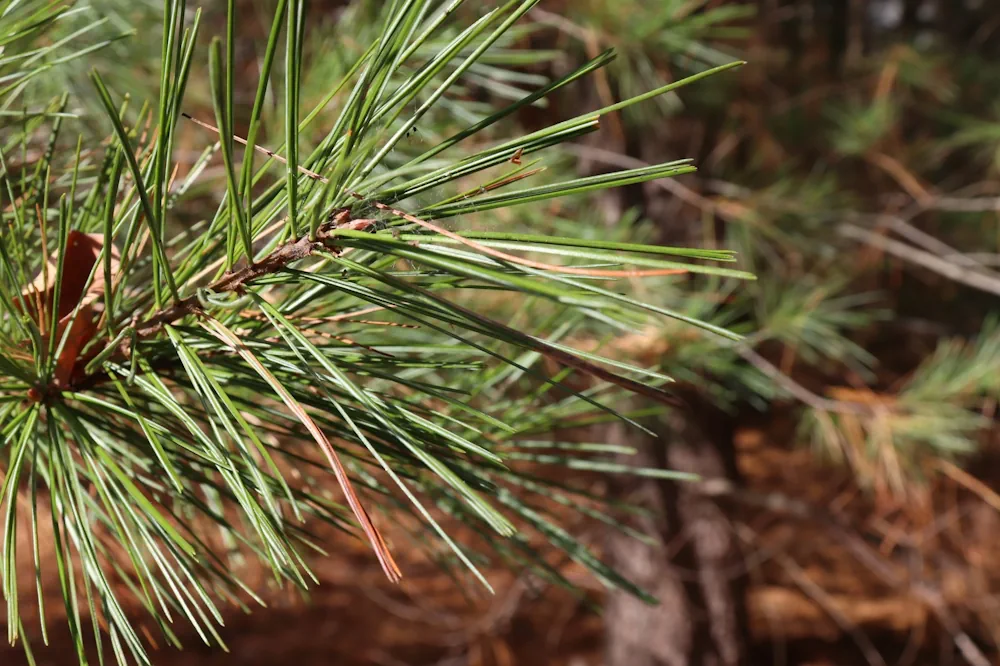
Evergreen trees are plants that keep their leaves all year round, unlike deciduous species that shed them in autumn. This means our gardens stay green even through winter, offering constant structure and colour.
Most evergreens belong to two main groups:
These trees have evolved adaptations that help them survive harsh weather. Many have waxy coatings on their leaves that reduce water loss. Conifers’ needle-shaped foliage limits surface area, helping them resist cold, wind, and drought. Their slow, steady growth also conserves energy and nutrients.
Evergreen trees provide practical benefits beyond their appearance. They:
Here’s a quick comparison to highlight their key traits:
| Feature | Evergreen Trees | Deciduous Trees |
|---|---|---|
| Leaf retention | Year-round | Shed in autumn |
| Common types | Conifers, broadleaf evergreens | Maples, birches, oaks |
| Adaptation | Waxy or needle-like leaves | Broad, thin leaves |
| Seasonal look | Constant foliage | Bare in winter |
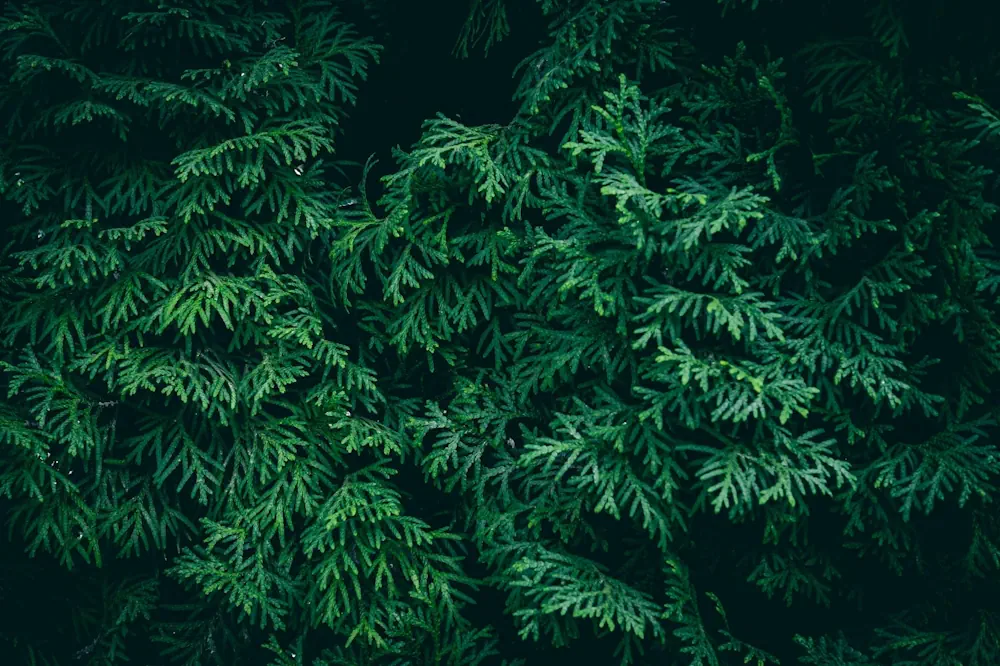
Evergreen trees come in many forms, from needle-bearing conifers to glossy-leaved broadleaf and subtropical species. Each group offers unique textures, growth habits, and uses that suit different climates, garden sizes, and design goals.
Conifers are the backbone of many evergreen landscapes. They keep their needles year-round and thrive in a range of climates, from cold mountain regions to temperate gardens.
Common conifer types:
Quick comparison:
| Species | Typical Height | Best Use | Key Feature |
|---|---|---|---|
| Pine | 10–60 m | Windbreaks, reforestation | Long needles |
| Spruce | 15–50 m | Cold climates | Square needles |
| Fir | 10–40 m | Decorative, festive | Soft needles |
| Cedar | 20–70 m | Ornamental | Scented wood |
Broadleaf evergreens keep their leaves through all seasons, offering greenery even in winter when deciduous trees are bare. They work well for hedges, privacy screens, and ornamental planting.
These species are reliable choices for year-round structure, with holly and magnolia particularly valued in traditional British gardens.
Subtropical and exotic evergreens bring variety and texture to warmer gardens. They often feature unusual leaf shapes, aromatic oils, or sculptural forms.
These trees thrive in regions with mild winters and provide evergreen structure where traditional conifers may not perform well.
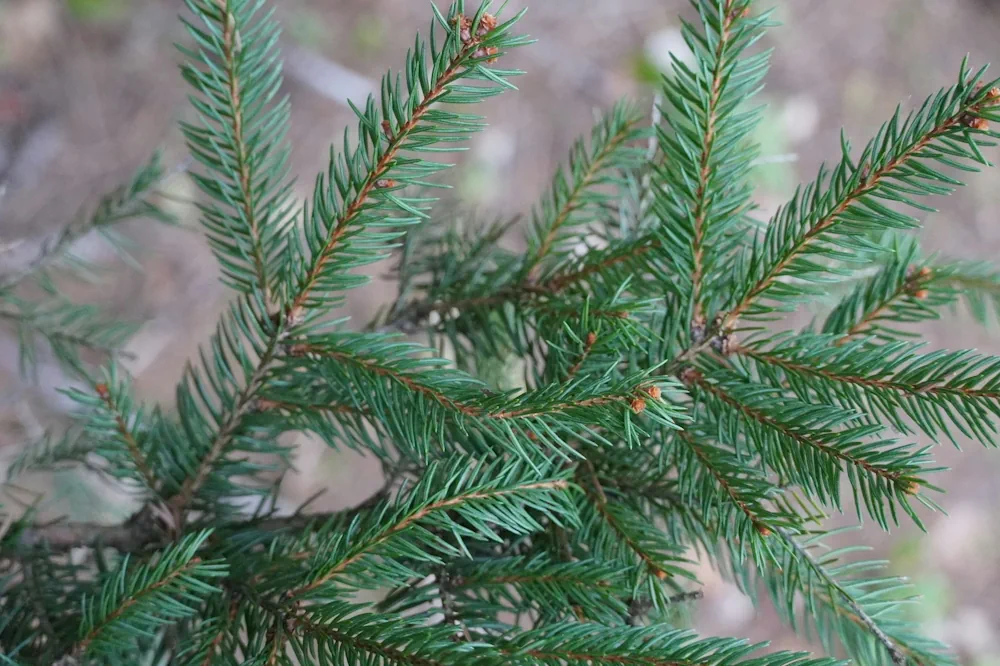
When we choose an evergreen tree, we start by thinking about the climate. Some species thrive in cool, temperate zones, while others prefer Mediterranean or subtropical conditions. For example, olive trees and holm oaks suit mild, coastal areas, while cider gums and snow gums tolerate colder sites.
Soil and drainage make a big difference. Most evergreens prefer well-drained soil, but some, like bay trees, adapt to heavier ground if not waterlogged. Checking the soil’s pH and texture helps us match the right tree to the right spot.
We also think about purpose.
Growth rate and maintenance matter too. Fast-growing evergreens like Eucalyptus gunnii fill space quickly but need pruning. Low-maintenance options such as olive or bay trees grow steadily and require little shaping.
We can also consider drought-tolerant evergreens for dry regions, including olive and loquat, which cope well with limited water.
| Evergreen Species | Approx. Height | Preferred Climate | Best Use | Maintenance |
|---|---|---|---|---|
| Bay Tree (Laurus nobilis) | 5 m | Temperate | Topiary, pots | Low |
| Olive Tree (Olea europaea) | 6 m | Mediterranean | Patio, screening | Low |
| Cider Gum (Eucalyptus gunnii) | 20 m | Cool temperate | Fast growth, shade | Moderate |
| Strawberry Tree (Arbutus unedo) | 3 m | Mild coastal | Ornamental | Low |
We keep evergreen trees healthy by focusing on consistent watering, pruning, and feeding. Each step supports strong roots, dense foliage, and better resistance to pests and disease.
Watering:
Evergreens need steady moisture, especially during their first few years.
Pruning:
We prune in late winter or early spring before new growth starts. Removing dead or crowded branches improves airflow and shape. Light trimming throughout the year also helps maintain structure without stressing the tree.
Fertilising:
A slow-release fertiliser in early spring supports steady growth. We avoid high-nitrogen feeds, which can cause weak, fast growth. Compost or organic mulch adds nutrients naturally and improves soil conditions.
| Common Issue | Likely Cause | Simple Fix |
|---|---|---|
| Yellowing leaves | Overwatering or poor drainage | Improve soil drainage |
| Sparse growth | Lack of nutrients | Apply balanced slow-release fertiliser |
| Browning tips | Drought stress | Increase deep watering frequency |
Pests and Diseases:
We watch for scale insects, aphids, and spider mites. A mild soap spray or horticultural oil usually controls them. To prevent root rot and mildew, we ensure good drainage and avoid waterlogging.
For those who enjoy smaller evergreens, see our guide on Seasonal Bonsai Care: Essential Tips for Every Season.
We can use evergreen trees in many ways beyond simple decoration. Some provide privacy and shelter, others fit beautifully into small gardens or even thrive indoors as bonsai or houseplants. Choosing the right species helps us match each tree’s growth habit and maintenance needs to its intended purpose.
Dense, fast-growing evergreens create natural barriers that block wind and noise while maintaining privacy year-round. Thuja (Arborvitae) and Leyland Cypress are two of the best evergreen trees for privacy. They form tall, uniform screens and tolerate regular trimming.
Podocarpus and Laurel (Prunus laurocerasus) also make excellent privacy hedge evergreens. Podocarpus offers a tidy, upright habit suitable for formal gardens, while Laurel grows quickly and provides glossy foliage that stays lush through winter.
For windy or exposed areas, we can plant Leyland Cypress in staggered rows for stronger wind protection. It’s one of the best windbreak trees because of its rapid growth and dense branching.
Quick tips:
Compact evergreen trees bring structure and greenery to limited spaces. Dwarf pines, Boxwood (Buxus sempervirens), and Japanese Holly (Ilex crenata) are ideal dwarf evergreen trees for small gardens. Their slow growth and tidy shapes make them easy to manage in pots or narrow borders.
Podocarpus maki, often sold as a potted evergreen tree, grows neatly in containers and tolerates light pruning. It suits patios and courtyards where space is tight but year-round foliage is desired.
We can pair these compact evergreen trees with low-maintenance ground cover or seasonal flowers for contrast. Regular watering and occasional feeding help them stay healthy in containers.
Container care checklist:
Some evergreens adapt beautifully to indoor life or bonsai cultivation. Podocarpus, Ficus, Juniper, and Carmona (Fukien Tea Tree) are popular evergreen bonsai trees that combine resilience with attractive foliage.
Podocarpus bonsai develops graceful, upright forms and thrives in bright, indirect light. Ficus species tolerate indoor conditions well and are among the easiest evergreen houseplants to maintain.
Juniper prefers cooler, well-ventilated spots and rewards careful shaping with fine, textured foliage. Carmona adds small white flowers, making it a favourite for indoor bonsai enthusiasts.
Bonsai care essentials:
Evergreen trees have long represented longevity, endurance, and renewal. Because they stay green year-round, we often see them as symbols of life that continues even through harsh winters. Their steady growth reminds us of persistence and balance in nature.
Across cultures, evergreens hold deep meaning. In European traditions, they appear in winter festivals and Christmas celebrations, symbolising hope and eternal life. In Chinese culture, pines and cypresses represent resilience and long life, often featured in art and gardens to bring harmony and strength.
In Feng Shui, evergreens help create stability and protection. Their constant greenery promotes a sense of calm and continuity, making them popular choices for garden design and home entrances.
The Buddhist pine (Podocarpus macrophyllus) carries special significance in East Asia. It symbolises wisdom, endurance, and spiritual growth, often planted near temples and courtyards.
Here’s a quick look at how different cultures view evergreens:
| Culture / Belief System | Symbolic Meaning | Common Use |
|---|---|---|
| Christianity | Eternal life, hope | Christmas trees and wreaths |
| Chinese culture | Longevity, strength | Art, gardens, New Year displays |
| Buddhism | Wisdom, renewal | Temple gardens, bonsai |
| Western traditions | Continuity, hospitality | Decorative wreaths and landscaping |
Evergreens remind us that life endures, adapts, and renews itself, season after season.
Start with the purpose. Evergreens are one of the most versatile tree categories available, but the species that suits a privacy screen is rarely the same one that suits a bonsai pot or a small courtyard container. Decide on the primary purpose first: structure, screening, ornament, or bonsai, and the right species selection follows naturally from there.
In our experience at Miyagi Bonsai, the most consistently underrated evergreen for UK growers is Podocarpus macrophyllus. As a garden specimen, it provides a neat, formal presence in sheltered positions. As a bonsai subject, it is patient, responsive to pruning, and capable of developing genuine character over decades. It bridges the garden and the bonsai collection in a way very few evergreens can. A well-placed Podocarpus, whether in a courtyard pot or a display pot on a windowsill, will reward the garden for years.
Miyagi Bonsai stocks a carefully chosen range of evergreen trees and evergreen bonsai, including Podocarpus macrophyllus, Juniper, Japanese Black Pine, and Scots Pine specimens, alongside bonsai pots, training soil, and care accessories, with next working day UK delivery available on most orders. The products and recommendations in this guide reflect what we stock, use and see working for our customers every day. We are rated 5 stars across over 100 Google reviews, and our team is on hand by email and phone if you have any questions about evergreen tree selection, garden planting, or bonsai development.
For limited spaces, compact evergreens like the bay tree (Laurus nobilis), strawberry tree (Arbutus unedo), and Mediterranean fan palm (Chamaerops humilis) work well.
They stay manageable in size, offer year-round greenery, and can even be grown in containers. The snow gum (Eucalyptus pauciflora subsp. niphophila) is another good choice, forming a neat, small-growing tree with attractive bark.
Evergreens need well-drained soil, consistent watering during their first few years, and mulching to retain moisture.
We should plant them where they get enough sunlight for their species—some prefer full sun, others tolerate part shade. Regularly check for signs of stress, such as yellowing leaves or sparse growth, which may indicate poor drainage or nutrient deficiency.
If we want low-effort greenery, holm oak (Quercus ilex), olive (Olea europaea), and cotoneaster are reliable choices.
These species tolerate pruning, wind, and varied soils. Once established, they need minimal watering and little intervention beyond occasional trimming to maintain shape.
Evergreens provide year-round colour, privacy screening, and wind protection.
They also support wildlife, offering shelter for birds during winter. Their consistent foliage helps structure a garden visually, keeping it lively even when deciduous plants lose their leaves.
Most evergreens benefit from light pruning once a year to remove dead or damaged branches.
The best time is usually late spring or early summer, after the risk of frost has passed. Avoid heavy pruning in autumn, as new growth may not harden before winter.
Species like holm oak, bay tree, and eucalyptus are known for their resilience.
They resist many common pests and fungal diseases when grown in suitable conditions. Keeping trees healthy through proper watering, spacing, and airflow further reduces the risk of infestations.
Evergreen trees retain their foliage year-round, photosynthesising continuously even in winter at a reduced rate. Deciduous trees shed their leaves in autumn, entering a period of dormancy before producing new growth in spring. The key practical difference for gardeners is appearance: evergreens provide consistent structure and colour through winter, while deciduous trees offer dramatic seasonal change; vivid autumn colour, bare winter branch structure, and fresh spring leaf burst.
Most gardens benefit from a combination of both types. Evergreens form the structural backbone while deciduous trees add seasonal interest and wildlife value. For year-round privacy screening, evergreens are essential; for autumn colour displays, deciduous species are unmatched.
Leyland Cypress is the fastest-growing evergreen tree widely available in the UK, capable of adding 60–90 cm per year in good conditions. Eucalyptus gunnii (Cider Gum) grows at a similar rate and is more ornamentally distinctive but requires regular pruning to prevent oversizing. Thuja plicata (Western Red Cedar) grows at 30–60 cm per year and is a more manageable alternative to Leyland Cypress for privacy screening. For smaller gardens, Laurel (Prunus laurocerasus) establishes quickly and can be kept at a manageable height with annual trimming. Fast-growing evergreens are effective for new gardens and privacy screens but generally require more regular maintenance than slower species.
Yes, many evergreen trees grow well in containers, particularly compact and slow-growing species. Bay tree, olive, Podocarpus macrophyllus, Japanese Holly, Boxwood, and dwarf pine cultivars are among the most reliable for long-term container cultivation. Use a well-draining compost mix, choose a pot only slightly larger than the root ball, and repot every two to three years as the roots develop.
Container-grown evergreens require more frequent watering than garden-planted specimens, as pots dry out faster, check soil moisture regularly and water thoroughly when the top layer feels dry. Protect containers from frost in winter by moving to a sheltered position or insulating the pot with bubble wrap or hessian.
The most widely cultivated evergreen bonsai species are Juniper (particularly Juniperus chinensis and Juniperus procumbens), Japanese Black Pine (Pinus thunbergii), Scots Pine (Pinus sylvestris), and Podocarpus macrophyllus. Juniper is the most popular outdoor evergreen bonsai species worldwide; its fine foliage, tolerance of wiring, and dramatic deadwood potential make it one of the most versatile subjects available.
Japanese Black Pine and Scots Pine develop impressive trunk taper and bark texture over time and are among the most rewarding long-term bonsai subjects. Podocarpus macrophyllus is the recommended choice for UK indoor bonsai; it tolerates stable indoor temperatures, responds well to pruning, and develops fine ramification with patient cultivation. Miyagi Bonsai stocks all four species in a range of development stages.

