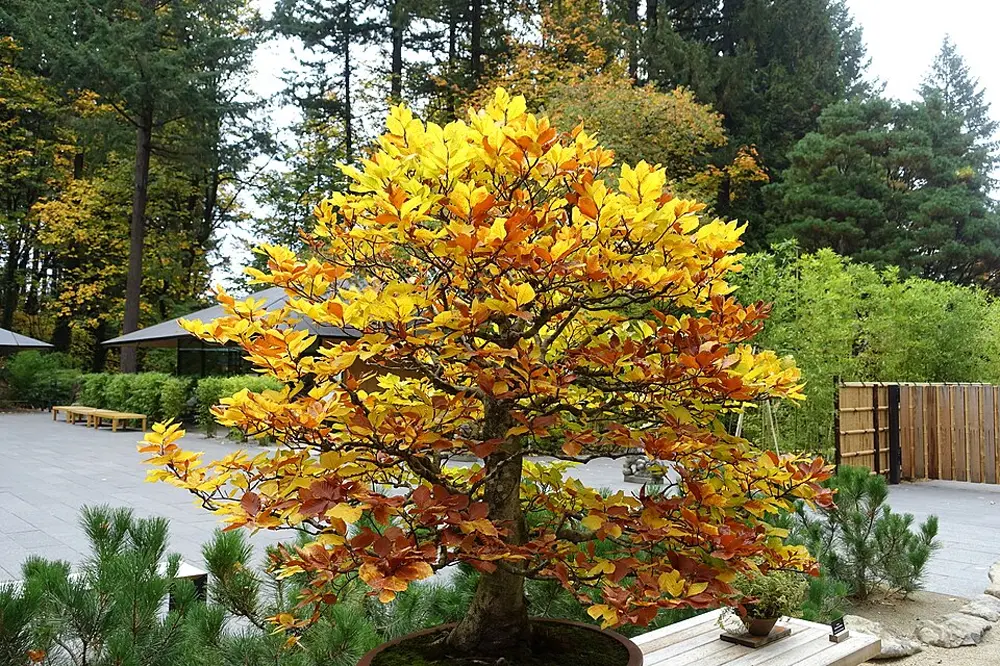
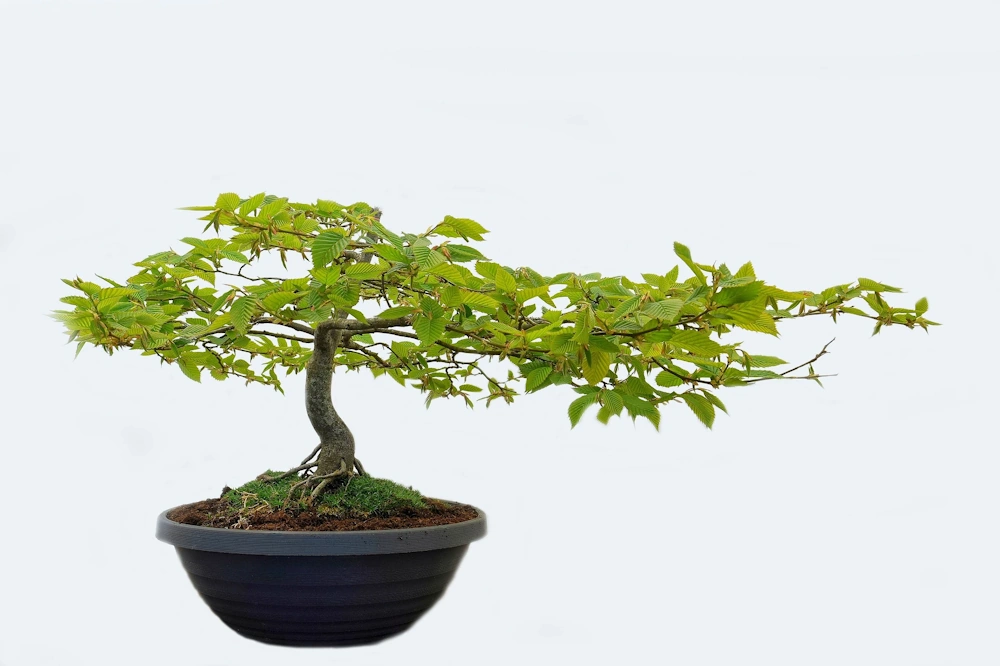
In the UK, beech bonsai usually begins changing colour from mid-September to early October. The first signs may appear as pale yellow or copper patches on several leaves, rather than an even change across the whole canopy.
Timing varies across the country:
- Southern England: often late September to mid-October
- Northern England and Scotland: commonly late September to late October
- Sheltered urban trees: may change later than exposed trees
- Cool, exposed sites: may colour earlier
A mild autumn can extend the display, with foliage developing gradually through October. A sharp drop in temperature, strong wind, or an early frost can speed up the change and cause leaves to turn brown or fall within a shorter period.
In favourable conditions, you may see autumn foliage from late September until late October. Some beech trees retain dry brown leaves after the colour has faded, sometimes well into winter. This trait can give your bonsai added structure, but you should still remove damaged or diseased leaves.
Watch the tree rather than relying only on the calendar. Once several leaves on the same branch begin to change, reduce feeding with high-nitrogen fertiliser and keep watering consistent while the bonsai prepares for dormancy.
How should you care for beech bonsai during autumn?
As autumn arrives, your beech bonsai gradually slows its growth. Its copper or golden-brown leaves may remain attached through winter, so do not remove them unless they are diseased or damaged. Place the tree where it receives good light, while protecting it from sudden changes in exposure and strong drying winds.
Reduce watering as temperatures fall, and the tree takes up less moisture. Check the compost with your finger before watering, then water thoroughly when the surface begins to dry. Avoid keeping the roots constantly wet, but do not allow the compost to become completely dry.
- Early autumn: Continue checking daily, especially during warm or windy weather.
- Mid to late autumn: Water less often as growth stops and evaporation decreases.
- After leaf fall: Check the compost regularly and water only when it starts to dry.
Beech prefers steady moisture, so adjust gradually rather than following a fixed schedule. Good drainage remains essential because cool, saturated compost can damage the roots.
Stop liquid feeding by late August or early September, depending on your local climate and the tree’s growth. Do not encourage soft new shoots late in the season. If you use slow-release fertiliser, remove it by early autumn so the beech can harden its growth before winter. Avoid autumn pruning that removes healthy branches, as beech back-buds less reliably than many other deciduous bonsai species.
Should you prune a beech bonsai in autumn?
You can carry out light maintenance pruning in autumn, but timing matters. Wait until the leaves have turned bronze and fallen if you need to remove larger branches. Once the tree becomes dormant, you can see its structure clearly and reduce the risk of removing healthy foliage that is still supporting root reserves.
Avoid major structural pruning while your beech still holds its bronzed leaves. Beech can respond slowly to heavy cuts, and removing branches too early may reduce its ability to store energy before winter. You should also avoid cutting simply to shorten long shoots unless they damage the design.
Autumn is more suitable for selective work that supports ramification:
- Remove dead, broken or crossing twigs.
- Thin congested shoots to improve light and airflow.
- Shorten strong extensions where the tree has finished growing.
- Remove shoots with excessively long internodes if they weaken the branch structure.
If you need major trunk or branch changes, late winter, before the buds swell, often provides a better window. Make clean cuts with sharp tools, and protect large wounds according to your normal beech bonsai care routine.
You can wire beech between spring and autumn, but its smooth bark marks easily. Use soft wire, check it frequently, and consider guy wires where you need to move a thicker branch without tightly wrapping it. Follow your site’s autumn wiring guide for technique and safety.
Is marcescence (leaf retention) something to worry about?
Marcescence is the retention of dead, bronzed leaves through winter instead of dropping them in autumn. If your beech bonsai keeps its brown leaves, this is usually normal and expected behaviour, not a sign of poor health or incorrect care.
Beech bonsai leaf retention is particularly common on young trees, developing saplings and the lower branches of older specimens. The leaves usually fall when spring buds begin to swell and new growth starts. You may also see the same pattern in beech hedges.
Beech forms a weaker separation layer between each leaf stalk and branch than many deciduous species. Because this abscission layer does not fully develop in autumn, the dry leaves remain attached. Their continued presence may help protect buds from cold and browsing animals, although the exact benefit varies with the tree and its growing conditions.
You do not need to remove marcescent leaves by hand. Leave them in place until they drop naturally, unless they show signs of disease. Continue normal autumn and winter care:
- Keep your bonsai outdoors so it can enter dormancy.
- Protect the pot and roots during prolonged severe frost.
- Check that the compost does not remain waterlogged.
- Inspect the buds and branches for signs of genuine damage.
Marcescence bonsai care differs little from ordinary winter care. Brown leaves in January can be perfectly healthy; look instead for problems such as soft branches, damaged buds, persistent wilting or fungal growth.
Which situation applies to you?
Your first autumn with a beech bonsai
Keep the tree outdoors in a sunny or partly shaded position with good airflow. Water whenever the surface begins to dry, but do not allow the root ball to become completely dry.
Reduce feeding as growth slows. Avoid heavy pruning in autumn because beech can die back beyond large cuts; retain healthy buds on any branch you shorten.
Your beech keeps its brown leaves
Some beech bonsai retain dry, copper-brown leaves through winter. This is normal if the buds remain firm and the twigs stay flexible.
Do not remove every leaf by force. Clear leaves that become wet and mouldy, and protect the container from severe frost while keeping the soil slightly moist.
You have a young tree or a mature specimen
A young beech often needs stronger, steady growth, so continue balanced feeding until growth has clearly finished. A mature bonsai usually needs less intervention, and autumn is better suited to observation and light maintenance than major styling.
Check wire regularly. Beech bark marks easily, and scars can remain visible for many years.
Leaves drop early or stay green
Early leaf loss can follow drought, root problems, pests, or sudden exposure to cold. Check watering, drainage, leaf undersides, and the roots before changing the feeding routine.
If leaves remain green late into autumn, avoid forcing dormancy. Let natural cooler temperatures and shorter days guide the seasonal change.
Where do you start with autumn beech care?
In our experience, the most common beech bonsai autumn mistake is misreading marcescence as a problem. Growers see brown, dry leaves clinging to the branches through November and December and assume something has gone wrong; overwatering, underwatering, root damage.
They remove the leaves by hand, sometimes damaging dormant buds in the process, and then worry further when the tree looks bare and angular through winter.
Retained leaves on beech are deliberate biology, not failure. The abscission layer simply does not complete in autumn the way it does on maple or elm. Those leaves will fall when spring buds swell. Until then, leave them in place unless they show visible mould or disease.
Your job through autumn and winter is straightforward: keep the compost barely moist, protect the root ball from sustained hard frost, check wire regularly because beech bark marks easily, and let the tree follow its own seasonal rhythm. Beech is one of the more self-sufficient bonsai species through winter. It rewards restraint more than intervention.
Buying Beech Bonsai from Miyagi Bonsai
Miyagi Bonsai stocks a range of beech bonsai alongside the supplies needed to support them through autumn and winter, including soft aluminium wire and guy wires suited to their thin, easily-marked bark, free-draining bonsai soil mixes, and frost protection fleece for exposed positions. The products and recommendations in this guide reflect what we stock, use and see working for our customers every day. We are rated 5 stars across over 100 Google reviews, and our team is on hand by email and phone if you have any questions about autumn colour, marcescence, watering, or winter protection for your beech. Next working day UK delivery is available on most orders.