
To care for your trident maple bonsai in autumn, stop feeding once leaves begin to colour, reduce watering as soil dries more slowly, and keep the tree outdoors in a bright position so it receives the cool nights that drive strong colour change.
Its three-lobed leaves can shift from summer green to yellow, orange and red before falling. The tree needs less water as temperatures fall, but its soil should never dry out completely. Autumn also gives you a useful chance to assess branch structure once the foliage thins.
Autumn also gives you a useful chance to assess branch structure once the foliage thins. Knowing what normal leaf drop looks like helps you act early if yellowing, spotting or sudden browning points to a problem.
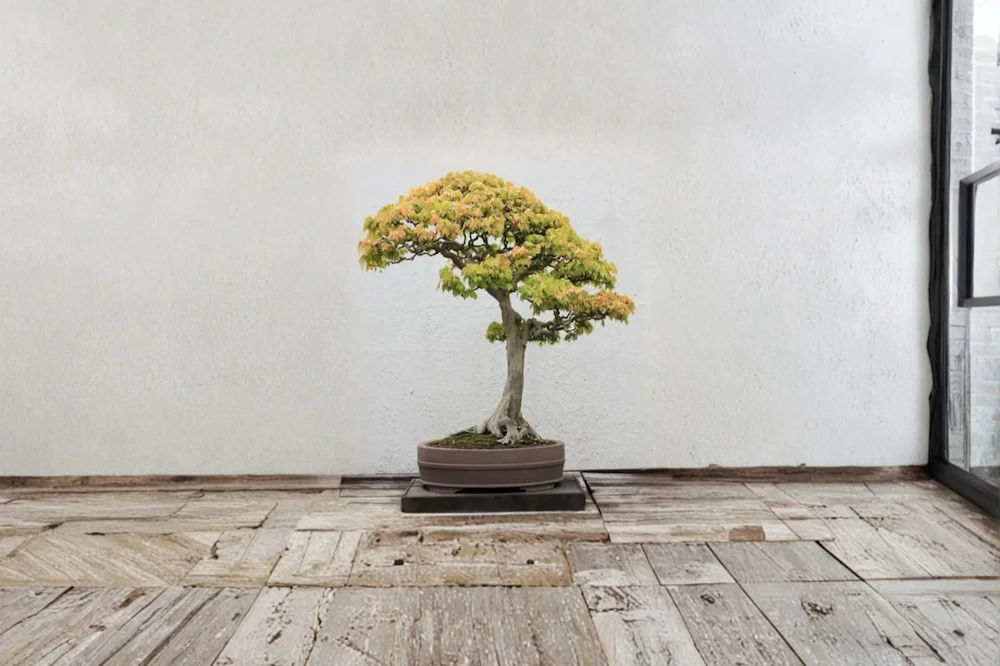
Trident maple bonsai can produce some of the most vivid autumn colour among bonsai species. Your leaves may turn yellow, orange, red, or russet, sometimes with several colours on one tree.
As autumn daylight shortens and temperatures fall, the tree slows leaf activity and prepares for dormancy. It stops replacing chlorophyll, the green pigment used for photosynthesis.
When chlorophyll breaks down, pigments that were already present become easier to see:
If you are asking, “Why is my trident maple turning red?”, red foliage is usually a normal autumn response. Bright light during the growing season, followed by cool autumn nights and mild days, can support stronger red colour.
Avoid forcing the change by withholding water or fertilising late in the season. Keep your bonsai evenly watered while the leaves remain active, then allow it to enter its natural winter rest.
In the UK, your trident maple bonsai usually begins changing colour from late September to October. Many trees reach their best autumn colour during October, then lose their leaves from late October into November.
Timing varies with your location and the season:
| Autumn conditions | Likely colour timing |
|---|---|
| Cool nights and bright days | Earlier and often stronger colour, from late September |
| Mild, sheltered autumn | Later change, often through October |
| Southern or urban UK gardens | Usually later than colder northern areas |
| Exposed outdoor position | Earlier than a sheltered position |
Leaves commonly move from summer green to yellow and orange, with red tones often appearing before leaf drop. Not every trident maple produces the same amount of red, as colour depends on the individual tree, light levels, temperatures and its general health.
Keep your tree outdoors through autumn where possible. A trident maple kept in a sheltered spot, against a warm wall, or moved indoors for winter may colour later because it receives less of the cool weather that helps trigger autumn change.
If leaves turn and fall as early as August or early September, check the basics. Early leaf drop can follow drought, heat stress, compact soil, or a rootbound pot. Brown, crisp leaves that remain attached usually point to missed watering rather than normal autumn colour.
As your trident maple bonsai enters its autumn colour-change phase, growth slows and its roots use less water. Check the compost more carefully rather than watering on a summer routine.
Water when the surface begins to dry, then soak the root ball until water drains from the pot. Avoid keeping the compost constantly wet, especially after leaf fall.
| Tree stage | Watering approach |
|---|---|
| Leaves changing colour | Water less often, but do not let the roots dry out fully |
| Leaves falling | Check moisture before each watering |
| Leafless and dormant | Water sparingly when the compost is starting to dry |
Cool, wet weather can greatly reduce watering needs. A sheltered tree in a small pot may still dry quickly in wind, so use the soil condition as your guide.
For trident maple bonsai care, reduce fertiliser as the tree’s active shoots harden and autumn colour develops. Stop feeding once the leaves are colouring strongly or beginning to fall. Fertiliser will not help a tree that is preparing for dormancy, and it can encourage soft late growth that is vulnerable to cold.
If you use a slow-release fertiliser, remove or avoid replacing it at this stage. Resume feeding in spring only after you see clear new growth.
During autumn colour change, let your trident maple bonsai display its foliage. Avoid major pruning or wiring while leaves are turning, as the tree is still moving resources into storage for winter.
Once the leaves have fallen, you can clearly see the branch structure. This leafless period makes trident maple especially suitable for autumn wiring, provided the tree is healthy and established.
| Task | Best autumn timing |
|---|---|
| Structural assessment | After leaf fall |
| Light branch selection pruning | After leaf fall, before hard frost |
| Wiring young and secondary branches | After leaf fall |
| Heavy pruning or major cuts | Usually late winter to early spring |
Remove crossing, damaged, or poorly placed shoots, but keep pruning measured. In the UK, stop work if the tree is frozen or very wet, and protect the root ball from prolonged hard frost.
Trident maple branches can set quickly, even in cool conditions. Check wired branches regularly in late winter and spring, because swelling can cause wire marks within weeks once growth begins.
For wiring angles, anchoring, wire thickness, and safe removal, see the site’s autumn wiring guide. Use this period to refine branch placement rather than forcing large bends in older, brittle wood.
In autumn, healthy trident maple leaf colour usually changes gradually. Leaves often move from green to yellow, orange, or red before they dry, loosen, and fall over several weeks.
This seasonal drop is normal for a deciduous bonsai. You may see colour change begin on different branches at different times, especially after cooler nights.
| Usually normal | Worth investigating |
|---|---|
| Gradual yellow, orange, or red colouring | Leaves fall suddenly while still green |
| Leaf drop during autumn | Heavy drop significantly earlier than autumn |
| Drying leaves that fall naturally | Blackened, soft, or badly spotted leaves |
| A thinning canopy over several weeks | Curled, wilted, or crisp leaves across the tree |
Check the tree if it loses many green leaves quickly. Sudden leaf drop can follow drying out, waterlogged roots, a sharp temperature change, pest activity, or a recent move.
Look closely for warning signs such as sticky leaves, fine webbing, scale insects, black spots, or brown edges. Keep watering based on soil moisture rather than a fixed schedule, and make sure excess water drains freely.
A few marked or early-dropping leaves do not always mean a serious problem. Monitor the pattern for several days, as most autumn colour and leaf loss reflects the tree’s normal seasonal cycle.
It is your first autumn with a trident maple bonsai. Expect leaves to change from green through yellow, orange, or red before falling. Keep up normal trident maple bonsai care: water when the soil begins to dry, but do not feed heavily once growth has stopped.
Your tree stays green later than expected. A bonsai kept in a warm, sheltered spot or indoors may colour later because it receives less cold exposure. Move it outdoors to a bright position, then begin winter care when leaf fall starts.
You wired or pruned the tree this season. Avoid further major pruning while autumn colour develops. Check wire regularly, as bark can mark quickly, and remove it before it cuts into the branch.
Leaves are dropping early or look spotted. Early leaf drop can follow drought, heat, root problems, or fungal leaf spot. Remove fallen leaves, review watering, and avoid leaving the pot constantly wet.
You expect winter frost. Once dormant, protect your trident maple bonsai winter care routine with a cold frame or unheated greenhouse during severe freezes. Do not let the root ball freeze solid, especially in a shallow bonsai pot.
Start by protecting the root zone while letting your trident maple complete its autumn colour change. Keep it outdoors in a bright, sheltered position, and water only when the surface of the bonsai soil begins to dry.
Check that your bonsai pot drains freely. A well-draining bonsai soil mix supports healthy root development and prevents wet roots as temperatures fall.
A suitable soil mix may contain:
Avoid repotting or root pruning in autumn unless you have an urgent root-health problem. Root work can disturb surface roots, nebari, and fine roots just before winter dormancy.
In our experience, the most common trident maple autumn mistake is not overwatering during colour change but continuing to water at the same frequency after leaf fall. The tree looks the same above the soil whether it has stopped drinking or not, so growers keep the routine going.
Water use drops sharply once the leaves are gone, and a consistently wet root ball in cool autumn conditions is one of the most reliable routes to root rot over winter. Check the soil before every watering from October onwards. If it still feels damp two centimetres down, wait.
Let the drying speed guide the frequency rather than the calendar, and your tree will enter dormancy with a healthy root system rather than a stressed one.
Miyagi Bonsai stocks a range of trident maple bonsai alongside the soils, accessories and protection supplies that support them through autumn and winter, including akadama, pumice and free-draining bonsai soil mixes, alongside frost protection fleece and securing ties for exposed positions. The products and recommendations in this guide reflect what we stock, use and see working for our customers every day. We are rated 5 stars across over 100 Google reviews, and our team is on hand by email and phone if you have any questions about autumn colour, watering, feeding or winter protection for your tree. Next working day UK delivery is available on most orders.
Yes, trident maple needs a genuine period of winter cold and should be kept outdoors, not indoors. As a temperate deciduous species, it relies on winter dormancy to rest and prepare for spring growth; keeping it warm indoors disrupts this cycle and weakens the tree over time. Provide shelter from hard frost and strong wind, but don’t bring it into a heated home.
Clear fallen leaves away from the base of the tree rather than leaving them in the pot. Decaying leaves sitting on the soil surface can trap moisture, encourage fungal issues, and harbour pests over winter. A quick clear-up after each drop keeps the soil surface healthy going into the dormant season.
Trident maple typically breaks dormancy and pushes new leaves from March to April in the UK, depending on regional temperatures and how mild the spring has been. Watch for swelling buds as the first sign growth is about to resume, rather than relying on a fixed calendar date.

