
Late summer offers a safer window for bonsai wiring because branches thicken more slowly, which reduces the risk of wire bite while still allowing you to set shape before autumn.
You can wire bonsai in late summer, and in many cases, it is one of the most practical times to do it. Growth has slowed after the spring flush, branches have hardened, and you can see the structure clearly again.
The full case for why this window works is covered below; the short version is slower thickening, firmer wood, and more predictable behaviour than spring.
If you want to refine the structure, correct the branch position, or prepare your tree for autumn display, late summer gives you a balanced window. The key lies in choosing the right species, applying the correct gauge wire, and checking it regularly as temperatures begin to fall.
This guide draws on established UK bonsai practice and is written for growers managing deciduous, conifer, and tropical species in British growing conditions. Whether you are wiring your first tree or refining an established collection, the principles here apply across experience levels.
Quick Late‑Summer Wiring Recommendations
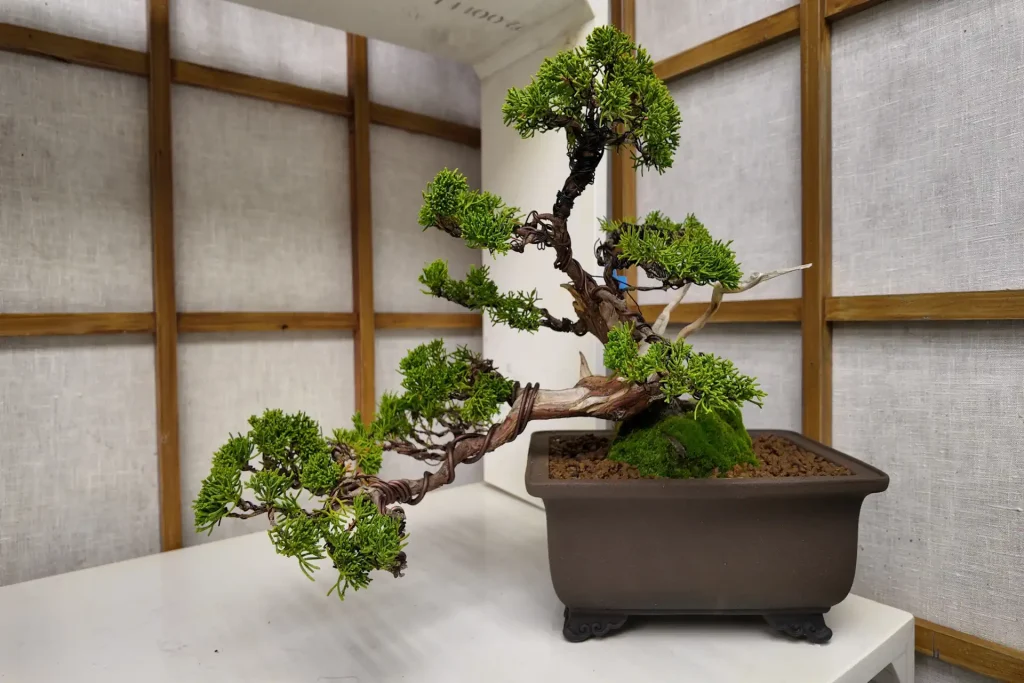
Wiring bonsai late summer feels counterintuitive because dormancy is approaching. If you’re wiring earlier in the season, different risks apply; see our guide to wiring bonsai in summer for early and peak-summer timing. In practice, this period often gives you more control, less risk of wire bite, and more reliable shape retention than spring or peak summer.
Late summer wiring advantages:
In spring and early summer, branches thicken fast. Sap flow is strong, cells expand quickly, and even correctly applied wire can bite within weeks.
By late summer, that rapid extension growth has slowed. Internodes have set, and most species have finished their main flush. This matters because:
In May or June, you may need to inspect wired branches every 1 to 2 weeks. In late summer, you can often stretch that to 3 to 4 weeks, depending on species and vigour.
This does not remove the need to monitor wire. Actively growing trees can still scar. However, the risk profile changes.
Compared to spring wiring, late summer bonsai wiring timing gives you more predictable behaviour and fewer surprise indentations.
Soft spring growth bends easily, but it also rebounds easily. When you wire very young, flexible shoots, they often try to return to their original position once you remove the wire.
By late summer, that same growth has begun to harden. Lignification increases, and the branch gains structural rigidity.
You benefit in two key ways:
You are not fighting soft, elastic tissue. You are guiding wood that is firm enough to “remember” its new line.
For many deciduous trees, wiring just before autumn leaf drop allows the branch to settle in place over winter. For pines and other conifers, late summer work can hold especially well as energy shifts from extension to bud development.
The result is cleaner lines with less re-wiring the following year.
Wiring bonsai late summer gives you a rare mix of strength and flexibility. Branches have matured enough to hold shape, yet they still bend safely, which makes this window ideal for serious structural work.
In late summer, your branches have started to lignify, but they have not fully hardened for autumn.
This matters.
You get a balance:
Earlier in summer, growth can be too soft. Wire bites quickly, and shoots may spring back once you remove it. By contrast, wiring bonsai before leaf drop allows you to work with tissue that already has structural strength.
This stage suits:
Because growth has slowed, swelling also slows. That reduces the risk of rapid wire scars, though you must still check regularly.
For many trees, this partial flexibility combined with partial rigidity creates the most controlled bending conditions of the year.
One major benefit of bonsai branch setting late summer is long-term hold.
When you wire in late summer and leave the wire on through autumn and into winter, the branch remains in that position during dormancy. The tree “rests” in its new structure.
That resting period strengthens position memory.
Branches wired and removed within one active growing season often try to rebound. In contrast, branches that sit wired through winter frequently set more firmly because:
This makes late summer wiring especially useful for larger adjustments, such as lowering primary branches or correcting upward growth on pines and deciduous species.
You must still monitor wire bite before leaf drop, particularly on vigorous trees. But when timed well, this approach helps you achieve branch positions that hold through winter with fewer rewiring cycles.
Late summer wiring is also strategic planning.
When you set branches before dormancy, they enter spring already positioned correctly. That changes how new growth emerges.
For example:
Using wire to prepare structure for following spring means you shape not just the branch, but next year’s growth pattern.
On pines, late summer or early autumn wiring can align shoots before bud set finishes. On deciduous trees, wiring before leaf drop lets you refine spacing while foliage still shows you the canopy outline.
By spring, your tree does not need emergency correction. It simply grows into the framework you already designed.
Late summer bonsai wiring timing gives you less room for error than spring work. Growth slows, dormancy approaches, and some trees simply do not respond well at this stage of the year.
By August in the UK, many trees have moved past their strongest growth phase. Branches thicken more slowly, so wire bite often develops more gradually than it does in spring.
That sounds helpful, but the real issue is time. You face a narrowing window before dormancy, which limits how long the tree has to recover from any damage.
If wire starts to mark the bark in September or October, the tree may enter winter before it can fully respond. Healing slows as activity drops. Scars can set in and remain visible for years.
When you wire in late summer:
You must stay vigilant. Late summer wiring demands closer monitoring than spring work because you cannot rely on active growth to correct mistakes quickly.
Some species handle late summer wiring poorly. Japanese maple sits at the top of that list.
Maples have thin bark that marks easily. They also prepare for autumn colour and leaf drop during this period. Any bark damage or stress can interfere with that transition.
For Japanese maple, better timing is:
Other delicate deciduous species can react in a similar way. In contrast, many evergreens tolerate wiring across more of the year, though you still need to watch for swelling.
If you are unsure, avoid late summer wiring on thin barked deciduous trees. The risk of visible scarring outweighs the benefit of minor positional changes.
Never wire a tree that has been repotted in the last six to eight weeks. Root work already places stress on the plant.
Late summer is a recovery period for many trees. Adding wire increases demand on a system that is still rebuilding fine roots.
You should also delay wiring if your tree shows signs of summer stress, such as:
In these cases, stabilise the tree first. Improve watering, feed appropriately, and resolve pest or root issues.
Wait until you see steady, healthy growth before you wire. Recently stressed trees should always be wired later, even if that means postponing shaping until the following spring.
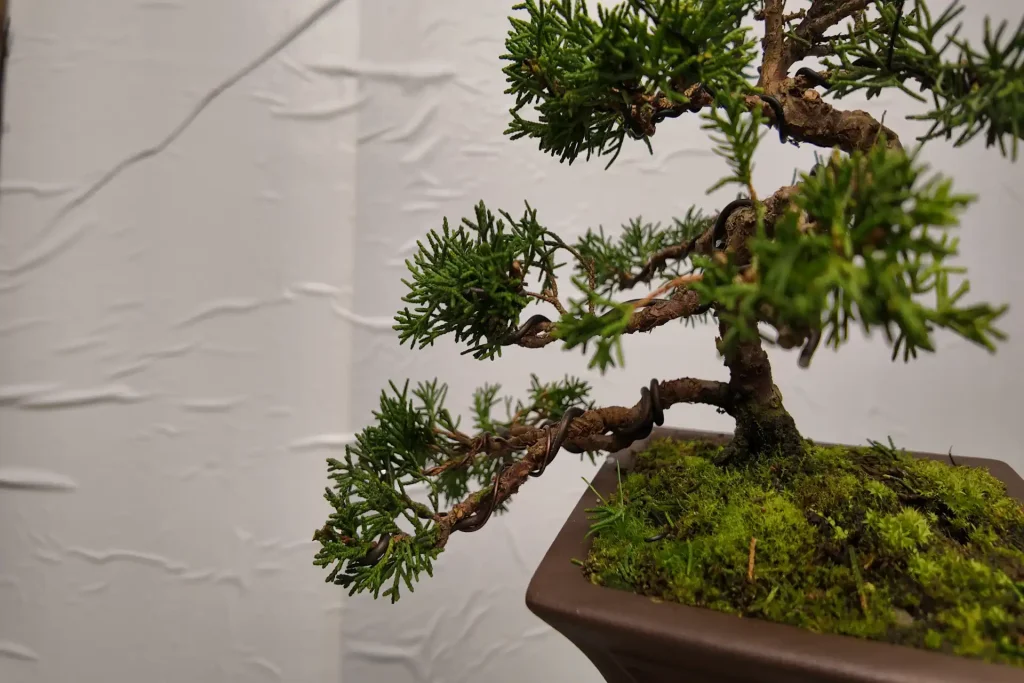
Late summer is not equal for all trees. Some species respond well to wiring bonsai late summer, while others hold shape better if you wait for autumn or spring.
If you practise bonsai wiring conifer late summer, junipers and pines should sit at the top of your list.
By late summer, most conifers have finished their main growth flush. Pines, in particular, have usually completed most of their annual branch thickening by August. This matters because:
You can also see the structure clearly because foliage remains in place. That makes design decisions easier than wiring in winter when growth is dormant but structure can look flat.
Late summer is also ideal for heavier bends on pines. The wood remains flexible enough to shape, yet strong enough to hold through autumn and winter. Many growers wire pines from late summer into early autumn so the wire can stay on until the following year with minimal scarring.
Junipers respond similarly. They tolerate wiring that remains on over winter, provided you check regularly and protect from severe frost below about -10°C.
You can carry out bonsai wiring deciduous late summer, but you need more judgement than with conifers.
The advantage is simple. Leaves are still present, so you can judge silhouette and spacing accurately. At the same time, growth has slowed compared with spring, which reduces the chance of rapid wire bite.
Some deciduous species handle late summer wiring well:
These species are relatively vigorous and recover quickly.
Others are less forgiving; Japanese maple, in particular, should be avoided in late summer for the reasons covered in the risks section above. If you want precise shaping without marks, wait until after leaf drop in autumn.
Avoid heavy bends at this stage. Focus on refining branch placement rather than dramatic reshaping.
With indoor tropical species wiring, seasonal limits matter far less.
Ficus, Chinese elm kept indoors, and other tropical bonsai do not enter a true winter dormancy. That means you can wire them at almost any time of year, including late summer.
Late summer often works well because:
Check wire frequently. Tropical species can thicken quickly, and wire marks appear fast if you ignore them.
If you grow tropical trees outdoors in summer, provide light shade after wiring. Fresh bends combined with intense sun can stress the plant.
Some trees respond poorly to species to avoid wiring late summer conditions.
Avoid wiring:
Recently repotted trees need time to rebuild roots. Wiring adds extra stress through internal micro fractures in the wood.
If you see yellowing leaves, weak extension growth, or signs of heat stress, delay wiring. Healthy trees recover quickly. Weak trees do not.
When in doubt, prioritise tree health over timing. Late summer offers strong benefits for conifers and selected deciduous species, but only if your tree is vigorous and stable.
Late summer wiring demands small adjustments to timing, tension, and wire choice. Wood is firmer than in spring, so you must work with hydration, lighter pressure, and careful gauge selection to avoid bark damage.
Wire in the morning, ideally between 8am and 11am. Whether you are shaping one tree or working through a full bench, the conditions are the same: branches are fully hydrated from overnight moisture and temperatures are moderate.
Avoid wiring during the warmest part of the afternoon, even though late summer is cooler than peak summer. Heat increases stress and reduces flexibility. Wood that feels firm in the morning can feel brittle by mid afternoon.
Only wire healthy trees. Do not proceed if you notice:
Late summer bonsai wiring technique in autumn conditions works best when growth has slowed but the tree still holds steady energy. You want stability, not active extension or recovery from stress.
Late summer changes how you judge wire gauge selection for hardening branches. Shoots that extended in spring now feel slightly stiffer and less forgiving.
In spring, you often follow the one third branch thickness rule. In late summer, consider going slightly lighter than the maximum suitable gauge, especially on deciduous trees.
Why this matters:
For most late summer bonsai work, aluminium wire offers better control. Aluminium wire late summer bonsai styling allows gradual shaping with less aggressive holding force than copper.
Choose a gauge that holds the branch with gentle support rather than maximum force. If in doubt, test a lighter wire first before moving up in size.
Your application technique late summer should stay precise and controlled. Wrap the wire at a steady 45 degree angle to the branch. Keep spacing even.
Do not pull the wire tight against the bark as you wrap. Hardening shoots cannot flex like soft spring growth, and tight coils increase scarring risk.
Pay close attention to:
Bend slowly and in small increments. Avoid sharp angles. If you feel resistance increase suddenly, stop and adjust your approach instead of forcing the movement.
Tension control becomes more important than gauge size. The same firmness you used on soft spring growth can be too tight on partially hardened late summer wood.
Apply the wire so it sits snug but does not indent the bark. A simple test helps:
If the wire bites into the surface as you bend, it is too tight. Late summer shaping relies on steady holding power, not compression.
Check wired branches every 7 to 14 days. Hardening continues into early autumn, and swelling can still occur. Adjust or remove wire before marks form rather than waiting for the branch to fully set.
Late summer wiring shifts your focus from shaping to monitoring. As growth slows, you need a clear plan for checking, spotting bonsai wire bite late summer, and deciding on bonsai wire removal autumn before dormancy sets in.
In spring and early summer, branches thicken fast. Wire bite can appear within weeks, especially on deciduous trees in active growth.
By late summer, that thickening slows. The wire bite rate drops significantly, but it does not stop. Many species continue slow cambium growth into early autumn, which means the wire can still mark the bark.
If you checked weekly in spring, you can usually extend this to fortnightly checks for wire applied in late summer. That said, do not relax completely.
Pay attention to:
Even slow autumn growth can turn light pressure into visible indentation over several weeks.
Set a simple schedule and stick to it. Consistency prevents surprise scarring.
A practical guide for when to check wire through autumn:
At each check, look closely for early warning signs:
Run your finger gently along the branch. You will often feel pressure before you see serious marking.
Deciduous trees require extra attention before leaf drop. Once leaves fall, it becomes harder to judge subtle swelling along finer twigs.
Removing wire before dormancy depends on two things: bite risk and structural stability.
If you see any early bite marks, remove the wire immediately. Do not wait for the branch to “set” further. Autumn scars can remain visible for years, especially on smooth bark.
If the wire is not biting and the branch has largely set into its new position, you can often leave it in place through winter. This works well for structural bends made in late summer that still need support.
Use this rule:
Always cut wire off in small sections rather than unwinding it. Unwinding can twist and damage bark that has already tightened around the wire.
Leaving wire through winter is sometimes acceptable, but you need to understand the risks.
Key wire left through winter risks include:
Slow, unnoticed bite on dormant wood
Dormant does not mean inactive. Subtle thickening can still occur.
Frost damage at contact points
Metal wire conducts cold. Severe frost can concentrate stress where wire touches bark.
Harder monitoring on deciduous trees
After leaf drop, fine branch swelling is less obvious.
You can safely leave wire on through winter if:
Avoid leaving wire on thin, smooth barked deciduous species. Conifers generally tolerate winter wiring better, but extreme cold still increases brittleness.
Careful autumn monitoring keeps your late summer wiring effective and prevents avoidable scarring.
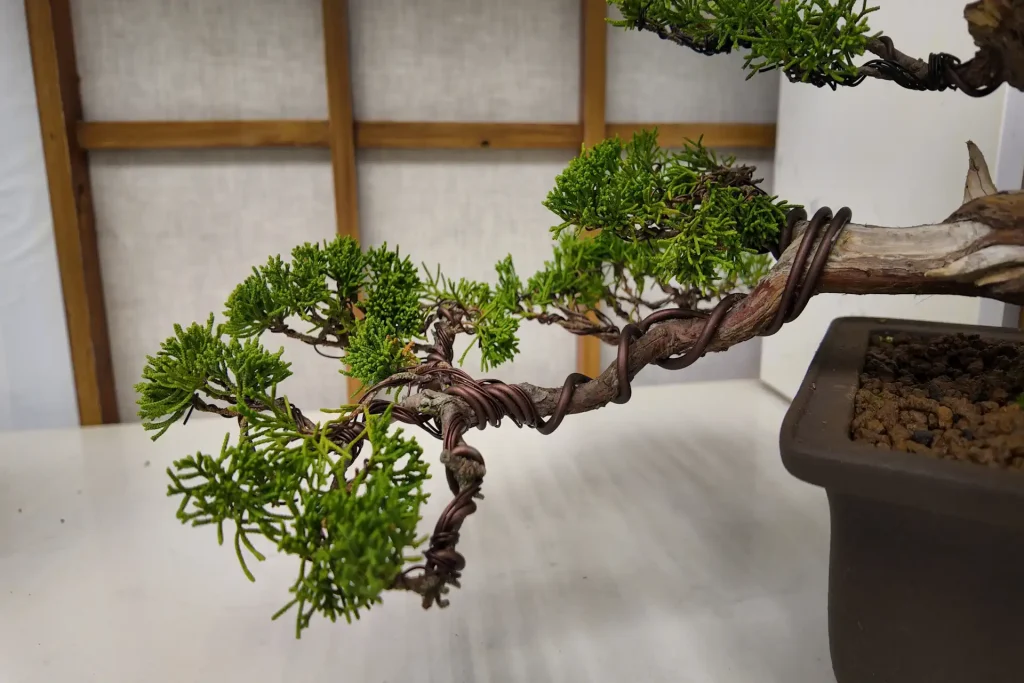
Late summer and autumn both work for wiring, but they create very different conditions. The main difference is foliage presence versus leaf drop, branch flexibility versus full hardening, and how clearly you can see the structure.
When you focus on wiring bonsai late summer, the tree still carries full foliage. You can see how pads, silhouettes, and branch density actually look with leaves in place.
This helps you judge spacing and balance in real time. However, you must work carefully around leaves and soft growth. Sap flow also begins to slow towards the end of summer, which can make wire removal harder if left too long.
By early autumn, especially from bonsai wiring September onwards in the UK, growth slows further. Deciduous trees start preparing for dormancy.
After leaf drop, the branch structure becomes fully visible. You no longer design around foliage mass, but you gain a clear view of primary and secondary branching. Branches are also more hardened, which reduces accidental bending damage but slightly limits flexibility.
Many experienced growers prefer wiring after leaf drop deciduous bonsai. Bare branches allow you to see the true framework without guessing where branches sit beneath leaves.
This approach works especially well for Japanese maple. The bark marks easily during active growth, so post leaf drop wiring lowers the risk of scarring. Hardened wood also tolerates wire pressure better.
Dormancy helps the new position set gradually over winter. There is no strong flush of growth pushing against the wire.
The trade off is that you lose foliage context. You must visualise how leaves will fill space next spring. For precise branch placement on deciduous species, autumn often gives you better control.
Start with species and condition. That solves most of the question.
Use this simple guide:
If you ask, can I wire bonsai in September UK? the answer is usually yes. Early to mid September often provides 4 to 6 weeks before frost, which gives time for initial setting.
Always assess strength first. Making the decision for your specific tree matters more than following a calendar.
If you are asking “should I wire bonsai in late summer?” the answer depends on species and climate. In most of the UK, August offers steady growth, moderate sap flow, and lower risk of wire bite than spring.
Use this table as a fast guide for wiring bonsai late summer.
| Species | Late Summer Suitability | Preferred Alternative Timing | Wire Type | Key Late Summer Consideration |
|---|---|---|---|---|
| Juniper | Recommended | Early spring | Aluminium | Flexible growth; check wire before autumn thickening |
| Japanese Black Pine | Recommended | Late autumn | Copper | Often wired after decandling; monitor resin flow |
| Scots Pine | Recommended | Autumn | Copper | Set primary structure before winter dormancy |
| Japanese Maple | Acceptable with care | Late autumn after leaf drop | Aluminium | Thin bark marks easily; wire after leaves fall for lower scarring risk |
| Trident Maple | Acceptable with care | Early autumn | Aluminium | Vigorous growth can cause quick wire bite |
| Chinese Elm | Recommended | Spring | Aluminium | Responds well once summer growth slows |
| Beech | Acceptable with care | Winter | Aluminium | Thin bark scars easily |
| Hornbeam | Acceptable with care | Autumn | Aluminium | Wire after leaves firm up |
| Ficus | Avoid outdoors in UK | Mid summer indoors | Aluminium | Needs warmth; unsuitable for cool August nights |
| Carmona | Avoid outdoors in UK | Warm growing season indoors | Aluminium | Sensitive to temperature drops |
For bonsai wiring August UK, conifers such as juniper and pine respond especially well. Many robust deciduous trees also handle late summer bonsai wiring timing if growth has firmed and you monitor closely.
Match your wire type, tension, and checking routine to the species and current weather rather than copying your spring approach.
In our experience, the most common late summer wiring mistake is applying the same tension and gauge used in spring without accounting for how much wood has hardened since then. Branches that bent easily in May feel stiffer in August, and wire that sat safely for weeks in spring can mark bark faster on firmer late summer wood. Go slightly lighter, check more often than you think you need to, and remove wire at the first sign of swelling rather than waiting for the position to fully set. The window is reliable; you just need to work with it rather than against it.
Miyagi Bonsai stocks a carefully chosen range of aluminium and copper bonsai wire, wiring tools, and trees suited to late summer shaping and structural development, including conifers and robust deciduous species such as Chinese Elm and Trident Maple, with next working day UK delivery available on most orders. The products and recommendations in this guide reflect what we stock, use, and see working for our customers every day. We are rated 5 stars across over 100 Google reviews, and our team is on hand by email and phone if you have any questions about wiring technique, species suitability, or timing your autumn shaping work.
There is no fixed answer; it depends entirely on whether the wire is biting. Check every two weeks through September and monthly once growth has clearly stopped in October. If you see any indentation or raised bark on either side of the wire, remove it immediately. If the branch has set into position and shows no bite, you can leave structural wire on through winter, particularly on conifers. Always cut the wire off in sections rather than unwinding it.
Go slightly lighter than you would in spring. Late summer wood has begun to harden and does not compress as easily as soft spring growth, which means heavier wire increases the risk of bark marking. Aluminium wire gives you better control at this time of year. Wrap at a 45-degree angle and apply snug but not tight; the wire should not spin freely, but it should move with gentle finger pressure.

