
Yes, you can wire bonsai trees in summer, as long as the tree is healthy, actively growing, and protected from heat stress.
You can wire bonsai in summer, but you need to adjust your timing and technique. As growth speeds up and temperatures rise, branches change quickly and stress builds faster than in spring or autumn. That shift affects how you approach bonsai wiring and overall bonsai styling.
Early summer often works well because sap still flows and young shoots remain flexible. In extreme heat or during drought, wiring can weaken branches and slow recovery.
As you continue, you will see why summer growth makes wiring more complicated, which species respond best, and how heat affects wired branches. You will also learn how to choose the right wire, apply it safely, monitor bite marks, and decide whether summer or autumn gives you better long-term results.
Beginners wiring their first bonsai in summer:
Outdoor deciduous species growers (Maple, Elm, Hornbeam):
Outdoor conifer growers (Juniper, Pine):
Indoor tropical species growers (Ficus, Carmona):
Experienced growers deciding between summer and autumn wiring:
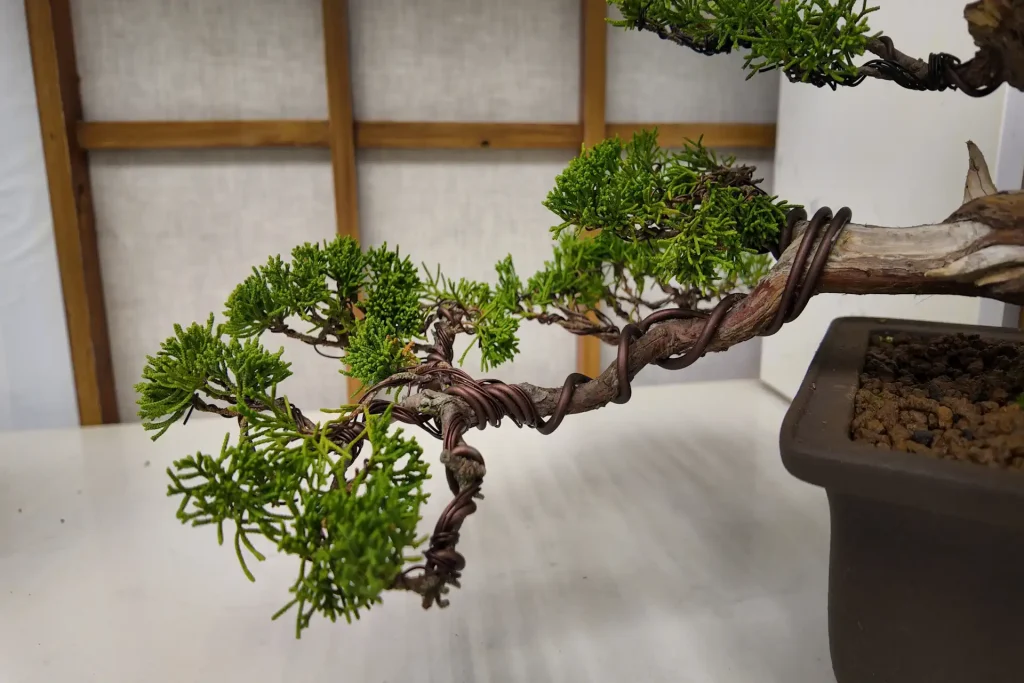
Yes, you can wire bonsai in summer.
It is safe to wire bonsai in summer only if the tree is healthy, established, and not under heat stress, and you monitor it closely for wire bite.
Summer wiring carries more risk than spring or autumn because your tree grows faster and faces higher temperatures.
In spring, sap flow and flexible new growth make branches easier to bend. In autumn, cooler weather reduces stress and slows growth. In summer, growth can be vigorous, especially in June and July in the UK.
That fast growth increases the risk of:
Deciduous trees are especially vulnerable. Their soft bark marks easily, and active growth means wires can cut in quickly.
You may need to check wired branches every 1 to 2 weeks in warm weather. Miss that window, and scars can form fast.
Wiring bonsai in summer works best under controlled conditions.
It suits:
Conifers tolerate summer wiring better because they grow more steadily, and their bark protects against marking. Many growers wire conifers almost year-round, avoiding extreme heat or deep winter cold.
In the UK, late July heatwaves can push temperatures above 30°C. During these periods, avoid major work. Instead, wait for milder days below 22 to 24°C.
If you ask, can you wire bonsai in summer, the practical answer is yes, but focus on light refinement, not aggressive shaping.
Sometimes the safest choice is to wait until autumn.
Delay wiring if your tree shows:
Deciduous species often respond better when you wire in late autumn after leaf drop. You see the branch structure clearly, and growth has slowed.
If you are unsure when to wire bonsai UK conditions demand patience. Late winter or early spring, just before buds swell, remains the most reliable window for major structural work.
If the tree looks stressed, pause. Healthy, stable growth should always come before styling.
When you practise wiring bonsai in summer, you work against the tree’s most active growth phase. Rapid thickening, high sap flow, and heat all increase the risk of wire bite and scarring.
Summer pushes strong extension growth, especially on deciduous species such as maple, elm, and ficus. New shoots harden, then thicken quickly as the cambium layer produces fresh wood.
This is where bonsai wiring timing in summer becomes tricky.
In spring, you often get softer, more flexible shoots. In autumn, growth slows. In mid-summer, however, branches can increase in girth in just a few weeks.
For fast growers, wire can start marking bark in 2 to 3 weeks during peak growth. On vigorous specimens, light aluminium wire may begin to bite even sooner if you apply it tightly.
Ask yourself: how fast does bonsai wire cut into bark in summer?
Often much faster than you expect.
Key risk factors include:
You must assume thickening will happen quickly and plan your checks accordingly.
Does summer heat affect bonsai wiring? Yes, directly.
Warm temperatures increase metabolic activity and vascular flow. When roots absorb water efficiently and leaves transpire heavily, the tree moves more sap through its tissues. That increased flow supports faster wood production and branch swelling.
In practical terms, hot weather can turn a safe bend into a tight bind within days.
During heat waves:
This swelling presses bark against the wire. On thin barked deciduous trees, marks can become permanent if you ignore them.
You should also consider that high heat reduces flexibility in some species once shoots harden. So you face two issues at once: quicker thickening and slightly stiffer wood.
That combination makes summer one of the more complicated seasons for shaping.
In summer, weekly checks are not optional. They are essential.
During spring and summer, experienced growers inspect wired trees once a week. In autumn, every two weeks often suffices. In winter, monthly checks usually work for most species.
Summer demands the strictest schedule.
When you check:
If you see early indentations, cut the wire off immediately rather than unwinding it. Cutting prevents further bark damage.
For wiring bonsai in summer, shorter setting times are normal. Lighter deciduous branches may set in 6 to 8 weeks, but thicker structural branches take longer and can scar throughout that period if ignored.
Treat summer wiring as high-maintenance work. You shape faster, but you must monitor just as quickly.
Some species handle summer wiring well, while others react badly to heat and rapid growth. Your success depends on growth rate, sap flow, and how quickly branches thicken during warm months.
You can usually carry out wiring conifer bonsai in summer with good results.
Junipers and many pines grow more slowly than deciduous trees, especially once early spring growth has hardened. Their needles protect inner tissue, and their branches stay flexible longer into the season.
Early to mid summer often works well because:
Junipers tolerate shaping well and rarely thicken fast enough to bite into wire within a few weeks. Pines require more care. You should bend gradually and avoid forcing old wood.
Check wired conifers every 3 to 4 weeks. Even slower growers can mark if growth surges after rain and feeding. Summer bonsai wiring risks remain lower here than with fast-growing deciduous species, but regular inspection still matters.
Wiring deciduous bonsai in summer carries more risk, especially with vigorous species.
Japanese maple, Chinese elm, and beech thicken quickly during warm weather. In active growth, branches can swell in just a few weeks, causing wire to bite and scar bark.
You should only wire if:
Maples are particularly heat-sensitive. In peak heat, stress levels rise, and bending can cause dieback at the tips. Chinese elm handles summer work better, but you must monitor wire closely.
Inspect every 2 weeks in strong growth periods. Remove wire as soon as it begins to mark. Summer bonsai wiring risks for deciduous trees mainly involve scarring and dehydration stress, so timing within the season matters more than the calendar month.
Tropical species such as ficus often grow most actively in summer. That makes summer one of the more practical times to shape them.
Ficus branches stay flexible, and warm temperatures support recovery after bending. You can wire during active growth, but you must watch for rapid thickening.
Key points for tropical wiring:
Indoor growers with stable temperatures have more control. Outdoor tropical bonsai need shading during intense sun to reduce summer bonsai wiring risks.
Because ficus heals quickly, minor marks usually fade. Still, remove wire promptly once the branch sets.
Some trees should not be wired during peak summer heat, especially in late July and August.
Avoid wiring when:
Beech and young maples struggle in extreme heat. Recently repotted trees or weak specimens should also wait until cooler conditions.
Use this quick comparison as a guide:
| Species | Summer Suitability | Risk Level | Notes |
|---|---|---|---|
| Juniper | Good | Low | Slow thickening, flexible growth |
| Pine | Moderate | Low to Moderate | Bend carefully, avoid old stiff wood |
| Chinese Elm | Moderate | Moderate | Fast growth, monitor closely |
| Japanese Maple | Limited | High | Heat sensitive, marks easily |
| Ficus | Good | Low to Moderate | Active growth, check weekly |
| Beech | Limited | High | Thin bark, heat stress prone |
When planning bonsai wiring timing in summer, focus on the tree’s growth speed and current health rather than the month alone.
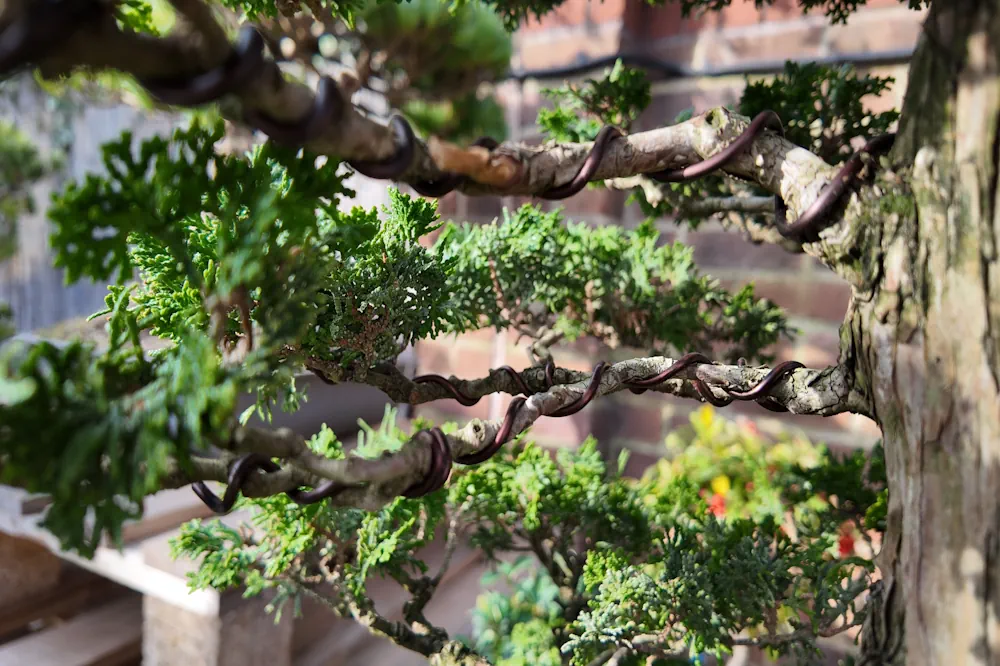
Hot weather changes how a wired branch behaves. Heat and dehydration reduce flexibility, increase pressure from the wire, and raise the risk of bark damage in a short time.
In high temperatures, your bonsai loses water faster through its leaves and shallow root system. As moisture drops, branches become less pliable and more brittle.
When you apply bonsai wire in hot weather, the tension you set in the morning can feel much tighter by afternoon. The branch shrinks slightly as it dehydrates, so the wire grips harder against the bark. This increases the risk of:
This is one of the main summer bonsai wiring risks. Rapid summer growth can also cause the branch to thicken quickly, which makes the wire cut in sooner.
If you must wire during a heatwave, work early in the morning and check the branch every few days. Remove or loosen the wire at the first sign of marking.
You should not wire a bonsai that you recently repotted. Repotting disturbs the roots and temporarily reduces water uptake.
In summer, that stress compounds. The tree already struggles to regulate moisture and temperature. Adding branch bending and wire pressure creates another demand on its limited resources.
Avoid wiring if your tree shows:
Many people ask, can I wire my bonsai during a heatwave? If the tree is newly repotted or already stressed, the answer is no. Wait until it shows strong, steady growth and stable watering before applying any wire.
Heat stress on wired branches shows up in specific ways. You need to look closely at the exact points where wire touches bark.
Watch for:
In severe cases, you may see tip dieback beyond the bend. That means water flow is restricted.
If you notice these signs, act quickly:
Bonsai branch wiring heat stress develops faster than many beginners expect. Close monitoring in summer protects both the branch and the overall health of your tree.
Wire type and gauge selection matter more than usual in summer, since branches thicken quickly. For a full breakdown of aluminium vs copper, gauge selection, and bark protection technique, see our guide to wiring bonsai in late summer.
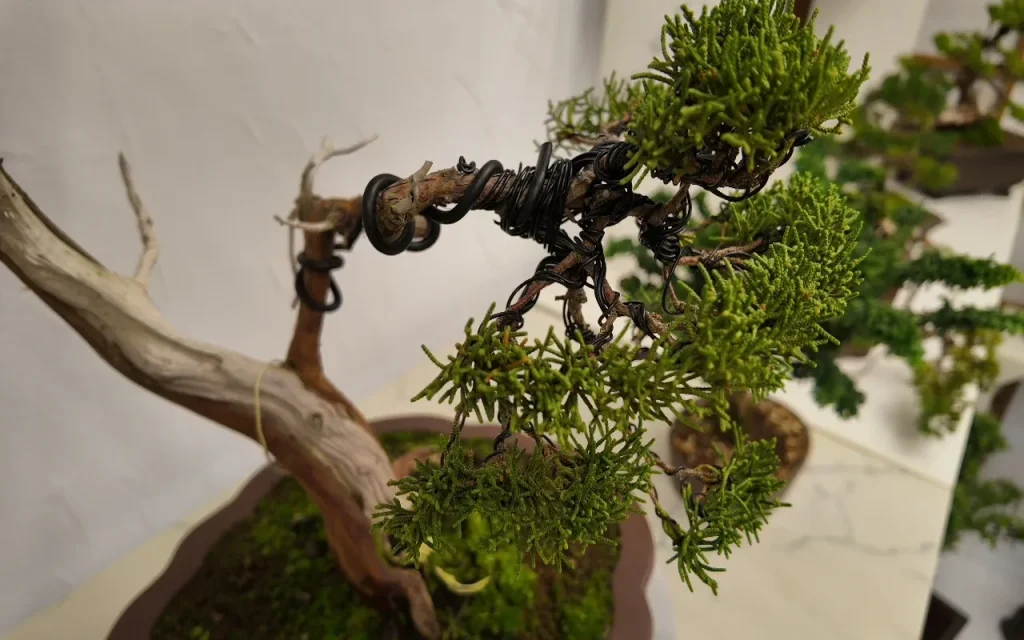
Wire in the early morning when branches are fully hydrated, and prepare the tree the evening before with a thorough watering. For the full step-by-step technique, angle, tension, and how to test tightness, see our late summer wiring guide.
Summer growth can be fast and forceful, especially on deciduous bonsai. You need to inspect wire often, spot early signs of pressure, and remove it before bonsai wire cuts into bark and leaves permanent marks.
In summer, check your wired bonsai at least once a week. For fast growers such as maples and elms, inspect every 5 to 7 days.
Warm temperatures and longer days speed up sap flow and branch thickening. You might see noticeable swelling in just a few weeks. Fine branches may set their shape within 4 to 8 weeks, though thicker structural bends take longer.
Pay closer attention after:
During these periods, growth can accelerate. If you ask, when should you remove bonsai wire in summer? The answer is simple: remove it as soon as the branch holds its shape and before the wire leaves a visible groove.
Keep inspections brief but consistent. Regular checks prevent problems that develop quickly in warm weather.
You can usually see and feel trouble before serious damage happens. Look closely at every coil of wire.
Watch for:
Run your fingertip gently along the branch. If you feel a ridge forming or the wire sits lower than the bark surface, it has started biting.
How fast does bonsai wire cut into bark in summer? In active growth, it can begin marking soft bark in as little as two to three weeks. Thin bark species show damage sooner than pines with thicker bark.
If you see spiral marks forming, remove the wire immediately. Waiting longer increases the risk of permanent scarring.
In summer, new growth is soft and easy to snap. Do not unwind the wire in one long piece.
Instead:
Support the branch with your free hand while cutting. This reduces movement and prevents cracks at the bend.
If the wire has already begun to bite, remove it straight away. Minor surface marks often fade as the branch thickens. Deep grooves may remain, especially on smooth bark species.
After removal, assess the branch:
If you find deeper damage, reduce stress by avoiding further wiring that season. Keep watering steady and protect the tree from intense afternoon sun for a short period. Careful monitoring now prevents lasting bonsai wire damage to bark and keeps summer shaping safe and controlled.
You can wire bonsai in summer, but timing changes how safely and effectively the branch sets. Autumn often gives you more control, less wire bite, and lower stress on the tree.
In early autumn, growth slows. That alone reduces one of the biggest summer bonsai wiring risks: rapid thickening that causes wire bite.
During summer, especially in the UK from June to August, deciduous trees can thicken quickly. You may need to check wire weekly to prevent marking. In autumn, checks every two weeks are often enough because expansion slows.
Cooler temperatures also matter. Heat increases water loss and stress, particularly if you bend branches at the same time. Autumn air is cooler and more stable, which makes it safer to shape without pushing the tree too hard.
Wood also hardens by late summer. Hardened shoots hold their position more reliably once wired. That means:
If you are asking when to wire bonsai UK growers favour, many experienced growers choose late September to early October for deciduous trees and autumn through early spring for conifers.
Sometimes it is technically safe to wire bonsai in summer, but it is not ideal.
You should strongly consider waiting until September if:
Wiring during strong growth increases the risk of deep wire marks within six to twelve weeks on deciduous trees. Fast swelling can hide the wire under foliage before you notice damage.
However, not all summer wiring is wrong. You may need to act now if:
Use this quick check:
| Question | If Yes | If No |
|---|---|---|
| Is growth slowing? | Conditions are suitable, proceed | Hold until new growth hardens off |
| Is the tree stressed? | Wait until recovered | Proceed carefully |
| Is shaping urgent for structure? | Wire selectively | Plan for later in the season |
When in doubt, delay major structural work until early autumn. You reduce risk, improve hold, and make monitoring easier.
Start with an honest assessment of the tree rather than the season. A healthy, established Juniper or Ficus in stable conditions is a reasonable summer wiring candidate. A stressed deciduous tree in peak July heat is not. That single assessment, made before picking up the wire, prevents the majority of summer wiring problems we see from UK growers.
In our experience at Miyagi Bonsai, the growers who achieve the best wiring results in summer are those who wire less and monitor more. A branch that holds its position before wire removal is a success. A branch with a permanent wire scar is not, regardless of how well the technique was applied.
Miyagi Bonsai stocks a carefully chosen range of indoor and outdoor bonsai trees alongside wiring supplies, including aluminium training wire in multiple gauges, copper wire, raffia, wire cutters, and concave cutters, with next working day UK delivery available on most orders. Every tree comes with a personalised care guide tailored to the species and your growing environment. We are rated 5 stars across over 100 Google reviews, and our team is on hand by email and phone if you have any questions about summer wiring timing, species-specific technique, or wire gauge selection.
You can wire in summer, but avoid extreme heat. When air temperatures rise above 30°C, trees already deal with water stress, and bending branches adds extra strain.
Do not wire during a heatwave when:
Instead, wait for a cooler spell. Work in the early morning, ensure the tree is well watered, and keep it out of direct afternoon sun after wiring.
If the tree looks stressed, postpone shaping. Health comes first.
In summer, branches thicken fast. Wire can start marking bark in as little as 3 to 4 weeks on vigorous trees.
Check your tree every 7 to 10 days during active growth. Look for:
Most summer wiring stays on for 1 to 4 months, depending on species and growth rate. Remove wire by cutting each coil with wire cutters. Do not unwind it, as that can tear bark.
Start simple. Use anodised aluminium wire if you are new. It bends easily and suits deciduous trees well.
Follow these steps:
Wire all branches you plan to shape before bending them. This gives better control and balance.
If two branches sit close together and have similar thickness, use one piece of wire to secure both. This is called double wiring and adds stability.
Stop wiring when branches become too thick or stiff to bend safely. Forcing old wood often causes cracks.
Use pruning or clip and grow when:
Clip and grow works well in summer because active growth heals cuts faster. Wiring shapes structure. Pruning refines it.
Junipers are flexible when young but brittle when old. Always bend slowly and in small increments.
Use these precautions:
For thicker branches, soak raffia in water and wrap it around the branch before wiring. Raffia spreads pressure and reduces splitting.
If you hear cracking, stop immediately. Minor splits can heal, but deep cracks may kill the branch.
Use guy wires when a branch is too thick, old, or brittle for coil wiring. Guy wires pull a branch downward rather than wrapping around it.
They work well for:
Anchor the wire to a strong root, trunk base, or pot. Protect the branch with rubber or plastic where the wire contacts bark.
Guy wires often use thin wire around 1 mm thick. Adjust tension slowly and check it regularly to prevent scarring.

