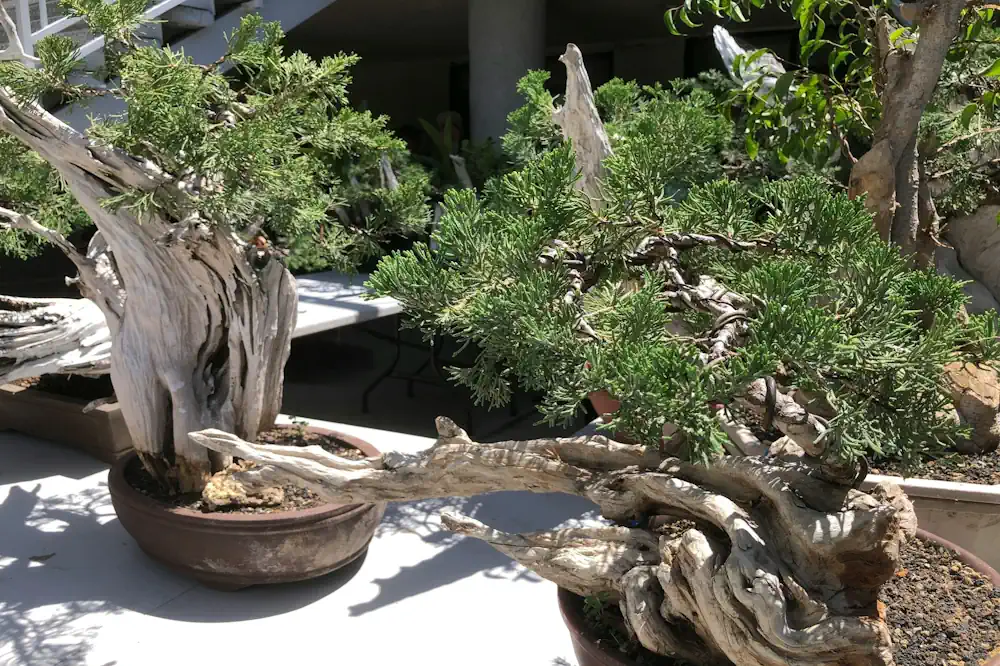
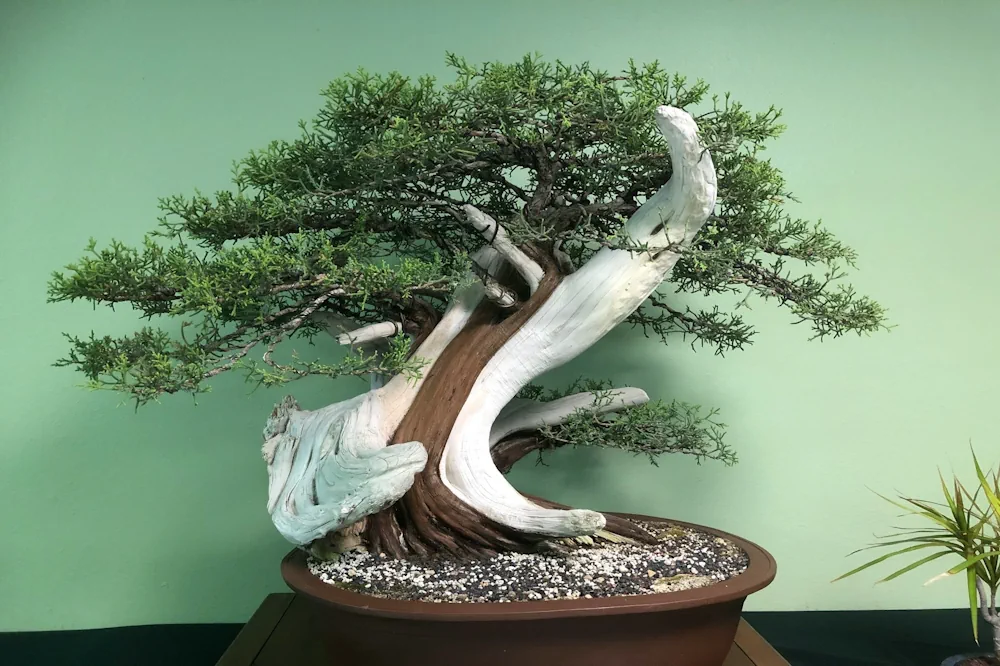
Before winter, inspect bonsai deadwood already present on your tree rather than treating it as a new carving project. Check both the wood’s condition and its surface colour, since rot needs action but ordinary fading often does not.
Signs of Rot or Insect Activity
Sound jin and shari feel hard and dry. Rotten wood may feel soft, spongy, flaky, or crumbly when you press it lightly with a fingernail or wooden probe.
Look closely in cracks, at the base of a jin, and where a shari meets live bark. Watch for:
- Dark brown or black patches that extend into the wood
- Soft fibres or powdery material that lifts away easily
- Small round boring holes, often with fine dust nearby
- Fresh insect frass, which can resemble pale sawdust
- Loose sections of wood or widening splits
- A musty or damp smell after rain or watering
Do not force a probe into the wood or cut deeply beside a live vein. Remove loose, clearly decayed material carefully, allow the area to dry, and address any active insect problem before applying more lime sulphur.
When Discolouration Is Normal Weathering
Lime sulphur-treated jin and shari commonly change from bright white to a softer silver-grey or dull grey over time. Rain, sun, algae, dust, and natural oxidation can make the surface look uneven, especially on outdoor bonsai.
Colour alone does not mean your bonsai deadwood is failing. If the wood remains firm, dry, and stable, normal greying is usually weathering rather than rot.
Use this quick check:
| What you see | What it usually means |
|---|
| Pale white becoming silver-grey | Normal lime sulphur weathering |
| Slight surface dullness or staining | Usually cosmetic |
| Firm wood with unchanged texture | No urgent reapplication needed |
| Dark colour plus softness or crumbling | Possible decay; inspect further |
Reapply lime sulphur when you want to refresh protection or appearance, not simply because the original white finish has faded.
Why is late autumn the right time to check deadwood?
Late autumn gives you a practical window to inspect jin and shari before persistent winter rain arrives. Wet wood stays damp for longer, which increases the chance of fungal growth and rot in untreated or damaged deadwood.
Check your deadwood before the November cutoff, while you can still work in dry, mild conditions. You avoid adding unnecessary stress when the tree is preparing for its dormant season.
Look closely for:
- Soft, dark, or crumbly wood
- Peeling old lime sulphur layers
- Cracks that hold water
- Moss, algae, or fungal growth
- Lime sulphur touching live veins or bark
If the wood is clean and fully dry, you can apply a thin fresh coat of lime sulphur with a small brush. Protect the soil, pot, and live tissue, as lime sulphur can mark surfaces and harm living parts of the tree.
Late-autumn treatment also separates deadwood care from a winter wash. A winter wash targets overwintering pests during dormancy, while lime sulphur on deadwood protects and lightens exposed wood. Do not treat them as the same job.
By checking now, you can let any treatment dry properly before harsh weather sets in. Then, in early spring, inspect again for winter damage before growth becomes active.
How do you reapply lime sulphur safely?
Reapply lime sulphur only to established, dry deadwood that has faded or weathered. In autumn, choose a dry, still day and allow enough daylight for the coating to dry fully.
First, clean the jin or shari with a dry, soft brush. Remove loose dust, algae and flaking old treatment, but do not scrape into sound wood or living veins.
| Prepare | Why it matters |
|---|
| Wear gloves, eye protection and long sleeves | Lime sulphur can irritate skin and eyes |
| Work outdoors with good airflow | The liquid has strong fumes |
| Cover the soil, pot and live bark | It can stain or damage living tissue |
| Use a small disposable brush | You can control the application precisely |
Follow the product label for dilution. For deadwood, many bonsai growers use a stronger mix than for pest control, but you should not assume that undiluted product suits every brand or tree.
Paint on a thin, even coat rather than flooding the wood. Keep it off foliage, buds, roots and the live edge around the deadwood. Let it dry before removing soil covers or moving the bonsai.
Do not apply in rain, strong wind, freezing conditions or intense heat. Keep children and pets away until the treated area is dry, and wash tools and hands afterwards.
If you are creating new jin or shari rather than maintaining existing deadwood, see our Advanced Bonsai Techniques guide.
Which situation applies to your deadwood this autumn?
You are inspecting deadwood for the first time this season.
Check jin and shari for bare wood, flaking treatment, cracks, and moisture exposure. If the previous lime sulphur coat has worn away, clean the surface and apply a thin new coat during dry weather.
Your deadwood looks grey but remains hard and dry.
Greying is often a normal ageing effect after lime sulphur fades. You can leave it for a natural look, or reapply a light coat if you prefer a whiter finish and added protection for bonsai deadwood.
You see dark patches, softness, or crumbly fibres.
Do not simply paint over damaged wood. Remove loose material carefully, let the area dry fully, and address possible decay before applying lime sulphur; severe rot may need specialist bonsai advice.
Your jin or shari has never received lime sulphur since creation.
Treat clean, fully dry deadwood to help limit fungal damage and slow weathering. Many growers reapply once or twice a year, often in early spring, but check the wood rather than following a fixed schedule.
Where do you start with pre-winter deadwood care?
In our experience, the most common deadwood mistake in autumn is treating lime sulphur application as a maintenance task to tick off rather than a decision to make. Growers see grey jin, assume it needs refreshing, and apply a coat without checking whether the wood underneath is sound.
Grey deadwood is usually healthy deadwood. Lime sulphur weathers to silver-grey on most outdoor bonsai within a season or two, and that natural finish is often an improvement on repeatedly painted chalky white.
The question worth asking before you reach for the brush is not whether the colour has changed but whether the wood is still firm. Press it with a fingernail in the areas most exposed to rain: at the base of each jin, inside cracks, and where shari meets live bark.
If it resists, clean off any algae or surface debris, assess whether the finish genuinely needs refreshing, and apply a thin coat only if it does. If it gives, that is rot beginning, and lime sulphur over soft wood solves nothing.
Deal with the decay first, let it dry, then protect what remains. One careful inspection takes ten minutes and tells you everything a visual check from arm’s length cannot.
Deadwood Care Supplies from Miyagi Bonsai
Miyagi Bonsai stocks application brushes, alongside a range of bonsai with jin and shari features. The products and recommendations in this guide reflect what we stock, use and see working for our customers every day. We are rated 5 stars across over 100 Google reviews, and our team is on hand by email and phone if you have any questions about assessing or treating deadwood on your tree. Next working day UK delivery is available on most orders.