In hot weather, you should check your bonsai daily and water whenever the topsoil feels dry, which can mean once or even twice a day during heatwaves.
Some trees may cope with watering three times a week in warm conditions, but during intense summer heat they often need far more frequent attention.
Hot weather can dry out a bonsai far faster than most plants in your garden. Shallow pots and free‑draining soil mean moisture escapes quickly, and in extreme heat a tree can lose a significant amount of water within hours. If you want strong growth and healthy roots, you need to adjust your bonsai care as temperatures rise.
This bonsai care guide will show you why heatwaves put your tree at risk, how to spot urgent signs of dehydration, and how to water correctly to avoid root rot. You will also learn how to protect your bonsai beyond watering, prevent common mistakes, and help a tree recover after heat damage.
Heatwaves put your bonsai under pressure from two sides. The soil dries far faster than usual, and high temperatures can damage roots and leaves even when the compost still feels damp.
Bonsai live in shallow pots. That small volume of compost heats up quickly when air temperatures rise above 30°C. In direct sun, the root zone can become much hotter than the surrounding air.
In normal UK summer weather, you might water once a day. During a heatwave, the same tree can dry out within hours. This is why many growers water morning and late afternoon when temperatures stay high.
Several factors speed up drying:
When your bonsai is drying out too fast, you may notice:
Hot compost also raises the risk of root damage. Unlike trees in the ground, bonsai roots sit close to the surface and cannot escape the heat.
Heat stress and drought stress often happen together, but they are not the same.
Drought stress occurs when the compost becomes too dry. The tree cannot take up enough water. Leaves wilt, growth slows, and tips may dry out.
Heat stress happens when temperatures exceed what the species can tolerate, often above 30 to 32°C for many temperate trees such as maples. Even with moist compost, high leaf temperatures can limit transpiration. Leaf tissue may scorch, and conifers can show branch tip dieback.
Look for these bonsai heat stress symptoms:
In short, if the soil is dry, you are dealing with drought. If the soil is moist but the tree still looks stressed, high temperature and intense sun are likely the main problem.
In hot weather, bonsai dry out much faster than standard houseplants because they sit in shallow pots with free-draining soil. You should not follow a fixed calendar. Instead, check your tree at least twice a day and water whenever the soil begins to dry.
In summer heat, bonsai watering frequency increases because higher temperatures speed up evaporation and transpiration. During very warm spells, you may need to water every day. In a heatwave, you may need to water twice a day.
Start with this simple routine:
Push a finger about 1–2 cm into the soil. If it feels dry at that depth, water thoroughly: the deep watering technique is covered in full below. In extreme heat, watering bonsai twice a day becomes normal, especially for small pots in full sun.
There is no single answer to how often to water bonsai in hot weather because several factors change the rate at which your tree dries out.
Key variables include:
For example, a small maple in a shallow pot, placed in full afternoon sun, may need watering morning and evening in summer. A larger pine in partial shade may only need daily watering.
Always adjust based on what you observe, not on habit.
Outdoor bonsai usually need more frequent watering in summer. Direct sun, wind, and high temperatures speed up drying.
In hot weather, outdoor trees often require:
Indoor bonsai dry out more slowly because they are protected from direct sun and wind. However, warm rooms and low humidity can still increase water demand.
Even indoors, you should check soil moisture daily in summer. Do not assume indoor placement means less care.
Whether indoors or outdoors, the rule stays the same: base your bonsai watering frequency in summer on soil moisture, not on a fixed schedule.
In hot weather, your bonsai can shift from properly hydrated to stressed within hours. You need to check the soil directly and watch for clear physical changes in the foliage and pot.
Start with the soil surface, but do not stop there.
If the top layer looks pale, dusty, or crusty, your bonsai may be drying out too fast. However, the surface can dry quickly in strong sun while the root zone stays slightly damp. Relying on appearance alone often leads to overwatering.
Use one of these simple tests:
Check the result:
| What you feel or see | What it means | Action |
|---|---|---|
| Cool and slightly moist | Roots still have access to water | Recheck later |
| Almost dry with faint moisture | Time to water today | Water thoroughly |
| Completely dry and dusty | Urgent watering needed | Soak fully, twice |
In hot weather, especially in small shallow pots, soil can go from “almost dry” to “bone dry” within a single afternoon. Never let it reach the point where the entire root ball feels dry.
Leaves often tell you before the roots fail.
Bonsai leaves drooping in summer usually mean the tree lacks water. The foliage looks limp rather than firm. This early-stage droop often improves within hours after a deep soak.
Watch for these warning signs:
If the soil has shrunk away from the sides of the pot, the root ball has likely dried significantly. Water immediately and ensure the entire root mass rehydrates.
Distinguish thirst from damage.
If leaves feel dry, brittle, and papery with large brown patches, the tree has already suffered heat or drought stress. Watering still matters, but damaged tissue will not recover. Your goal is to prevent that stage by acting at the first signs of dullness or droop.
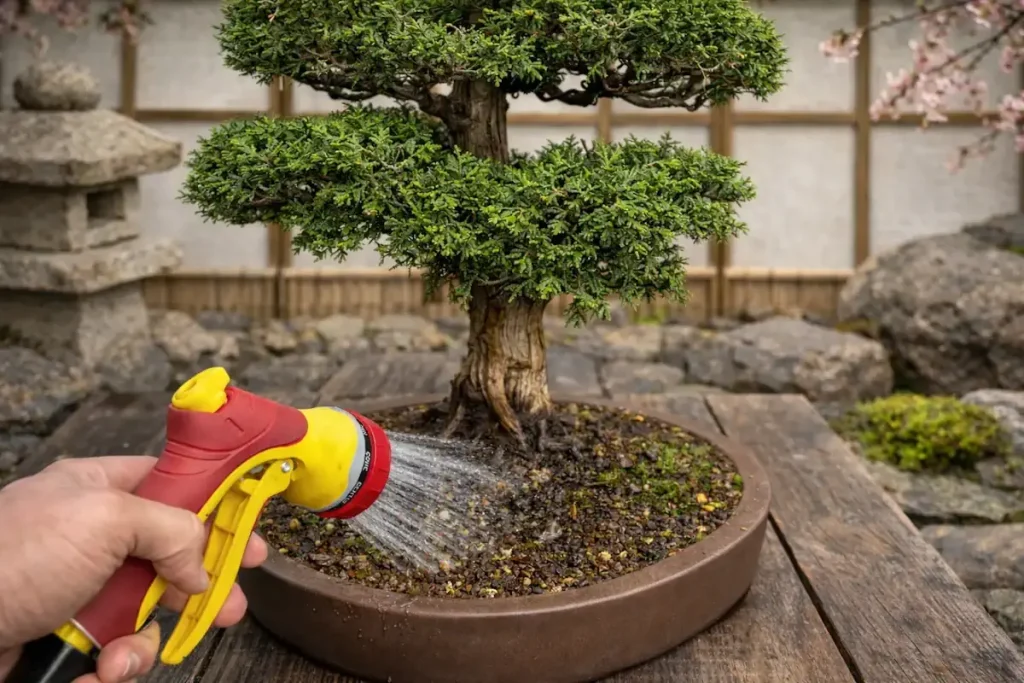
During a heatwave, you need to control timing, depth, and evaporation. Water at the right time of day, soak the entire root mass, and adjust when bonsai soil is drying too quickly.
The best time to water bonsai in summer is usually early morning, before temperatures climb above 25 to 30°C.
Morning watering allows the tree to absorb moisture before intense sun and heat increase evaporation. It also lets foliage dry during the day, which reduces the risk of fungal issues.
Evening watering can help during extreme heat, especially when temperatures stay above 30°C into late afternoon. However:
If temperatures exceed 32°C, check soil moisture again in late afternoon. In very hot spells, you may need to water twice a day, especially for small pots that dry out quickly.
Always check the soil first. Push a finger 1 to 2 cm into the surface. If it feels barely damp or dry, water thoroughly.
Deep watering bonsai means soaking the entire root ball, not just the top layer.
Surface watering is a common mistake. It wets the first centimetre of soil but leaves lower roots dry. During heatwaves, this stresses the tree and weakens fine feeder roots.
To water bonsai correctly:
This second pass matters. Bonsai soil mixes drain fast by design, especially those with akadama, pumice, or lava rock.
If your bonsai soil is drying too quickly:
Avoid standing the pot in water for long periods. Constantly wet roots in hot soil create more risk than brief dryness.
Many beginners ask, should you mist bonsai leaves in hot weather? Misting has limited benefit.
Light misting can briefly raise humidity around tropical species. It may reduce leaf temperature for a short time. However, water evaporates quickly in heat, often within minutes.
Keep these points in mind:
If you grow tropical bonsai indoors or in very dry air, occasional morning misting helps. For outdoor trees in a heatwave, focus on deep watering and shade instead.
Roots control survival. Leaf misting only supports comfort, not hydration.
Watering keeps roots alive, but it does not solve overheating soil, intense sun, or dry air. You need to control light, temperature, and humidity to protect outdoor bonsai in extreme heat.
Direct sun all day can push soil temperatures in shallow pots to dangerous levels, especially above 32°C. High soil heat damages roots faster than leaf scorch.
Use bonsai shade cloth in summer to cut light intensity by 30 to 50 percent. This reduces heat load while still allowing photosynthesis. For most species, especially maples and other thin‑leaf trees, this makes a clear difference during a UK heatwave.
Simple options include:
Keep Mediterranean species such as pine or olive in brighter spots, but avoid full exposure from midday to late afternoon. Even sun‑tolerant trees can suffer if the pot overheats.
Temporary shading works best when you install it before a heatwave peaks, not after leaves start to burn.
Positioning plays a major role in caring for your bonsai during a heatwave. Morning sun with afternoon shade suits most species in summer.
Move trees so they:
Brick walls and patios store heat and raise air temperature around the pot. This creates stress even if the soil is moist.
Airflow matters just as much. Good ventilation helps cool foliage and soil through evaporation. Space pots apart so air can move between them. Avoid tight clusters that trap hot, still air.
Do not place bonsai in completely enclosed sheds or garages. Stale air increases stress and can lead to dieback at branch tips, especially in conifers.
Dry air during a heatwave increases water loss from leaves. A humidity tray helps buffer this effect.
Fill a shallow tray with gravel and water, then stand the pot on top. The base must sit above the water line. As water evaporates, it raises humidity immediately around the tree.
This method works best for:
Mulching the soil surface also slows moisture loss. Add a thin layer of sphagnum moss, fine bark, or similar material. This reduces evaporation and keeps the top layer of soil cooler.
Mulch should stay thin so it does not block drainage. Combine mulching with shading and airflow control, because watering alone rarely protects bonsai from heat during a prolonged UK heatwave.
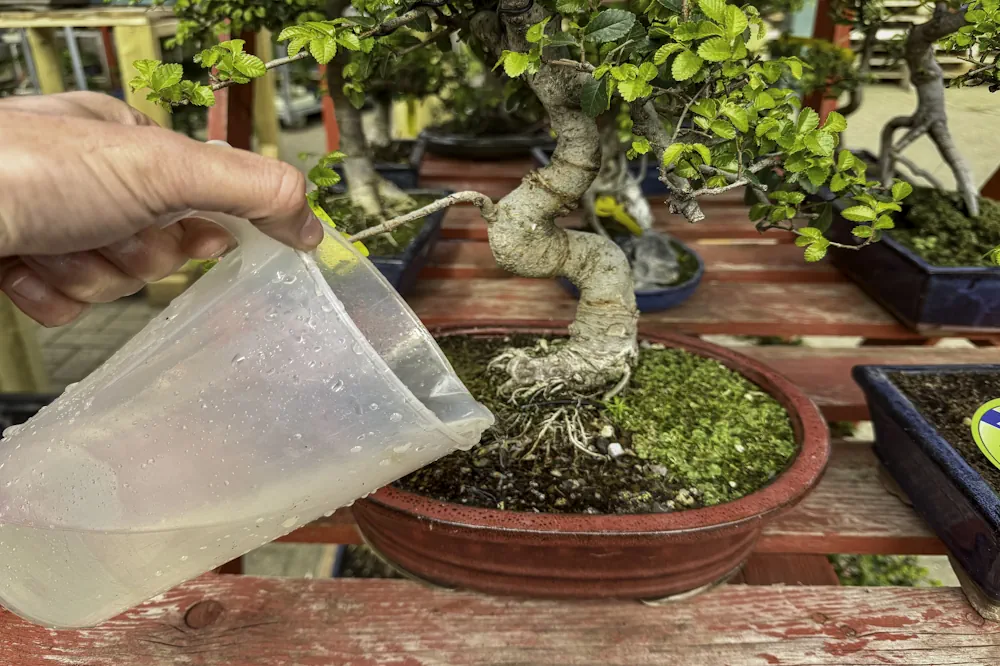
Hot weather pushes you to act fast, but quick decisions can harm your tree. Most problems come from giving too much water, watering at the wrong time, or misreading leaf damage and reacting the wrong way.
When temperatures rise above 32°C, the instinct is to water again and again. Dry soil creates concern, but constant watering creates a different problem.
An overwatered bonsai in summer often shows:
Well-structured bonsai soil drains quickly even in shallow pots. If you keep the compost saturated, roots cannot access oxygen. This leads to root rot, which spreads fast in warm, wet soil.
Avoid panic watering. Check moisture below the surface rather than reacting to the surface appearance, wait until the top 1 to 2 cm begins to dry, then water deeply and thoroughly as described in the technique section above.
Midday watering feels logical when the sun is strongest. In reality, it is often the least effective time.
At peak heat:
Instead, return to the timing guidance above: early morning is best, with a late afternoon check during extreme heat.
If you must water during the day, move the tree into shade first and water the soil directly, not the leaves.
Brown leaves do not always mean the tree needs more water. In hot weather, you may see bonsai leaf damage in hot weather, especially on maples and other thin-leaved species.
Leaf scorch often shows as:
Dehydration looks different. You may notice:
If you mistake scorch for thirst, you may overwater and trigger root problems. Instead of adding more water, provide:
Match your response to the actual cause. Check the soil first, then adjust light and watering together.
Heat and drought stress can look severe, but many trees recover if you act quickly. You need to confirm the tree is still alive, then rehydrate the root ball properly and reduce further stress.
After a heatwave, your bonsai may look worse a day or two later. Damage often shows up once cells have already dried out.
Common signs include:
In extreme heat, a small bonsai in a shallow pot can lose a significant portion of its available moisture within hours, far faster than most growers expect. Once air temperatures rise above 29°C, heat stress increases quickly. Root zone temperatures in shallow pots can climb significantly higher than air temperature, and it is at that root level where serious damage occurs in sensitive species.
To check if your bonsai is still alive, gently scratch a small area of bark with your fingernail. Green and moist tissue underneath means the tree is alive. Dry, brown tissue throughout several branches suggests severe damage.
If only the outer leaves are burnt but inner growth remains green, your tree’s chances of recovery are good. If the trunk and main branches are brittle and dry, recovery is unlikely.
If your bonsai is dying in hot weather, act immediately but calmly. Start with water.
This method rehydrates compacted, bone dry soil that repels surface watering.
Next, move your tree to bright shade, not deep shade. Protect it from direct midday sun and hot wind. Do not fertilise. Damaged roots cannot process feed and you risk further stress.
For the next one to two weeks:
You may wonder, can bonsai survive a heatwave? Yes, many can, especially if the roots did not overheat beyond recovery. Trees often push new buds within several weeks if the cambium layer remains alive.
However, if no new growth appears after four to six weeks in the growing season, and branches fail the scratch test, the damage was likely too severe to reverse.
Start with the soil. Everything else, shade, humidity trays, misting, timing, is secondary to keeping the root ball at the right moisture level. A correctly watered bonsai in full afternoon sun will cope better than an incorrectly watered tree in shade.
In our experience, the most common hot weather mistake is not underwatering; it is watering little and often rather than deeply and thoroughly. Light surface watering in a heatwave keeps the top centimetre damp while leaving lower roots dry. The tree shows stress, the grower waters again, and the cycle continues without ever properly hydrating the root ball. Deep watering once or twice a day, every time, solves this.
Miyagi Bonsai stocks a carefully chosen range of bonsai trees and care accessories, including humidity trays, specialist soils and shade equipment, with next working day UK delivery available on most orders. The products and recommendations in this guide reflect what we stock, use and see working for our customers every day. We are rated 5 stars across over 100 Google reviews, and our team is on hand by email and phone if you have any questions about caring for your bonsai in hot weather.
Start with the soil. Press your finger about 1 to 2 cm into the surface.
If it feels dry and firm, water thoroughly until water runs out of the drainage holes. In shallow bonsai pots, soil can move from moist to dry within hours when temperatures rise above 29°C.
Look for these signs:
During a heatwave, check at least twice a day. Do not wait for visible leaf wilt if you can avoid it.
In very hot weather, once a day is often not enough.
When temperatures exceed 32°C, many bonsai in shallow pots need watering once or even twice a day. Some growers water 2 to 3 times daily in peak summer, depending on soil mix and species.
As a practical guide in temperate UK summers:
Always base your decision on soil moisture, not the clock. Check first, then water.
Water early in the morning whenever possible.
Morning watering lets the roots absorb moisture before the hottest part of the day. It also reduces rapid evaporation.
Late evening is the second best option. Avoid watering during midday heat unless the tree shows clear signs of dehydration. If your bonsai looks stressed and dry, water immediately regardless of the time.
Indoor bonsai usually dry out more slowly than outdoor trees exposed to full sun and wind.
In summer:
Air movement and direct sun increase water loss outdoors. Indoors, central heating, fans, or bright south-facing windows can still dry soil quickly, so check daily.
Misting can raise humidity slightly, but it does not replace proper root watering.
For most temperate bonsai, including juniper, heat stress increases sharply above 29°C. The thermal death limit for many temperate species sits around 46°C.
Junipers tolerate heat better than many broadleaf species, but they still suffer if roots overheat in small pots. At air temperatures above 32°C:
Move your juniper to partial shade during extreme heat. Water thoroughly and monitor soil at least twice daily when conditions are severe.
Overwatering can happen even in summer if soil drains poorly.
Watch for:
Warm weather speeds up root rot when soil stays waterlogged. Keep the soil moist, not saturated. Good drainage and checking before watering protect your tree more than following a fixed schedule.