
Bonsai leaf scorch happens when your tree loses water faster than its roots can replace it, usually due to intense sun, heat, wind, poor watering, root damage, or excess fertiliser salts.
You notice the edges of your bonsai leaves turning brown and crisp, even though you water regularly. Leaf scorch often signals stress, not disease, and it can spread quickly if you ignore it.
You can trigger leaf scorch by leaving a shallow pot in strong midday sun, allowing soil to dry out, overfeeding with fertiliser, or exposing roots to temperature swings. Japanese maple and other thin‑leaved species show damage fast, especially in hot weather above 30°C when roots struggle to keep up with demand.
If you act early, you can limit the damage and help your tree recover. You will learn what causes leaf scorch, which species face the highest risk, how to spot early warning signs, and the practical steps that prevent and reverse the problem before it weakens your bonsai further.
Beginners whose bonsai has developed brown, crispy leaf edges:
Outdoor Japanese Maple growers:
Outdoor deciduous species growers (Chinese Elm, Hornbeam, Beech, Zelkova):
Indoor tropical species growers (Ficus, Carmona, Serissa):
Growers dealing with a UK heatwave:
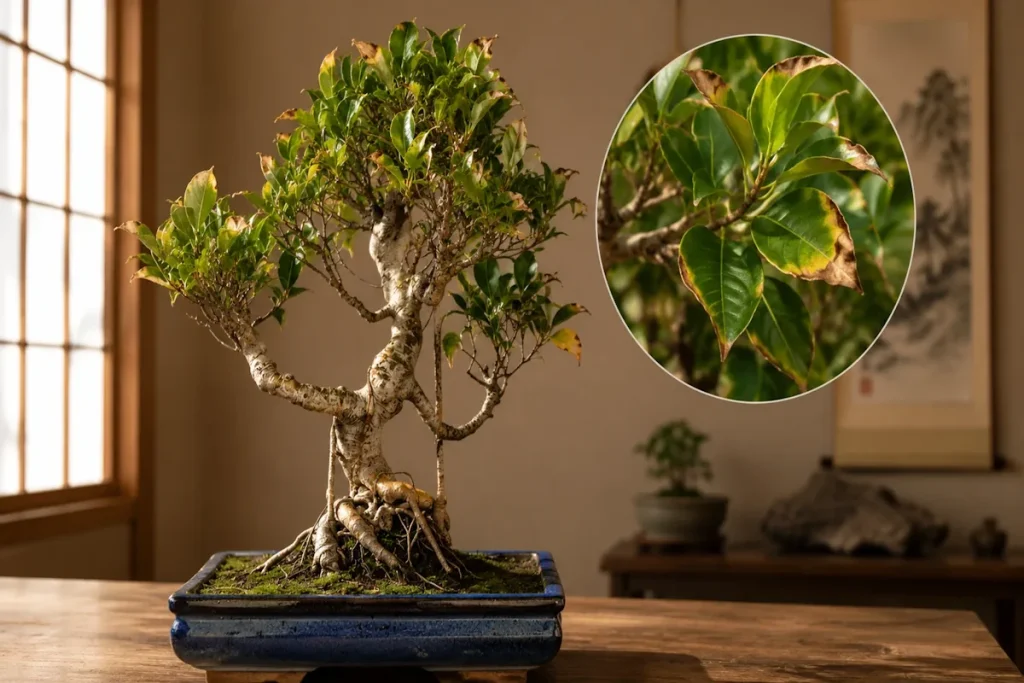
Bonsai leaf scorch happens when your tree loses water from its leaves faster than the roots can replace it. In summer, intense light and high temperatures combine to dry and overheat delicate foliage, especially in shallow bonsai pots.
You usually see brown, crispy leaf edges, pale patches, or whole margins that look burnt. This is often called bonsai leaf burn in summer, and it develops quickly during hot, bright spells.
At first glance, bonsai leaf scorch and underwatering look similar. Both can cause brown leaves. The pattern tells you what is really happening.
With leaf scorch, you typically notice:
This often affects species such as Japanese maple, beech, and hornbeam during strong sun above 25–30°C, especially if the leaves developed in shade.
With underwatering damage, the whole leaf wilts.
You see drooping growth, dry soil throughout the pot, and sometimes leaf drop. The tree looks limp, not just burnt at the edges.
Physiologically, scorch is about excess light and heat overwhelming the leaf, while underwatering is about insufficient moisture in the root zone. In practice, both can happen at the same time during heatwaves.
Your bonsai sits in a very shallow container. That design increases risk in summer.
Shallow pots:
On a sunny UK patio, dark pots can exceed 40°C at the root surface even if air temperature is 28°C. Fine feeder roots near the pot wall can suffer heat stress. When roots slow down, water uptake drops.
Now your leaves continue to transpire in bright light.
The roots cannot keep up. The result is bonsai too much sun symptoms such as scorched margins and dry tips.
Trees recently repotted or root-pruned are even more vulnerable because their root systems are temporarily reduced.
Light alone does not usually cause scorch in UK conditions. The real issue is the combined effect of strong sun and high temperature.
In full summer sun:
For Japanese maple bonsai, leaf scorch risk increases when temperatures move beyond 25°C in direct sun, especially with low humidity and wind. Wind dries the leaf surface further, which increases stress.
Intense light drives photosynthesis.
At the same time, heat disrupts water balance. When water loss exceeds uptake, cells at the leaf edge die. That is how heat and light combine to burn bonsai leaves.
If you move a shade-grown tree straight into full sun, damage can appear within a single hot afternoon. Gradual acclimatisation reduces this risk.
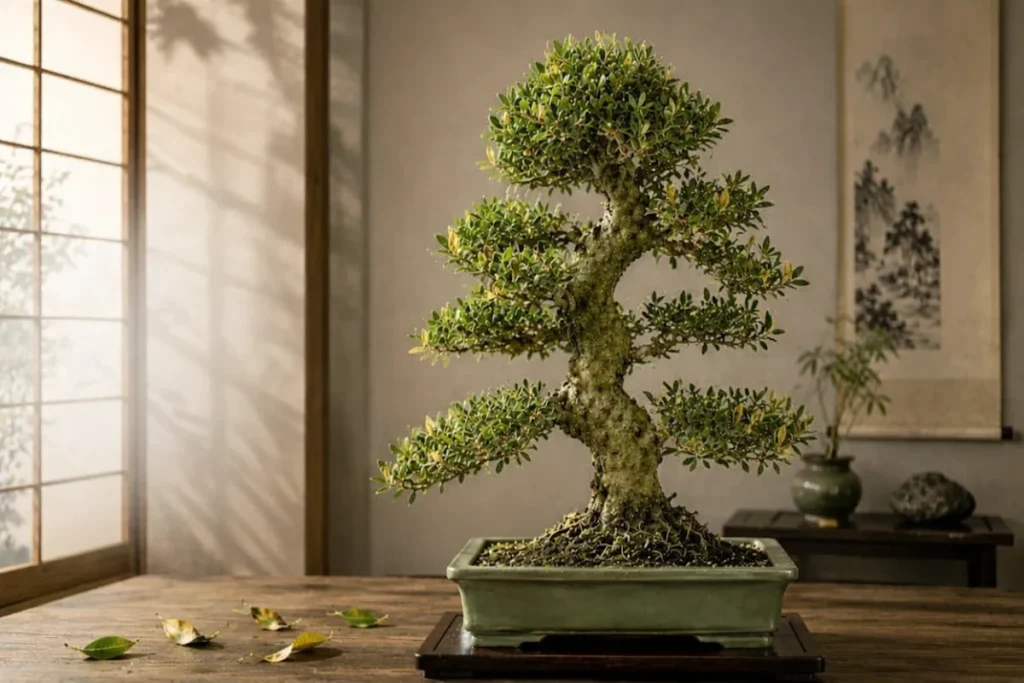
Some bonsai cope well with strong sun, while others show damage within hours. Leaf thickness, native habitat, and whether you grow the tree indoors or outdoors all affect how easily you see bonsai sunburned leaves and other bonsai too much sun symptoms.
Risk level: High
Japanese maple is the species most often linked to Japanese maple leaf scorch bonsai problems. Its leaves are thin, soft, and often finely divided, which means they lose moisture quickly in heat and wind.
You will usually notice:
Even one unusually hot, sunny day can cause damage, especially if the tree sits in full afternoon sun. Shallow bonsai pots dry fast, which increases stress on the roots.
Place your maple where it gets morning sun and afternoon shade. In summer, protect it from strong midday rays and drying winds. Keep soil evenly moist, but not waterlogged, to reduce dehydration stress.
Damaged leaves rarely kill the tree, but repeated scorch weakens growth over time.
Risk level: Moderate
Chinese elm, Zelkova, beech, and similar deciduous species tolerate more sun than Japanese maple, but they can still scorch under harsh conditions.
Chinese elm, in particular, can show:
These species often need 4–6 hours of sunlight, yet they benefit from partial shade during intense summer afternoons. Sudden changes cause problems. If you move a tree from shade to full sun without gradual adjustment, you may see scorch within days.
Wind, low humidity, and inconsistent watering increase the risk. Keep watering steady and adjust placement seasonally. If your elm grows in full sun, acclimatise it slowly in spring rather than exposing it all at once.
Risk level: Moderate to High (indoors in summer)
Ficus bonsai tolerate strong light outdoors, but problems often start when you grow them indoors near south‑ or west‑facing windows.
Glass can:
This creates classic ficus bonsai leaf burn. You may see brown patches in the centre of leaves, not just at the edges. Leaves may also yellow and drop after a sudden spike in temperature.
In summer, direct sun through glass can exceed outdoor temperatures. Move your ficus slightly back from the window or use sheer curtains to diffuse light.
Monitor soil daily during warm spells. Indoor bonsai dry faster than you expect when exposed to amplified sunlight.
Risk level: Low
Juniper, pine, and olive evolved in bright, open environments. Their foliage is thicker, waxier, or needle-like, which reduces moisture loss.
These species:
You can still see stress if watering fails, but true leaf scorch is less common. Problems usually relate more to drought than direct light itself.
Even with sun‑tolerant species, protect recently repotted trees and newly styled specimens. Strong roots and gradual acclimatisation remain important.
If you want a bonsai that handles bright conditions with fewer scorch issues, these species offer a more forgiving starting point.
You can limit damage from bonsai leaf scorch if you spot the first visual changes on the leaves and act quickly. Focus on where the damage starts, how the leaf tissue feels, and whether the problem affects the whole tree or only exposed areas.
Early bonsai leaf scorch shows up as brown or yellowed edges along the leaf margins. The tips often dry first, then the discolouration spreads inward.
In summer, you may notice:
If your bonsai leaves are browning in summer but the centre of the leaf remains partly green, scorch is likely. The texture is a key clue. Crispy usually means heat stress, strong sun, or dehydration rather than rot.
On thin-leaved species like Japanese maple, damage can appear within days of intense sun or hot wind. Severely scorched leaves may drop, but mild scorch often stays attached.
Scorch usually starts on the outer and upper canopy, especially on the side facing direct sun. South- or west-facing exposure in the UK often shows the first damage during hot spells.
It appears there because:
You might ask, does bonsai leaf scorch mean too much sun? Often yes, but not always. It can also mean the roots cannot supply enough water during heat, even if you water regularly.
Inner or shaded leaves usually stay green at first. If the entire tree browns evenly, look beyond scorch.
Several issues look similar. Use texture, pattern, and timing to narrow it down.
Quick comparison:
| Problem | Leaf Texture | Where It Starts | Key Clue |
|---|---|---|---|
| Bonsai leaf scorch | Dry, crispy edges | Sun-facing, outer leaves | Brown margins with green centres |
| Underwatering | Limp, then dry | Whole canopy | Soil very dry; leaves wilt before browning |
| Overwatering / root damage | Soft, sometimes yellow | Random or inner leaves | Soil wet; possible sour smell |
| Nutrient deficiency | Soft, pale or yellow | Often older leaves first | Even discolouration, not just edges |
| Fungal disease | Spots with defined borders | Scattered | Dark lesions, may spread in circles |
When comparing bonsai leaf scorch vs underwatering, check the soil. If it is dry several centimetres down and the tree wilts before crisping, underwatering is more likely.
Scorch damage looks like it has been “burnt” from the outside in. Nutrient issues change colour but rarely create sharp, brittle margins.
Inspect your tree daily during hot weather. Early detection gives you the best chance to prevent further leaf loss.
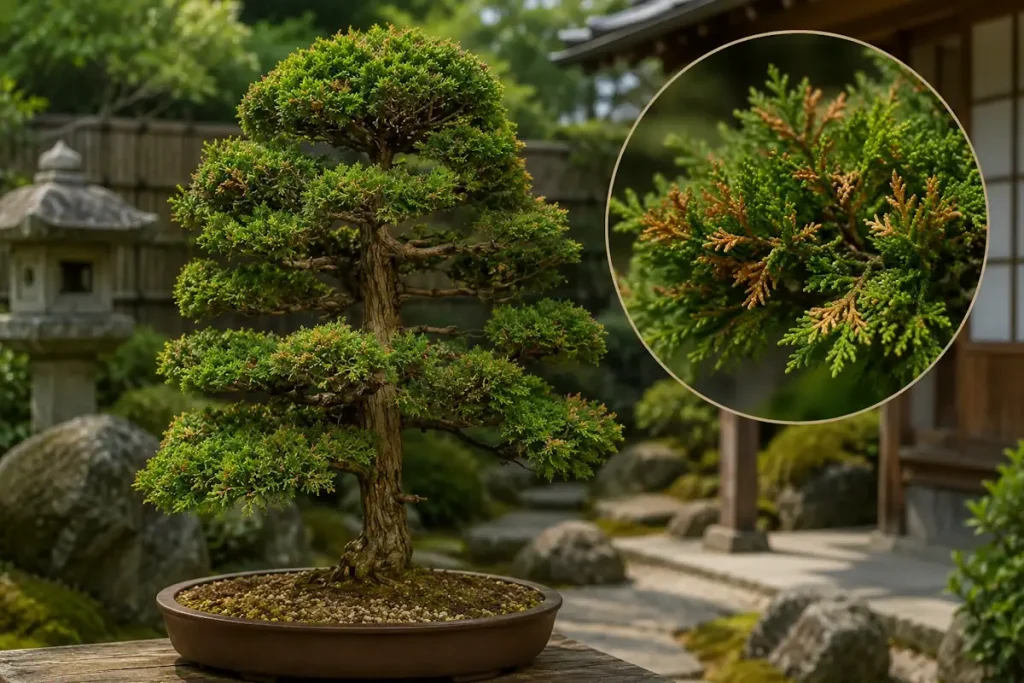
You can prevent bonsai leaf scorch by controlling sun exposure, heat, and water loss before damage appears. Smart summer positioning, correct shade use, and gradual light adjustment protect leaves from turning brown at the edges in hot weather.
Your bonsai positioning in summer determines whether leaves stay healthy or scorch.
Place your tree where it receives morning sun and afternoon shade. Morning light (roughly 7am–11am) is bright but cooler, which supports photosynthesis without extreme heat stress.
Avoid exposed patios, balconies with reflected heat, and spots against south‑ or west‑facing walls. Hard surfaces radiate heat and dry shallow bonsai pots quickly.
For most species:
If you often ask, “Why are my bonsai leaves going brown at the edges in summer?” the answer is usually too much direct afternoon sun combined with fast soil drying.
Keep pots off hot stone or concrete. Use a wooden bench or slatted stand to reduce heat build‑up under the container.
Not all sun exposure is equal.
The most damaging period is typically midday to 4pm, when light intensity and temperature peak. During this window, transpiration increases rapidly, and shallow bonsai roots struggle to replace lost moisture.
This imbalance causes:
Morning sun warms the tree gradually and allows steady water uptake. Afternoon sun, especially in heatwaves, overwhelms thin‑leaf species such as Japanese maple.
Indoor bonsai moved outdoors are especially vulnerable. They lack natural acclimatisation and can scorch within days.
If you want to protect bonsai from sun scorch, control when the tree receives light, not just how much.
Shade cloth works well when you use the correct density and positioning.
The right bonsai shade cloth percentage depends on species and climate:
| Species Type | Recommended Shade Cloth |
|---|---|
| Japanese maple | 40–60% |
| Tropical bonsai (Ficus, etc.) | 30–50% |
| Juniper and pine | 20–40% |
Higher percentages block more light. Avoid 70%+ unless temperatures are extreme, as too much shade weakens growth.
Position shade cloth above the tree, not wrapped tightly around it. You want filtered light and airflow, not trapped heat.
Leave space between the cloth and foliage. Direct contact can create hot spots.
Use shade cloth mainly during peak summer or heatwaves. Remove it gradually as temperatures stabilise.
Sudden light changes often cause scorch.
If you move a bonsai from shade to stronger sun, follow a 7–14 day transition plan:
Never shift a tree from indoor light straight into full outdoor sun. Acclimatisation allows leaves to thicken and adjust to higher light intensity.
If edges begin to brown, reduce exposure immediately and provide temporary afternoon shade.
Gradual adjustment prevents stress and keeps foliage firm, green, and resilient through summer.
Summer sun through glass can overheat leaves and pots within hours. You need to manage direct light, reduce trapped heat, and watch for early signs of stress to prevent bonsai sunburned leaves and long-term damage.
South and west facing windows receive the strongest sun in the UK during summer. West facing glass is often the worst because it delivers intense afternoon heat when indoor temperatures already peak.
Glass does more than let light in. It amplifies heat and blocks airflow, creating a hot pocket between the window and your bonsai. On a warm day, the area right against the pane can become significantly hotter than the rest of the room.
Shallow bonsai pots heat up quickly. Ceramic containers hold warmth, which can raise root temperatures and dry soil fast.
Species react differently:
This combination of strong light, trapped heat, and fast soil drying leads to bonsai leaves browning in summer.
Start with distance. Move your bonsai 30–100 cm back from the glass rather than keeping it on the sill. Even a small shift reduces direct heat exposure.
Next, diffuse the light:
You want bright, indirect light, not direct beams hitting leaves for hours.
Rotate your tree every week during summer. This prevents one side from taking all the heat and reduces uneven growth or one-sided leaf scorch.
During heatwaves, move sensitive trees completely away from south or west windows. Place them in a bright room with indirect light instead. Good bonsai positioning in summer often means adapting day by day rather than sticking to one fixed spot.
Water thoroughly in the morning and check soil again by late afternoon. Hot glass dries pots faster than you expect.
Heat damage usually appears first on the side facing the window. Check leaves closest to the glass.
Look for:
Bonsai sunburned leaves often feel brittle, not soft. In ficus, leaf burn shows as tan or light brown blotches that do not recover.
If you notice bonsai leaves browning in summer despite regular watering, heat from the window is likely the cause. Also check the pot surface. If it feels hot to the touch in the afternoon, roots are under stress.
Act quickly. Move the tree back, add light diffusion, and monitor new growth. Fresh leaves without scorch confirm you have corrected the light and heat level.
Watering at the right time and in the right way helps your bonsai cope with intense summer heat. Good timing, deep soil hydration, and dry foliage during peak sun all lower the risk of bonsai leaf burn in summer and improve bonsai leaf scorch recovery.
You reduce leaf scorch risk when you water early in the morning, ideally before temperatures begin to rise. At this time, the roots absorb moisture fully and store it before peak heat increases evaporation.
When your bonsai enters the hottest part of the day already hydrated, it can cool itself through transpiration. This natural process releases water vapour through the leaves, lowering leaf temperature and limiting bonsai too much sun symptoms such as browning tips and crispy edges.
If you water too late, especially after the soil has dried out in strong heat, the tree may already be under stress. Dry roots cannot supply enough water to the leaves, which leads to:
Check soil moisture daily during hot weather. Water when the top layer feels slightly dry, but never allow the root ball to dry out completely.
Midday watering creates two problems.
First, watering during peak heat causes rapid evaporation from the soil surface. Much of the moisture never reaches the deeper roots, and the soil may dry again within hours. Wetting foliage repeatedly in warm, humid conditions can also create an environment that favours fungal problems on susceptible species.
Instead:
If your tree shows signs of bonsai too much sun symptoms, move it to morning sun with afternoon shade rather than relying on misting. Adjusting light exposure works better than cooling leaves with water.
In hot weather, deep soaking always outperforms surface misting for scorch prevention.
When you water slowly and thoroughly, moisture reaches the entire root system. This supports steady water uptake throughout the day. Consistent soil moisture allows stable transpiration, which reduces leaf temperature and protects against scorch.
Surface misting only wets the top layer. It:
Water until it drains from the bottom of the pot. This flushes excess salts and reduces fertiliser buildup, which can also contribute to leaf scorch.
During heatwaves, you may need to water once or even twice daily depending on pot size, soil mix, and species. Deep, consistent hydration gives your bonsai the best chance to resist stress and recover from mild scorch damage.
Bonsai leaf scorch recovery depends on acting quickly, correcting the original cause, and giving the tree time to stabilise. You need to reduce stress, manage watering carefully, and avoid pushing new growth too soon.
When you first see bonsai leaves browning in summer, move the tree out of harsh sun straight away. Place it in bright, indirect light or dappled shade.
Then check the soil. If it feels dry below the surface, water deeply until water drains freely from the holes. This helps rehydrate roots without leaving them waterlogged.
To avoid confusing bonsai leaf scorch vs underwatering, look at the pattern:
Hold off on fertiliser for at least 2–4 weeks. Feeding a stressed tree can worsen root damage and increase salt buildup.
Also:
Your aim is to stabilise moisture and light, not force new growth.
Do not rush to strip the tree bare. Slightly scorched leaves can still photosynthesise and support recovery.
Remove leaves only if they are:
Use clean, sharp scissors. Trim at the leaf stem without tearing bark.
If more than 50% of foliage is damaged, prune gradually over 1–2 weeks rather than all at once. Sudden heavy pruning adds stress.
Wait to resume feeding until you see new buds swelling or fresh green shoots. At that point, use a diluted, balanced fertiliser at half strength for the first few feeds.
Patience matters more than neat appearance during bonsai leaf scorch recovery.
Recovery time varies by species, health, and root condition.
| Species Type | Typical Recovery Time | Notes |
|---|---|---|
| Ficus (indoor) | 2–4 weeks | Often rebounds quickly in warm, stable conditions |
| Chinese Elm | 3–6 weeks | May drop damaged leaves before pushing new growth |
| Juniper | Several months | Brown foliage won’t recover; spreading branch dieback needs root inspection, not just time. |
| Japanese Maple | 4–8 weeks | Sensitive to repeat sun exposure |
You know recovery has started when you see:
Warning signs of decline include blackened shoots, soft roots, and continued leaf drop with no new buds after several weeks.
Some species will not regain scorched leaves. Focus on healthy new growth instead of cosmetic damage. Consistent light, careful watering, and gradual return to normal feeding give your tree the best chance to recover.
Act early when heat rises. The checks below take less than five minutes each morning and prevent the majority of summer scorch before it starts.
Start each morning before 10am. Sun angle and heat build quickly, and early adjustments protect soft foliage.
1. Position and light
2. Shade cloth
3. Soil moisture
4. Pot temperature
These small checks help prevent bonsai leaf scorch before visible browning appears.
When forecasts predict 30°C or higher, act before damage starts. Leaf scorch often follows sudden heat, dry wind, or strong midday sun.
Immediate protection steps
Avoid watering leaves during peak sun. Wet foliage plus intense light can worsen damage.
Species triggers for extra care
Root zone control
You protect bonsai from sun scorch by controlling exposure, cooling roots, and keeping moisture steady during extreme weather.
Start with position rather than watering. Find morning sun with afternoon shade, confirm the tree is not within direct striking distance of glass amplifying summer heat, and elevate pots off heat-retaining surfaces. Those three positioning decisions prevent more leaf scorch than any watering adjustment, and they can be implemented before the next hot day arrives.
In our experience at Miyagi Bonsai, the growers who avoid summer leaf scorch most consistently are those who adjust position proactively in late May or early June rather than reactively after the first hot spell. Brown crispy edges are a signal that the tree has already experienced cellular damage. The goal is to create conditions where that signal never appears.
Miyagi Bonsai stocks a carefully chosen range of indoor and outdoor bonsai trees alongside summer care supplies including shade cloth, free-draining bonsai soils, fine-rose watering cans, humidity trays, and balanced fertilisers, with next working day UK delivery available on most orders. Every tree comes with a personalised care guide tailored to the species and your growing environment. We are rated 5 stars across over 100 Google reviews, and our team is on hand by email and phone if you have any questions about leaf scorch prevention, species-specific summer positioning, or recovery after heat damage.
Brown, crispy edges usually point to leaf scorch caused by water stress.
This often happens when:
When water uptake cannot keep up with water loss from the leaves, the margins dry first. You will often see yellowing that turns brown along the edges before the whole leaf suffers.
Temperature swings and hot, dry air can make this worse. A bonsai placed near a radiator or in full summer sun can scorch quickly.
In practice, a few issues cause most cases of dry leaf tips:
Too much fertiliser can be just as harmful as too little. Excess salts collect in the soil and interfere with water absorption, which leads to browning at the edges.
Soil pH that drifts too high or too low can also block nutrients, even if they are present.
First, stabilise the environment before you prune or feed.
Take these steps:
Avoid sudden changes. Gradual adjustments reduce further shock.
Do not try to “fix” scorch with extra fertiliser. That often makes the problem worse.
You can remove severely damaged leaves if they are mostly brown and dry.
Use clean, sharp scissors and avoid stripping too many leaves at once. The tree still needs healthy foliage for photosynthesis.
If a leaf is only slightly scorched at the edges, leave it in place. The green parts still produce energy for recovery.
For species like Japanese maple, mild seasonal scorch does not always require heavy pruning.
In many cases, yes, your bonsai can recover.
If the roots remain healthy, you will usually see improvement within a few weeks during the growing season. New leaves may replace damaged ones in the same season.
Severe cases involving root rot or major dehydration take longer. Recovery can stretch over several months, especially if you needed to prune roots.
The key factor is root health. If the root system stays viable, the tree often rebounds.
Consistency prevents most repeat problems.
Focus on these basics:
Small, steady adjustments work better than dramatic changes. When you keep moisture, light, and feeding balanced, leaf scorch becomes far less likely to return.

