
To keep bonsai roots cool in summer, place the pot out of direct afternoon sun, use light‑coloured or breathable containers, insulate the soil surface with mulch, and water thoroughly in the morning so the root zone stays evenly moist without becoming waterlogged.
Roots function best in soil temperatures around 18°C to 24°C, and once pots rise well above that, stress builds quickly.
Summer heat does not just scorch leaves. It cooks the pot. When your bonsai roots overheat, they lose the ability to take up water and nutrients, even if the soil looks moist.
If you focus only on shading foliage, you miss the real problem. In bonsai care, the container and surface beneath it often heat up faster than the air. Simple changes to placement, pot choice, and watering habits can lower root temperature and prevent long term damage during heatwaves.

Most growers watch leaf scorch and wilting, yet summer damage usually starts below the soil surface. If you want effective bonsai root protection in hot weather, you must focus on bonsai soil temperature in summer rather than just shading foliage.
For the full explanation of why roots overheat before leaves show stress, and how root zone temperature differs by species, see our guide to bonsai root heat stress.
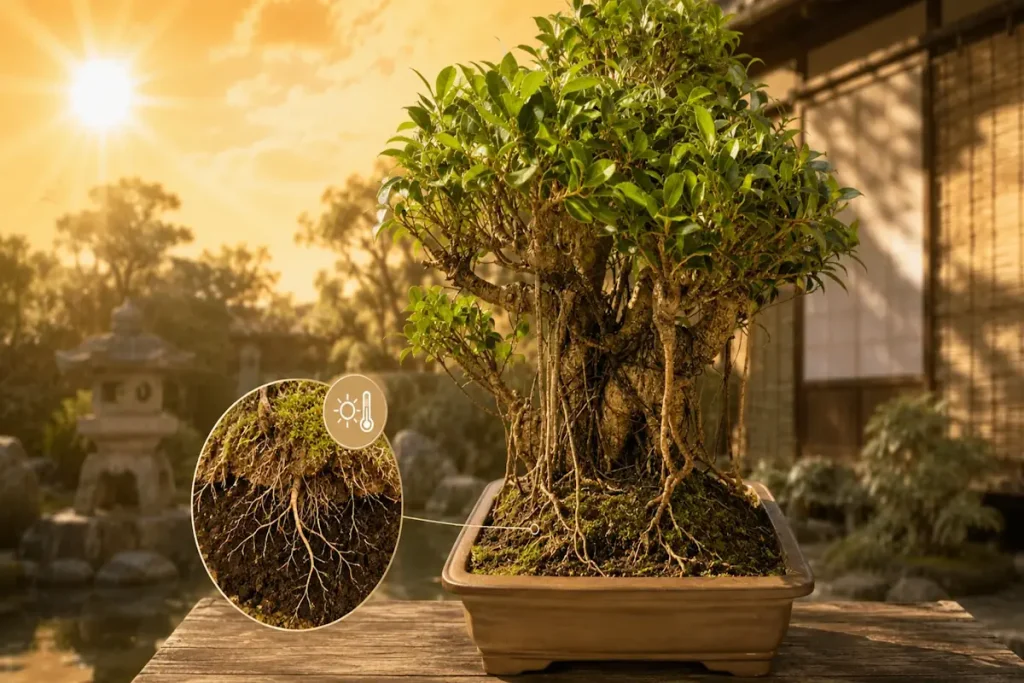
Your bonsai pot material, heat retention, and colour directly affect root zone temperature. In full summer sun, the difference between pot types can mean several degrees at soil level, which is enough to stress fine feeder roots.
If you ask, does pot colour affect bonsai root temperature? The answer is yes.
Dark glazed ceramic absorbs significantly more radiant heat than light unglazed clay. In full afternoon sun, the root zone in a dark glazed pot can run several degrees warmer than the same tree in a light, unglazed clay container.
That difference matters. Bonsai roots function best in stable, moderate temperatures. When soil heats up repeatedly, you risk:
Unglazed clay performs better in summer for two reasons:
Evaporation through the clay has a mild cooling effect. That makes light unglazed clay one of the best choices for managing bonsai pot overheating in summer, not just for drainage but for thermal control.
If you grow in strong afternoon sun, avoid dark glazes unless you can provide consistent shade.
Black plastic pots are among the worst performers for heat retention. They absorb heat quickly and hold it, especially when sitting on hot paving or benches.
In summer, the root ball in a black plastic pot can become excessively warm even when the air temperature feels moderate. This increases watering frequency and raises the risk of root stress.
Light coloured mica pots perform much better. They:
If you use plastic, manage it actively:
You do not need to replace every plastic pot. You just need to control direct solar exposure.
You can lower root temperatures with small, low cost changes.
1. Wrap the pot sides
Use light coloured cloth, hessian, or shade fabric. This reduces direct radiant heating and is easy to remove in autumn.
2. Create an insulating air gap
Place your bonsai pot inside a slightly larger container. The air space between the two pots slows heat transfer.
3. Paint terracotta with breathable light paint
A pale, breathable masonry or mineral paint reflects more sunlight while still allowing some airflow.
4. Apply sphagnum moss on the soil surface
A thin layer of long fibre sphagnum reduces direct sun on the soil and slows surface heating.
These adjustments directly reduce bonsai pot overheating in summer without changing your overall setup. Small changes at pot level can stabilise the entire root environment.
Where you place your bonsai in summer affects root temperature more than pot colour, wrapping, or occasional misting. A heat‑retaining surface can keep feeding warmth into the base of the pot long after the air begins to cool.
If you are asking, how do I stop my bonsai pot overheating in summer, start by looking down.
Concrete, paving slabs, stone patios and metal tables absorb heat all day. Surface temperatures on concrete can rise far above air temperature in full sun. Even when the air sits at 30°C, the surface itself can exceed 45°C.
That stored heat does not disappear at 5 or 6 pm. It radiates back upward for hours.
A bonsai pot sitting directly on concrete at 6 pm still receives heat from below, even as the air cools.
Research shows container soil in direct sun can reach around 46°C. Root function declines once soil temperatures pass roughly 35°C. Above 40°C, damage begins.
When you combine direct sun with a heat‑soaked surface, you create constant upward heat flow into the root zone. This drives bonsai pot overheating in summer, especially in shallow containers.
Wood behaves very differently from stone or metal. It does not store and radiate heat to the same extent.
When you place your bonsai on a wooden bench, you reduce conductive heat transfer from below. Add a slatted top and you improve it further.
Slats allow:
Even lifting your pot 5 to 10 cm above a solid surface can make a measurable difference to root zone temperature.
This simple change in bonsai bench elevation in summer often lowers soil heat more effectively than wrapping pots or changing pot colour. It directly addresses the main source of sustained heat.
If you want to reduce bonsai soil heat quickly, elevation should be your first adjustment.
Surface choice can shift root temperatures by several degrees. That difference matters.
Consider this comparison:
| Surface Type | Heat Retention | Effect on Pot Base |
|---|---|---|
| Concrete or stone | High | Continues heating into evening |
| Metal table | Very high | Rapid heating, strong upward radiation |
| Wooden slatted bench | Low to moderate | Allows airflow and cooling |
A pot on concrete in full sun may experience base temperatures close to the surface temperature beneath it. Move that same pot onto a raised wooden bench and you remove the constant upward heat source.
In practical terms, this can mean keeping soil closer to the low 30s°C instead of creeping towards 40°C on hot days.
Before you mist, wrap, or change pots, move your trees off heat‑retaining surfaces. In summer bonsai surface placement is not a minor detail. It is the foundation of root temperature control.
You can lower root temperature quickly by blocking direct sun from the pot and using evaporative cooling. The methods below focus on the container itself, because in a heatwave the soil temperature poses the greatest risk to your bonsai.
If you ask, should I wrap my bonsai pot in summer, the answer during hot spells is often yes.
Wrapping the pot in damp hessian, burlap or thick cotton cloth is one of the most effective and immediate ways to cool bonsai roots. As water evaporates from the fabric, it pulls heat away from the pot surface. This is simple evaporative cooling.
To do it properly:
In strong sun above 30 to 32°C, you may need to re-wet the wrap every few hours. In dry wind, it dries even faster. When kept damp, you can reduce the outer pot temperature by several degrees, often enough to prevent root stress.
This method works well for maples and other species sensitive to root heat. It is a practical form of bonsai heatwave root protection that you can apply the same day temperatures rise.
Double potting adds both insulation and cooling.
Place your bonsai pot inside a slightly larger container. Fill the gap with damp sphagnum moss, coarse sand or perlite. This layer acts as a buffer against direct heat and slows temperature swings.
You gain two benefits:
Keep the fill slightly damp, not saturated. Water it when it begins to dry, especially during a heatwave.
This method suits thin ceramic pots and shallow containers that heat quickly. It is also useful for deciduous species and recently repotted trees with vulnerable root systems.
For long periods of hot weather, double potting provides more stable root temperatures than pot wrapping alone.
Many growers shade the whole tree. A more targeted approach often works better.
Instead of blocking all overhead light, position shade cloth so it shields the sides of the pot from direct afternoon sun. You can:
This keeps the root zone cooler while allowing the canopy to receive sufficient light for photosynthesis.
By focusing shade on the container rather than just the canopy, you reduce heat absorption at the source without weakening top growth: the temperature thresholds at which root damage begins are covered in the opening section.
If you are looking for the best way to keep bonsai roots cool without slowing top growth, this targeted shading approach is efficient and simple.
The base of the pot also absorbs heat from benches and paving.
Place your bonsai on a tray or shallow bed of coarse sand or bark. Keep the material consistently damp. As water evaporates, it cools the air immediately around the base of the pot.
For best results:
This method works well on patios where surfaces radiate heat upward. It is a low-cost way to support damp material bonsai pot cooling without wrapping every container.
It will not replace proper watering, but it can lower stress during peak afternoon heat.
Grouping trees creates a cooler microclimate.
When you cluster pots closely, you reduce the amount of exposed surface area on each container. The inner pots receive less direct sun and wind.
As your trees transpire, they release moisture into the surrounding air. In a tight group, this slightly raises local humidity and reduces drying of both soil and pot wraps.
Place the most heat sensitive species in the centre. Position tougher pines and junipers on the outer edge where they take more exposure.
This approach supports bonsai insulation in hot weather without extra materials. It works best when combined with one of the direct cooling methods above.
Shade does more than prevent leaf scorch. When you use it correctly, you actively reduce bonsai soil heat and protect root function during peak summer temperatures.
Most growers think about shade as leaf protection. In extreme heat, bonsai root protection in hot weather matters more.
Roots sit in shallow containers that heat up fast. Research shows container soil can exceed 38°C in direct sun. Root efficiency drops from around 29 to 32°C, and measurable injury occurs at 35°C. Once soil reaches 40°C or more, fine feeder roots can die within hours.
If you only shade the canopy, the pot sides still absorb direct and reflected sunlight. Dark ceramic pots are especially vulnerable.
Focus on:
Overhead shade lowers surface heating and can reduce root zone temperatures by 5 to 8°C. That difference directly supports water uptake and growth.
When you think about keeping bonsai roots cool in summer, always start with the container, not the leaves.
The most damaging heat for roots usually occurs between 12pm and 4pm. At this time, solar intensity and air temperature peak together.
Morning sun rarely causes serious root overheating. Afternoon exposure does.
A simple and effective adjustment:
This approach limits soil temperature spikes while maintaining strong light for growth.
For afternoon shade positioning bonsai roots, look for a north-facing corner or the shaded side of a structure after noon. Even a few hours of protection during peak heat can significantly reduce bonsai soil heat.
You do not need permanent deep shade. You need protection during the hottest part of the day.
You can often reduce heat without buying anything. Start by observing how shade moves across your garden.
In the UK:
For root cooling, west and east facing walls work well because they block peak heat.
You can also stagger benches so larger trees shade smaller pots. This reduces direct exposure on the container surface.
Dappled shade from taller trees often works better than solid shade cloth. It lowers direct radiation while still allowing airflow, which helps prevent stagnant, overheated conditions around the pot.
When you use existing structures wisely, you improve shade cloth bonsai roots strategies without making your growing area dark or damp.
You can use watering to control bonsai soil temperature in summer, not just to prevent dryness. Timing and water temperature both affect how much heat builds up around fine roots during the day.
Water your bonsai thoroughly in the early morning, before direct sun hits the pot. At this point, the soil and roots are at their coolest and most receptive to moisture.
A fully saturated root ball heats more slowly than dry soil. Moist soil absorbs heat gradually, while dry soil warms quickly and can spike in temperature by midday.
When you water in the morning:
This matters because pots heat up fast in summer. A tree that enters the afternoon with evenly moist soil will usually maintain a lower root zone temperature than one left slightly dry until evening.
Evening watering rehydrates the tree, but it does little to protect roots during the hottest hours. For keeping bonsai roots cool in summer, morning watering works as a proactive cooling strategy rather than a reactive fix.
Avoid pouring very cold water onto a pot that has been baking in full sun. The sudden temperature change can stress delicate feeder roots.
Fine roots respond poorly to shock. A large temperature gap between hot soil and icy water can disrupt normal root function and slow recovery, especially in small pots where temperature shifts happen quickly.
Think in practical terms:
Instead, aim for water close to outdoor air temperature. You want steady cooling through hydration, not a sharp thermal jolt. This simple step reduces the risk of cold water on hot roots while still managing heat effectively.
Store your watering water outdoors in a covered container. Let it reach ambient temperature before use.
This approach gives you two benefits:
Be careful with water that has sat in a hot greenhouse or conservatory. It can become warmer than the soil itself and add heat instead of removing it.
Check by touch. If the water feels noticeably warm, let it cool in shade before use.
By controlling both when you water and how warm the water is, you actively manage root zone heat rather than reacting to stress. For more detailed guidance during extreme conditions, see the July heatwave watering post.
When temperatures stay above 32°C for several consecutive days, normal summer care is no longer enough. You need active, structured bonsai heatwave root protection to prevent soil temperatures from reaching damaging levels.
Standard summer care usually includes morning watering, light afternoon shade, and good airflow. That works during typical warm spells.
However, sustained temperatures above 32°C for two or more days change the risk level. Shallow bonsai pots heat quickly, and root systems cannot buffer temperature like trees in the ground.
Once air temperatures exceed 32°C for multiple days, normal summer care is not enough: watch for pots feeling warm by late morning, soil drying before evening, or pale foliage and slight tip wilt as the signal to act.
At this point, keeping bonsai roots cool in summer becomes a priority rather than routine maintenance.
Do not wait for leaf burn. Root overheating happens before visible canopy damage. Focus on pot temperature first, not just leaf appearance.
When a heatwave settles in, act in a clear order of priority. These emergency cooling steps for bonsai protect the root zone first.
1. Move non-conifers to afternoon shade immediately.
Maples and deciduous species suffer faster than pines. Give them full protection from roughly 12 pm onwards.
2. Wrap pots with damp, breathable material.
Use cotton cloth or towels. Keep them moist but not dripping. This reduces direct solar heating while allowing airflow.
3. Lift pots off hard surfaces.
Concrete and stone store heat. Raise pots on benches, slats, or pot feet to improve air circulation under the container.
4. Increase watering frequency carefully.
Check soil moisture first. If needed, water twice daily during peak heat. Always water thoroughly, not lightly.
5. Check pot temperature morning and afternoon.
If the pot feels hot to the touch, not just warm, apply shade and damp wrapping immediately.
This is how you protect bonsai roots during a heatwave without causing root rot from constant saturation.
You do not need special equipment. Your hand works well for monitoring root zone temperature during a heatwave.
Use the palm test:
Check twice daily, late morning and mid-afternoon.
If pots reach the dangerous range, increase shading and re-wet the wrapping. Also confirm the tree is not sitting above reflected heat from walls or paving.
Continue active intervention until:
These signs show that root temperatures have stabilised and emergency measures can gradually reduce.
Keeping bonsai roots cool in summer protects fine feeder roots and stabilises bonsai soil temperature in summer. Dark pots on paving can exceed air temperature by 10 to 15°C, which stresses roots quickly.
Use these practical options to improve bonsai root protection in hot weather.
| Method | Effectiveness | Ease | Cost | Best Used When |
|---|---|---|---|---|
| Move off hard surfaces onto wooden slatted bench | High | Easy | Low | Pots sit on stone, concrete, or decking |
| Double potting (air gap between pots) | High | Moderate | Low to Medium | Prolonged hot spells |
| Shade cloth around pot sides | Medium to High | Easy | Low | Strong afternoon sun |
| Pot wrapping with damp cloth or hessian | Medium | Easy | Low | Short heat spikes |
| Stand pot in damp sand or bark | Medium | Moderate | Low | Small to medium trees |
| Group trees together | Medium | Easy | Free | Dry, windy conditions |
| Morning deep watering | Medium | Easy | Free | Daily summer routine |
| Change pot material or lighter colour | Long term | Moderate | Medium | Repotting season |
For heatwaves above 32°C, run this checklist:
If you ask what is the best way to keep bonsai roots cool immediately, the answer is simple: move the pot off any heat retaining surface and place it on a wooden slatted bench. This single action reduces root zone temperature faster than any other method and should always be your first step before trying anything else.
Start with the surface beneath the pot. Before adjusting watering, wrapping the pot or adding shade cloth, check what the pot is sitting on. Concrete and stone in the afternoon sun are the most common source of sustained root overheating, not air temperature, not direct sun on the pot itself. Move the tree to a slatted wooden bench, and you remove the problem at its source.
In our experience, most summer root stress cases share one thing in common: the pot spent the afternoon on a heat-retaining surface. Growers adjust watering, add shade to the canopy, and wonder why the tree keeps declining. The pot base is cooking from below while the foliage looks sheltered from above. Check the surface first, act on it first, and the other adjustments become far more effective.
Miyagi Bonsai stocks a carefully chosen range of bonsai trees and summer care accessories, including humidity trays, specialist soils and shade equipment, with next working day UK delivery available on most orders. The products and recommendations in this guide reflect what we stock, use and see working for our customers every day. We are rated 5 stars across over 100 Google reviews, and our team is on hand by email and phone if you have any questions about keeping your bonsai roots cool through summer.
Yes; pot colour and material make a measurable difference to root zone temperature in summer. Dark glazed ceramic pots absorb significantly more radiant heat than light unglazed clay, and in direct afternoon sun the difference in root zone temperature between the two can be several degrees, enough to push a borderline-safe root temperature into the damaging range. If you cannot change the pot, wrapping the sides in light-coloured damp cloth achieves a similar effect through both reflection and evaporative cooling.
Root heat damage often shows in the canopy before you can confirm it in the roots. The clearest signs are leaves that wilt or curl despite moist soil, foliage that droops during the hottest part of the day but does not recover fully by evening, and growth that stalls suddenly during a warm spell. These symptoms occur because damaged roots can no longer move water efficiently, even when the soil is not dry. If you suspect damage, use the palm test on the pot; if it is too hot to hold your hand against the side for more than a few seconds, root zone temperatures have likely already been damaging. Cool the pot immediately and allow one to two weeks of stable conditions before assessing whether recovery is underway. New growth appearing at shoot tips is the clearest sign that roots are functioning again.
No. Cold shock from ice or very cold water applied to an overheated root zone can damage fine feeder roots as severely as the heat itself. The sudden temperature change disrupts cell function and can cause the same wilting and decline you were trying to prevent. Instead, use water that has been stored outdoors and reached ambient temperature, or water from a shaded butt. Apply it thoroughly in the morning before the pot heats up, not as an emergency cooling measure once the pot is already hot. If the pot is dangerously hot mid-afternoon, the priority is shade and damp wrapping — let the pot cool gradually through evaporation rather than forcing a rapid temperature drop with cold water.
No. Species differ significantly in their tolerance of root zone heat. Japanese Maple is among the most sensitive; fine roots begin to suffer at relatively modest soil temperatures, and the canopy shows stress quickly. Chinese Elm and Ficus are more tolerant and can handle warmer root zones without immediate visible decline. Junipers and pines are generally more resilient than deciduous species, but still suffer when pots overheat on hard surfaces over sustained periods. Recently repotted trees of any species are the most vulnerable because root disturbance reduces the tree’s ability to buffer temperature stress. As a practical rule, protect deciduous species and recently repotted trees first during any heatwave, and treat junipers and established pines as a secondary priority if you have limited shade or bench space.

