
Bonsai size classifications organise trees by height, from tiny 3 cm specimens to towering examples over 2 metres tall. These categories help you understand how large your tree will grow, how much care it needs, and how easy it will be to move.
You will often see both named size classes and the traditional “hand” system. The hand system describes how many people it takes to lift the tree, from fingertip and one-hand bonsai to four-hand and even eight-hand specimens. As sizes increase, maintenance, cost, and physical handling change as well.
When you understand these classifications, you can choose a bonsai that fits your space, skill level, and long-term goals. A 15 cm tree demands different care than a 120 cm one, and knowing the difference saves you time and effort.
Beginners choosing their first tree: Start with Katade-mochi, a tree between 25 and 46 cm tall. This size class is widely considered the most forgiving entry point into bonsai because the soil holds moisture long enough to give you time to learn watering habits, pots are widely available, branches are thick enough to wire and prune without specialist tools, and the tree is light enough to move and repot without assistance. Avoid miniature classes such as Keshitsubo, Shito, or Mame as a first tree. Their tiny soil volume means missed watering in warm weather can cause rapid decline, and the margin for error is very small.
Indoor growers with limited space: Shohin and Komono, trees between 13 and 25 cm tall, are the most practical sizes for indoor growing in UK homes. They fit comfortably on bright windowsills, under grow lights, or on dedicated indoor display benches without dominating the space. At this size, the tree still shows convincing trunk taper and branch structure, which smaller trees cannot always achieve. The trade-off is that small pots dry out faster than larger ones, so indoor growers in centrally heated homes need to check soil moisture daily rather than every two or three days.
Outdoor growers with garden or patio space: Katade-mochi and Chumono, trees between 25 and 91 cm tall, suit most UK garden and patio environments well. At this scale trees can spend most of the year outdoors, develop convincing bark texture and branch ramification over time, and withstand the UK climate with appropriate seasonal protection. Chumono trees in the 46 to 91 cm range begin to require two people for repotting and are better suited to growers who have been working with smaller trees for a few years and are ready to commit to a larger specimen.
Growers interested in exhibition and competition: If you are preparing for exhibition, Shohin is the most widely supported competition class in the UK, with dedicated shows and display traditions built around this size. Many clubs and societies run Shohin-specific classes. Katade-mochi and Chumono are also commonly exhibited. Before entering, confirm the show’s height measurement rules as some exhibitions measure from soil level and others from the pot rim, and some expand Shohin to include trees up to 25 cm, effectively merging it with Komono.
Experienced growers considering a large specimen: Omono and Hachi-Uye trees, between 76 and 152 cm tall, require a serious commitment of space, time, and physical capacity. Repotting requires two to three people and specialist equipment. Seasonal movement and protection become significant logistical tasks. The reward is a tree with genuine presence, detailed trunk structure, and the visual weight of a mature specimen. Most experienced growers who work at this scale have been developing medium-sized trees for at least five to ten years before stepping up. If you are considering an Omono or larger purchase, confirm your outdoor storage and protection arrangements before buying.
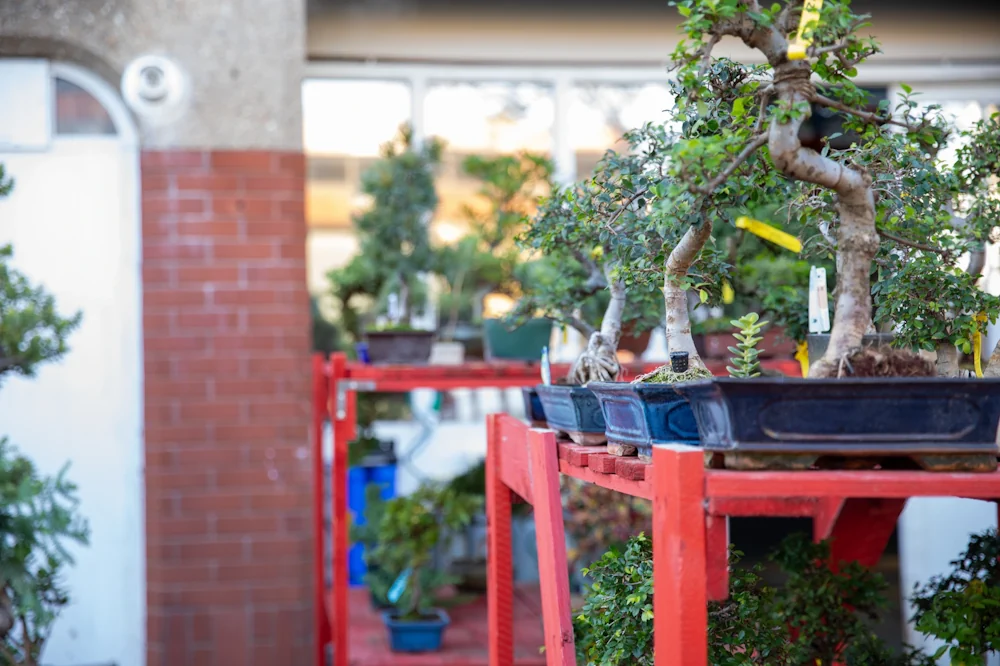
The ten recognised categories span from under 3 inches to over 6 feet, each with its own name, handling class, and care demands.
Size affects care, placement, and design in ways that compound as you move up or down the scale. Very small bonsai, such as Keshitsubo (1–3 inches) or Shito (2–4 inches), dry out quickly. Their shallow pots hold little soil, so you may need to water more than once a day in warm weather. Finding suitable pots can also be harder.
Small to medium trees, such as Shohin (5–8 inches) or Katade-mochi (10–18 inches), offer more flexibility. You can prune and wire them more easily, and pots are widely available. Many beginners start in the 6–18 inch range because care is manageable and costs stay reasonable.
Large classes, including Omono (30–48 inches) and Imperial (60–80 inches), demand space and physical help. You may need several people to move them. Pots and heavy-gauge wire cost more, and repotting becomes a serious task.
As bonsai become smaller, realism becomes harder to achieve.
A 16-inch tree can show trunk taper, branch structure, and leaf proportion in a way that closely mirrors a full-sized tree. You can create visible ramification and balanced spacing between branches.
At 3 inches tall, detail becomes limited. Leaves may appear oversized compared to the trunk. The design often suggests a tree rather than replicating one precisely. In the smallest classes, the image becomes more interpretive and less naturalistic.
Medium bonsai often strike a balance. They remain compact but still allow you to build convincing structure. That balance explains why mid-sized trees are common in exhibitions and private collections.
If realism matters to you, mid-range sizes deliver it most reliably. Extreme miniaturisation is a trade-off you make knowingly.
Bonsai size classifications began with a practical system in Japan known as the “hand” system.
Growers described trees by how many hands it took to lift them. A one-hand bonsai could be moved easily by one person. A four-hand tree required two people. The largest examples, sometimes called eight-hand trees, needed four people to carry them safely.
Over time, this informal method developed into named height categories. Exhibitions and competitions required clearer rules, so practitioners defined size ranges in inches and centimetres. Height is typically measured from the rim of the pot to the top of the tree.
Today, you still see both ideas combined. Named categories such as Mame, Shohin, Chumono, Omono, and Imperial link back to the original lifting concept. This structure keeps bonsai size classifications consistent across shows, clubs, and sellers, and it helps you compare trees with confidence.
The bonsai hand system measures size by how many hands you need to lift the tree and its pot. It predates modern named categories and still appears in bonsai size charts and exhibition rules today.
The bonsai hand system describes size in practical terms. It focuses on handling, not just height.
A one-hand bonsai means you can lift and move the tree with one hand. These trees are small and light, often under 25 cm tall, depending on pot and soil weight.
As size increases, so does the number of hands required:
An eight-hand bonsai typically falls into the largest class, often 152–203 cm tall in the Imperial range. These trees can weigh a significant amount due to large ceramic pots and dense root systems.
This system allowed growers and traders to describe size clearly before rulers became common. You could communicate scale quickly without exact measurements.
Modern named categories such as Mame, Shohin, and Imperial often appear alongside the bonsai hand system in a bonsai tree size guide. Exhibitions still reference both systems.
Here is a simplified mapping you will often see in a bonsai size chart:
Named Category | Typical Height Range | Hand Classification |
Mame | 5–15 cm | One-hand |
Shohin | up to 20–25 cm | One-hand |
Kumono | 15–25 cm | One-hand |
Katade-mochi | 25–46 cm | One- to Two-hand |
Chumono / Chiu | 41–91 cm | Two-hand |
Omono (Dai) | 76–122 cm | Four-hand |
Imperial | 152–203 cm | Eight-hand |
Some ranges overlap. For example, a 25 cm tree might qualify as Shohin or Kumono depending on the show rules.
You should treat the hand system as a practical guide. It helps you understand weight, care demands, and display needs, not just height on paper.
The smallest bonsai types sit at the extreme end of miniature bonsai sizes. You can hold them between your fingers or in one hand, but their tiny scale demands precise care and close attention every day.
Keshitsubo bonsai measure just 1–3 inches (3–8 cm) tall. This is the smallest recognised bonsai type and is often called a fingertip bonsai.
At this size, you work with very little soil. The shallow pot dries out quickly, sometimes within hours in warm weather. You must monitor moisture closely and water carefully to avoid both drought and root rot.
Because the soil volume is so limited, nutrients deplete fast. You apply diluted feed in small, regular amounts rather than heavy doses. Even slight changes in light, temperature, or airflow can stress the tree.
Long-term maintenance proves difficult. Many growers treat keshitsubo bonsai as specialist projects rather than beginner trees due to their fragility and rarity.
Shito bonsai grow between 2–4 inches (5–10 cm). People often call them thumb-sized bonsai, and they share many traits with keshitsubo.
You still deal with minimal root space and rapid drying. Frequent watering remains essential, especially during active growth in spring and summer. Miss a day in hot conditions and the tree can decline quickly.
Shito trees allow slightly more flexibility in styling than keshitsubo. You can develop basic trunk movement and simple branch structure, but refinement requires steady pruning and fine wiring.
Although slightly larger, they remain part of the most demanding miniature bonsai sizes. You need consistent light, stable temperatures, and careful feeding to keep them healthy.
Mame bonsai size ranges from 2–6 inches (5–15 cm). This class is widely known as palm-sized bonsai and forms the most popular entry point into miniature bonsai.
You can hold a mame comfortably in one hand. That extra height allows for stronger trunk development and more defined branch pads compared with shito or keshitsubo bonsai.
Care still requires precision. Small pots mean faster drying than larger bonsai, but mame offer slightly more margin for error. Many growers display them in groups of three or five to create balance and visual impact.
All three types, keshitsubo, shito, and mame, sit at or below the lower edge of the one-hand classification. If you choose this scale, you commit to close observation, steady watering, and disciplined maintenance.
Small one-hand bonsai balances detail with manageability. At this scale, you can create a convincing miniature tree while still moving and maintaining it without assistance.
Shohin bonsai size ranges from 5–8 inches (13–20 cm) in height, measured from the rim of the pot to the top of the tree. You may also see this class called Chohin.
This is one of the most popular sizes among enthusiasts and exhibition growers. Many dedicated shows focus entirely on Shohin displays.
Unlike the very smallest bonsai, Shohin trees can show proportion, taper, and seasonal change clearly. You can wire and prune them with precision, but without the extreme fragility of fingertip-sized trees.
Be aware that some exhibitions expand the Shohin category to include trees up to 10 inches, effectively merging it with Komono. Always check show rules if you plan to exhibit.
For many growers, Shohin represents the sweet spot between artistry and practicality.
Komono bonsai measure 6–10 inches (15–25 cm) tall. They extend the small category slightly beyond Shohin while still qualifying as one-hand trees.
You can lift and reposition them easily, yet they offer more growing space in the pot. That extra soil volume improves moisture retention compared with smaller classes.
Komono are less demanding than true miniature bonsai, but they still dry out faster than medium or large trees. During hot spells, you may need to water more than once a day.
If you are wondering how small can a bonsai be, these sizes provide a practical lower limit before care becomes highly technical. They also suit bonsai size for indoors display, as they fit comfortably on shelves, desks, or dedicated stands with adequate light.
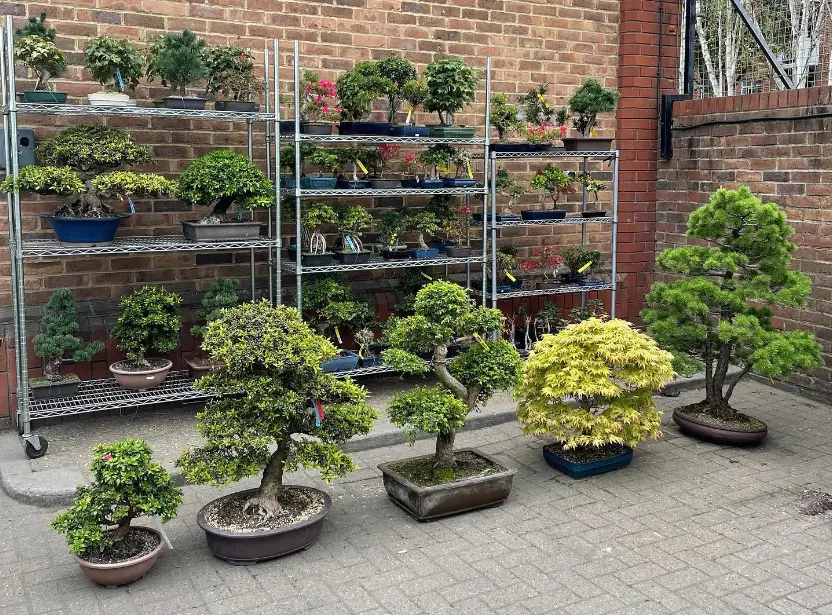
Medium bonsai sit in the centre of the bonsai tree height spectrum. They balance manageability with enough size to create convincing trunk movement, branch structure, and proportion.
Katade-mochi bonsai measure 10–18 inches (25–46 cm) in height, taken from the rim of the pot to the top of the tree. This is one of the most common types of bonsai by size, and for good reason.
At the smaller end (around 10–12 inches / 25–30 cm), your tree may still qualify as a one-hand bonsai. As it approaches 18 inches (46 cm), it firmly enters the two-hand class.
This size works well for beginners. It stays portable, pots are widely available, and maintenance feels manageable. You can shape it effectively without the constant watering demands of miniature bonsai.
Chumono and Chiu bonsai measure 16–36 inches (41–91 cm) in height. Historically, these were separate classifications, but most practitioners now use the names interchangeably.
These are true two-hand trees. You will need both hands to move them safely, especially during repotting.
You can create a tree that feels established and stable without stepping into the logistical challenges of large bonsai classes.
For many enthusiasts, Chumono is where the quintessential bonsai look is most achievable; presence and structure without becoming unmanageable.
Large bonsai show you the upper limits of the art. These trees range from 30 inches to 80 inches (76–203 cm) and answer the common question: “how big do bonsai trees get?” Far bigger than most people expect.
They demand space, strength, and long-term commitment, but they also deliver strong visual impact.
Omono bonsai and Dai bonsai now refer to the same size class. Both describe trees measuring 30–48 inches (76–122 cm) in height.
You need four hands to move them, which usually means two people. The pot, soil, and root mass add serious weight.
Because of their scale, people often call them garden bonsai or landscape bonsai.
At this size, the trunk thickens, and the branch structure becomes more detailed. You can create convincing taper and mature bark features that smaller trees cannot show as clearly.
For most home growers, Omono marks the practical upper limit.
Hachi-Uye bonsai measure 40–60 inches (102–152 cm). This overlaps with Omono in height, but weight and bulk place them in a higher handling category.
They qualify as six-hand trees, meaning three people usually move them safely.
At this scale, you are managing a large living structure; dedicated outdoor space, reinforced benches, and careful seasonal protection are all required.
Watering takes longer because of the increased soil volume. Pruning also requires ladders or raised platforms in some cases.
The Imperial bonsai size stands at the top of recognised classifications. These trees measure 60–80 inches (152–203 cm) tall.
They require eight hands to move, typically four people working together.
Imperial bonsai are rare, typically found in palace gardens, major temples, and formal museum collections. They take decades to develop and often pass through several generations of caretakers.
When someone asks how big do bonsai trees get, this class provides the clearest answer. An Imperial bonsai can stand as tall as an adult person, yet it remains a carefully controlled tree in a shallow container.
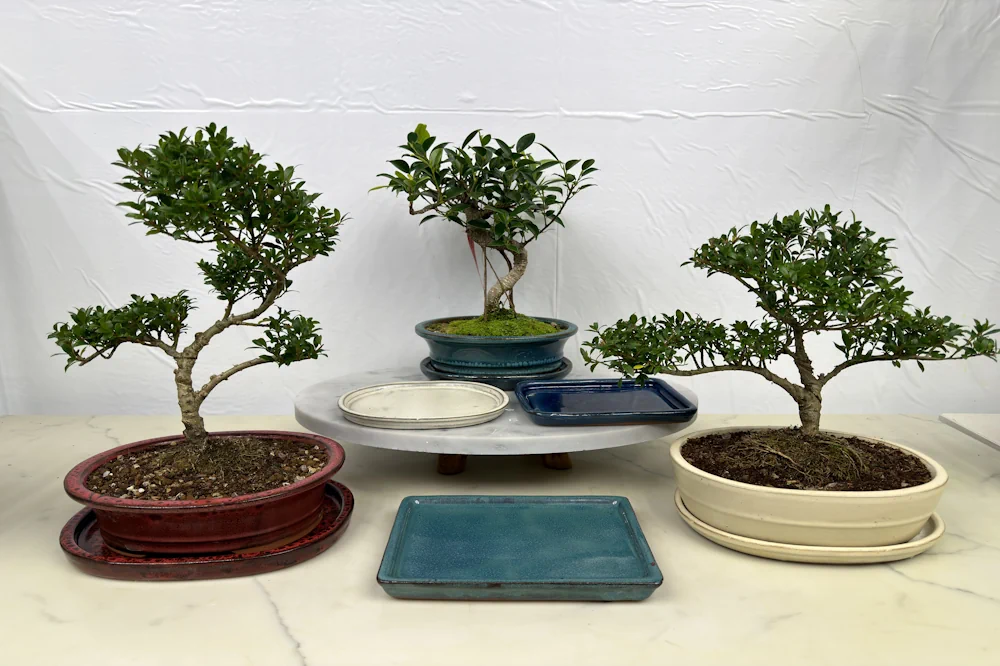
The right bonsai size depends on your space, time, and experience level. Watering frequency, handling weight, indoor placement, and even competition rules all change with scale.
If you are starting out, choose a size that forgives small mistakes.
Katade-mochi (10–18 inches / 25–46 cm) offers the best balance. It is widely considered the best bonsai size for beginners; the soil dries at a manageable rate, branches are thick enough to wire and shape easily, pots are easy to find, and you can move it without help. Large enough to look like a mature tree in miniature, yet small enough for a patio, balcony, or bright indoor space.
If you want something smaller, Shohin (5–8 inches / 13–20 cm) is a reasonable step down. Many growers keep Shohin as an indoor bonsai size near a bright window or under grow lights. They require closer monitoring than Katade-mochi, but they remain manageable.
Avoid starting with miniature classes such as Keshitsubo or Shito. Their tiny pots dry out quickly and demand frequent watering, sometimes more than once a day in warm weather.
Care demands increase at both ends of the scale.
Miniature classes dry out fast; missed watering in warm weather can stress a tree within hours. Medium sizes offer the best balance of moisture control, design flexibility, and ease of handling, which is why most growers consider them the easiest bonsai size to maintain. Large classes demand space, physical help, and higher costs for pots, soil, and wire.
Size classification formally matters when you enter shows.
Exhibitions group trees by height, usually measured from the rim of the pot to the apex. Categories often include Shohin, Komono, Katade-mochi, Chumono, Omono, and Imperial, but rules vary.
Some shows expand Shohin to include trees up to 10 inches, effectively covering Komono, and height ranges can overlap; a 6-inch tree might qualify for more than one category depending on the organiser.
Knowing your tree’s classification ensures you enter the correct bonsai competition sizes and avoid disqualification.
Outside competition settings, you can focus on what suits your space and routine. Whether you start with a Shohin on a windowsill or a Katade-mochi on a garden bench, there is a classification that fits your space, skill, and patience.
Start with your space and your schedule rather than your ambition. A tree that fits your window, your bench, or your garden and that you can water consistently will develop far better than a larger or smaller tree that sits outside your practical capacity. The right size is the one you can look after well rather than the one that looks most impressive in a photograph.
In our experience at Miyagi Bonsai, the growers who enjoy bonsai most consistently over the long term are those who started at a manageable size, learned the rhythms of that size well, and then moved up or down deliberately when they were ready. There is no correct size. There is only the size that suits where you are right now.
Miyagi Bonsai stocks a carefully chosen range of indoor and outdoor bonsai trees across size classifications from Shohin through to Chumono and beyond, alongside specialist bonsai soils, pots, tools, and care accessories, with next working day UK delivery available on most orders. Every tree comes with a personalised care guide tailored to the species, size, and your growing environment. We are rated 5 stars across over 100 Google reviews, and our team is on hand by email and phone if you have any questions about size selection, species choice, or getting started with bonsai.
These are the questions people ask most often about bonsai size classifications, covering the basics of the naming system, care by size, and how to choose the right tree for your situation.
Keshitsubo is the smallest recognised classification, measuring just 1–3 inches (3–8 cm) tall. Often called a fingertip bonsai, it is extremely rare and considered one of the most difficult sizes to maintain long term. Its shallow pot holds very little soil, which dries out quickly and leaves the tree with minimal buffer against heat or neglect.
Bonsai can grow up to 60–80 inches (152–203 cm) tall in the Imperial classification, roughly the height of an adult person. Most hobbyists work with trees between 5 and 36 inches. The Imperial class is rare and typically found in palace gardens, temples, and museum collections rather than private homes.
Katade-mochi (10–18 inches / 25–46 cm) is widely considered the best starting point. It is portable, widely available in nurseries, and forgiving enough that small lapses in watering will not immediately harm the tree. If you prefer something smaller, Shohin (5–8 inches) is a reasonable step down, but avoid miniature classes like Keshitsubo or Shito until you have built up experience.
The hand system is a traditional Japanese way of describing bonsai size by how many hands are needed to lift the tree and its pot. A one-hand bonsai can be moved by a single person with one hand. A four-hand tree requires two people. An eight-hand Imperial tree needs four people to carry it safely. The system predates modern named categories and is still referenced in exhibitions and size charts today.
Height is measured from the rim of the pot to the highest point of the tree. This is the standard used across exhibitions, competitions, and most bonsai organisations. The pot itself is not included in the measurement.
Shohin covers trees from 5–8 inches (13–20 cm) and Komono covers 6–10 inches (15–25 cm), so their ranges overlap. In practice, Shohin is the more widely recognised competition class. Some exhibitions expand the Shohin category to include trees up to 10 inches, effectively merging the two. Always check individual show rules before entering, as definitions vary between organisers.
Yes, significantly. Miniature classes dry out fast, sometimes within hours in warm weather, and require close daily attention. Medium sizes like Katade-mochi and Chumono offer steadier moisture control and are more forgiving. Large classes such as Omono and Imperial demand dedicated outdoor space, heavy pots, and often multiple people for repotting. As a rule, care demands increase sharply at both ends of the scale.

