Bonsai Feed and Soil Guide for Beginners

Which feed and soil combination do you need?

  • Complete beginner – Bonsai Focus Repotting Mix paired with Bonsai Focus Fertiliser. A proven all-in-one combination that covers aeration, drainage and nutrition without requiring separate products or mixing.
  • Developing grower – Ibaraki Akadama soil paired with Chrysal Liquid Feed. Akadama gives more precise control over moisture and drainage as your understanding of your trees grows. Chrysal provides fast-acting nutrients during the growing season.
  • Species-specific grower – mix your own substrate using akadama, grit and bark to suit the moisture and drainage requirements of your specific species.

For most beginners, the Bonsai Focus combination is the simplest and most reliable starting point – both products are designed to work together and require minimal adjustment.

Choosing the right feed and soil is one of the most important steps in bonsai care, especially for beginners. This guide explains how bonsai soil mixes and fertilisers work together to support healthy roots, steady growth and long-term tree health.

Why do feed and soil matter for bonsai?

Feed and soil quality directly determine how effectively water, oxygen and nutrients reach the root system, influencing both short-term growth and long-term tree health. While watering and pruning are the visible parts of bonsai maintenance, what happens below the surface has an equal or greater impact on the tree’s condition.

What do you need to know about bonsai soil mixes?

Bonsai soil mixes are designed to balance moisture retention, drainage and aeration. Unlike regular garden compost, a proper bonsai soil mix supports root health while allowing precise control over watering and nutrients.

Organic vs Inorganic Soil

Bonsai soil may be organic, inorganic, or a blend of both. Organic materials help retain nutrients, while inorganic components improve airflow and drainage. Many beginner-friendly mixes combine the two to create stable growing conditions.

Why Drainage and Aeration Matter

Proper drainage and aeration prevent common issues such as waterlogged roots and root rot. A well-structured soil mix allows excess water to escape while ensuring oxygen reaches the root system.

Common Soil Components (akadama, grit, bark, sand)

Common bonsai soil components include akadama for moisture regulation, grit for drainage, bark for organic matter and sand for structure. These elements are often combined to suit different tree species and growing conditions.

How do you feed a bonsai tree?

Feeding supplies nutrients that bonsai trees cannot always obtain from soil alone. A balanced fertiliser supports root development, leaf growth and overall vitality during the growing season.

Liquid vs Solid Fertiliser

Liquid fertilisers provide quick nutrient uptake and precise control, while solid fertilisers release nutrients slowly over time. Both options can be effective depending on the care routine and the tree species.

When to Feed Bonsai Trees

Most bonsai trees should be fed during active growth, typically from spring to early autumn. Feeding schedules vary depending on species, climate and soil composition.

Feeding During Dormancy

During winter dormancy, feeding should be reduced or stopped altogether, as nutrient uptake slows significantly.

What are the best feed and soil combinations for bonsai?

Once the basics of soil structure and feeding are understood, selecting the right feed and soil combination becomes much easier.

Bonsai Focus combination

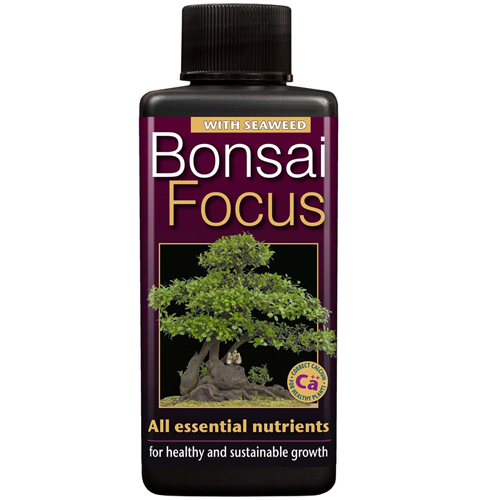
Bonsai Focus Fertiliser 100ml

Bonsai Focus Fertiliser is a concentrated liquid feed, specially formulated for bonsai trees. Enriched with seaweed, fulvic, and humic acids, it promotes healthy growth in small soil amounts without risk of overfeeding. Mix 5ml per litre of water and apply during growth for optimal nutrition.

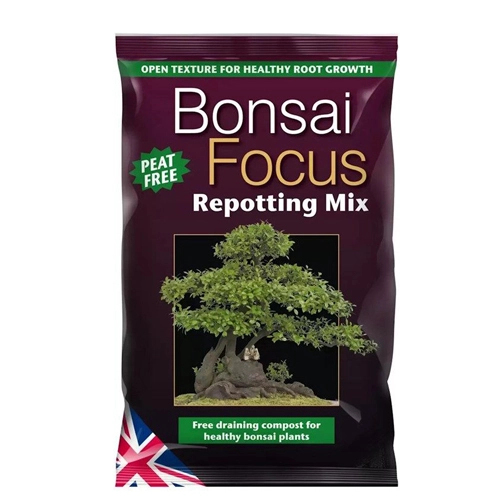
Bonsai Focus Repotting Mix 3L

Bonsai Focus Repotting Mix is a ready-to-use blend of high-quality peats, fine grit, sand, and bark, designed for bonsai trees. It ensures optimal drainage, aeration, and moisture retention, delivering nutrients for up to 4 weeks. Environmentally friendly and promotes an ideal, healthy and vibrant growth.

Bonsai Focus Fertiliser 100ml contains fulvic and humic acids, which support nutrient availability in the root zone. It is mixed with water and applied during regular watering, making it a practical choice for beginners who want straightforward feeding without complex measurement.

The Bonsai Focus Repotting Mix 3L is a ready-to-use substrate containing bark, fine grit, sand and a balanced nutrient charge. It provides good aeration and moisture retention straight from the bag without requiring additional components. Nutrients in the mix remain active for approximately one month. Both products are environmentally certified and compatible with most bonsai species.

Akadama and Chrysal combination

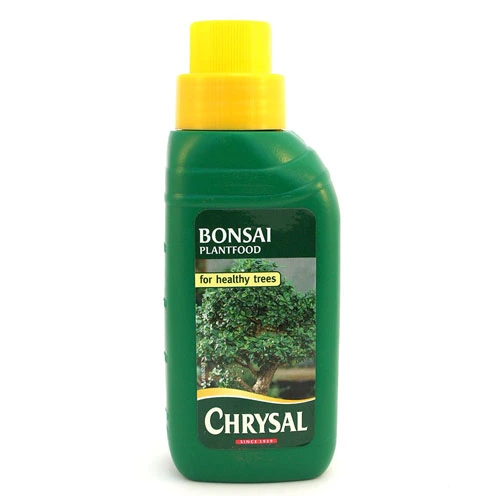
Chrysal Liquid Bonsai Feed 250ml

Chrysal Liquid Bonsai Feed 250ml is the UK’s top bonsai feed, specially formulated with a double dose of soluble micronutrients and an NPK of 4-6-6. Easy to use, it promotes healthy growth when applied weekly during active growing periods. Follow recommended dilution to avoid overfeeding.

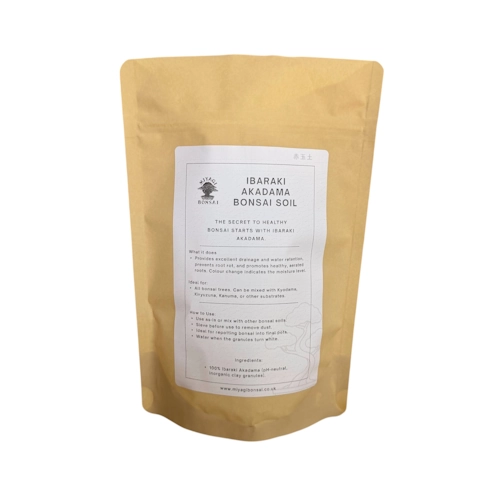
Ibaraki Akadama Bonsai Soil 2L
Ibaraki Akadama Bonsai Soil

Ibaraki Akadama Bonsai Soil 2L offers excellent drainage and water retention. Its colour changes from white when dry to brown when moist, making watering easy to monitor. Suitable for use alone or mixed with other substrates, it supports healthy growth and simplifies soil moisture management.

Chrysal Liquid Bonsai Feed 250ml is a concentrated liquid fertiliser formulated specifically for bonsai. It delivers a high nutrient load during the active growing season and is applied by diluting with water at each watering. Well suited to trees in established soil mixes that need feeding support rather than substrate replacement.

The Ibaraki Akadama Bonsai Soil 2L is a single-component Japanese clay substrate used widely in professional bonsai cultivation. It can be used alone or blended with grit, pumice or organic material to suit specific species. A useful indicator of watering need; akadama visibly lightens in colour as it dries, making it easy to judge when watering is required. It holds water well while also providing reliable drainage when used correctly.

What feed and soil mistakes should beginners avoid?

Common mistakes include using regular garden soil, overfeeding during dormancy and choosing soil mixes with poor drainage. Avoiding these issues helps protect root systems and maintain balanced growth.

Where do you start with bonsai feed and soil?

For most beginners, the Bonsai Focus combination is the right first choice; practical, reliable and designed to work together without any additional adjustment. In our experience, the most common beginner mistake is using standard garden compost rather than a purpose-made bonsai substrate. Garden compost retains too much moisture, restricts drainage and suffocates roots. A purpose-made mix costs little more and makes a significant difference to root health from the first repot.

Buying bonsai feed and soil from Miyagi Bonsai

Miyagi Bonsai stocks a carefully chosen range of bonsai soil mixes and fertilisers, with next working day UK delivery available on most orders. The products and recommendations in this guide reflect what we stock, use and see working for our customers every day. We are rated 5 stars across over 100 Google reviews, and our team is on hand by email and phone if you have any questions about choosing the right feed or soil for your trees.

Bonsai feed and soil FAQ

These frequently asked questions address common concerns about bonsai soil and feeding, helping beginners refine their care routine with confidence.

How to make bonsai soil for beginners?

For beginners, bonsai soil can be made by mixing equal parts of akadama (for water retention), pumice (for aeration), and lava rock (for drainage). Sift out fine particles to improve airflow and prevent compaction. Adjust the mix based on your tree species and climate to ensure optimal root health and moisture balance.

Start feeding your bonsai in early spring as new growth begins and continue feeding regularly through the active growing season. Use balanced or specialized bonsai fertilizers to provide essential nutrients, stopping feeding in winter when growth slows or stops.

The best bonsai soil mix depends on the species but generally combines akadama, pumice, and lava rock for balanced moisture retention, drainage, and aeration. Deciduous trees prefer more akadama for moisture, while conifers benefit from equal parts of all components. Tailor your mix to local climate and watering habits to promote healthy roots.

Balanced fertilizers with NPK ratios like 10-10-10 or 14-14-14 work well for most bonsai. Organic options provide slow-release nutrients, while liquid fertilizers offer quick absorption. Choose fertilizers specifically formulated for bonsai to support steady, healthy growth.

Repot bonsai every 2-5 years depending on species and growth rate. Repotting refreshes soil, prevents compaction, and supports root health. Early spring, before new growth, is ideal for repotting when the tree is less stressed.

Regular garden soil is not recommended because it often lacks drainage and aeration. Bonsai soil must be well-draining and loose to prevent waterlogging and root rot, so specialized mixes or DIY blends with akadama, pumice, and lava rock are preferred.

Improve drainage by mixing inorganic components like pumice, lava rock, or coarse sand into your soil. Avoid overly fine particles and compacted soil to ensure water flows freely and roots receive oxygen.

Signs include water retention causing soggy soil, root rot, yellowing leaves, slow growth, or fungal infections. Compacted or infested soil also impacts bonsai health, signaling a need for soil replacement or adjustment.

Organic matter adds nutrients and improves moisture retention but can increase risk of soil compaction if overused. Use in moderation with ample inorganic particles to keep soil airy and well-draining.

Usually, fertilizing is reduced or stopped during dormancy to prevent encouraging growth when the tree is resting. Use low-nitrogen or maintenance feeds sparingly if necessary, based on the tree species and local climate.

Marino Pruning a Bonsai Tree

Marino

Marino is a dynamic entrepreneur and director of Miyagi Bonsai, bringing a deep passion for bonsai that blends traditional cultivation with contemporary retail strategy. Since taking the helm in October 2020, Marino has grown the business into a go-to source for high-quality bonsai products, nurturing both the art form and its community appeal.
Recently Viewed