
A bonsai humidity tray may look simple, but it plays a vital role in keeping miniature trees healthy and thriving. A bonsai humidity tray is a shallow water-filled tray placed beneath the pot to increase humidity and protect surfaces from excess water. Indoor bonsai often struggle with dry air from heating or low humidity. A humidity tray helps restore balance naturally.
Whether you’re just starting or refining your bonsai care routine, understanding how this simple accessory works can transform the health and appearance of your tree. Let’s explore how to choose, use, and maintain a humidity tray to keep your bonsai in peak condition.
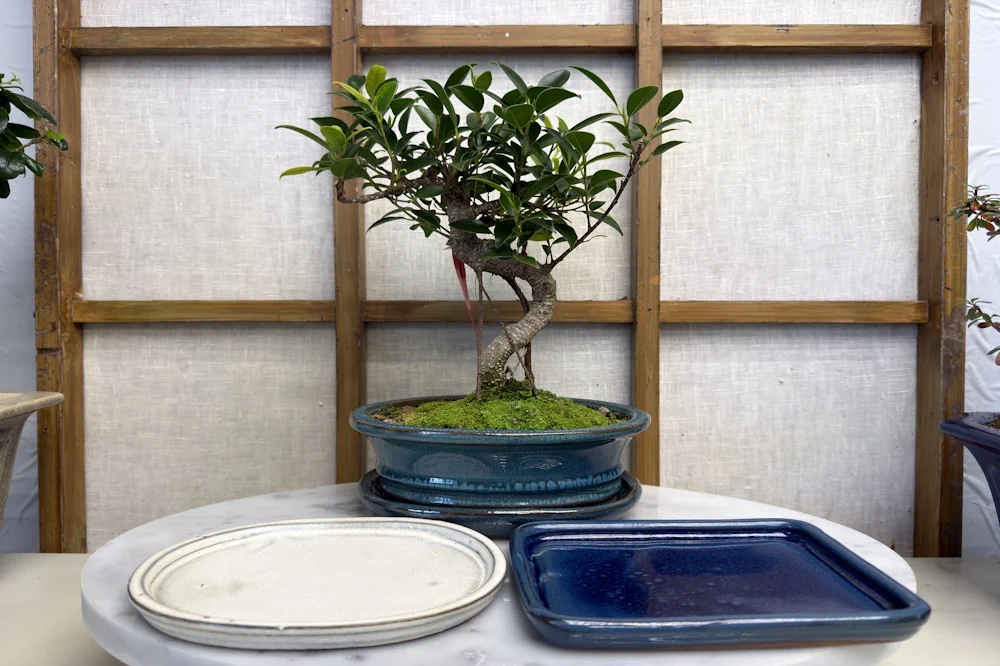
A bonsai humidity tray is a shallow dish or saucer that sits directly beneath a bonsai pot. It catches excess water that drains from the pot, protecting tables and shelves from moisture damage.
These trays are sometimes called drip trays, as they perform both roles, collecting water and gently raising humidity. When used indoors, they help mimic the natural moisture levels bonsai trees would experience outdoors.
Common tray materials include:
Shapes vary too, such as oval, rectangular, square, or round, allowing us to match the tray to our bonsai shape.
We often see decorative trays with silk finishes or textured surfaces that complement the bonsai’s aesthetic. Some bonsai containers even have built-in trays, while others use separate ones for flexibility. Whether functional or ornamental, a humidity tray is a practical and attractive part of bonsai care.
Plastic
Ceramic
Marble and stone
As a general rule: use plastic for practicality and multiple-tree setups; use ceramic for most display arrangements; reserve marble and stone for statement trees in fixed display positions.
A bonsai humidity tray and a bonsai drip tray refer to the same accessory, a shallow tray placed beneath the pot to catch excess water. The term humidity tray is more common in bonsai care guides because it highlights the tray’s role in gently increasing moisture around the tree. In the UK, a drip tray is widely used in general gardening and product listings, making it a familiar term for protecting surfaces from runoff. In practice, both names describe the same tool, and both improve indoor bonsai health by raising local humidity and keeping furniture safe from watermarks.
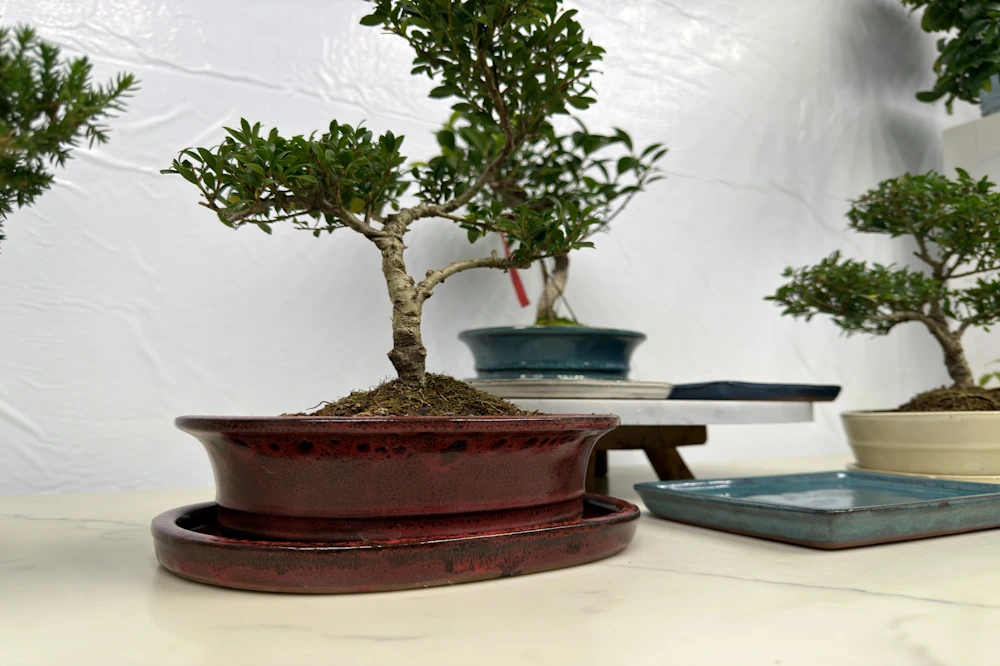
A bonsai humidity tray serves both functional and environmental purposes. A bonsai humidity tray helps us create a small, humid pocket of air around the tree. This microclimate mimics the moisture levels of natural forests, which is especially useful indoors, where air conditioning or heating can dry the air.
By keeping the area around the bonsai slightly more humid, we reduce root desiccation and slow down transpiration. This helps the tree retain moisture for longer periods, making it less vulnerable to drying out between waterings.
Another key purpose is surface protection. When we water our bonsai, excess water drains through the pot’s holes. The tray catches this runoff, preventing stains or water damage to furniture and display stands.
We also find humidity trays convenient for watering in place, especially for large or heavy trees that are difficult to move. The tray can hold a small amount of water, extending the time between waterings for busy growers.
| Function | Benefit |
|---|---|
| Creates a humid microclimate | Mimics outdoor forest conditions |
| Prevents root drying | Maintains soil moisture |
| Protects surfaces | Catches excess water |
| Decorative use | Enhances display aesthetics |
Online discussions often debate how much humidity trays affect the whole room. In reality, their benefit is localised; they improve conditions immediately around the tree, not the entire space.
Using a bonsai humidity tray is simple once we know the right steps. It helps maintain consistent moisture and protects our display surface from excess water.
Step 1: Choose the right tray size
We should select a tray that’s in line with the size of the bonsai; we don’t want it to override the bonsai’s visual appeal. This gives enough room for water and stones without flooding the roots.
Step 2: Place your bonsai
After submerging your bonsai or watering it. Place your bonsai on the drip tray; this will let the water drip onto it.
Step 3: Continue normal watering
The tray supports humidity, but we still need to water the bonsai deeply from above. This ensures proper soil hydration.
Outdoor bonsai should never sit in drip trays, as this can trap excess water and disrupt healthy root growth. Unlike indoor bonsai, outdoor trees rely on natural weather cycles, rainfall, sun, and air circulation to balance moisture levels.
When rainwater collects in a drip tray, it cannot drain freely, causing the soil to stay saturated for too long. This standing water deprives roots of oxygen and quickly leads to root rot, one of the biggest threats to a bonsai’s long-term health.
Bonsai roots thrive in evenly moist but not waterlogged soil. Without proper drainage, oxygen flow is restricted, and beneficial microbes die off, leaving the tree vulnerable to fungal infections. In heavy rain, outdoor trays can overflow repeatedly, washing away essential nutrients and compacting the soil, making it even harder for water to drain.
Instead of using trays, place outdoor bonsai pots on stands or bricks to allow air to circulate beneath them and water to run off naturally. This setup helps maintain an ideal moisture balance, keeps roots healthy, and ensures your bonsai grows strong through every season.
Start with one tray and one tree. The humidity tray is one of the simplest and most immediately effective bonsai accessories available; a single plastic tray under your first indoor bonsai will produce a visible difference in leaf condition within weeks during the heating season. Once the benefit is established with one tree, extending the approach across a collection is straightforward.
In our experience at Miyagi Bonsai, the most common humidity tray mistake is placing the pot directly in the water rather than above it. The pot should rest on pebbles or a grid so that the base of the pot sits above the waterline; this raises humidity through evaporation without causing the waterlogging that leads to root rot. The water evaporates up around the pot; it should never enter through the drainage holes.
Miyagi Bonsai stocks a carefully chosen range of bonsai humidity trays in plastic, ceramic, and decorative finishes, alongside bonsai pots, gravel, and care accessories, with next working day UK delivery available on most orders. The products and recommendations in this guide reflect what we stock, use and see working for our customers every day. We are rated 5 stars across over 100 Google reviews, and our team is on hand by email and phone if you have any questions about humidity trays, indoor bonsai care, or accessory selection.
Fill the tray with a shallow layer of water and decorative pebbles, then place your bonsai pot on top. The water evaporates gradually, raising humidity around the tree.
It increases local humidity, prevents surface damage from runoff, and helps maintain soil moisture between waterings, ideal for indoor bonsai.
Choose a tray slightly larger than your bonsai pot to allow airflow and even humidity without overwhelming the display.
Check the tray every few days; top up when the water level drops below the pebbles.
Yes. Tropical and subtropical species such as Ficus, Carmona, and Schefflera benefit most in dry indoor environments.
Ceramic trays are decorative and durable, while plastic ones are lightweight and affordable. Choose based on display preference and bonsai size.
For indoor bonsai, particularly tropical and subtropical species such as Ficus, Carmona, Podocarpus, and Serissa, a humidity tray is strongly recommended rather than optional. UK indoor environments, especially in centrally heated homes during winter, can drop to humidity levels well below what these species require. A tray provides continuous localised humidity at zero ongoing cost or effort. For outdoor bonsai, humidity trays should not be used; they trap excess water and cause root rot. For cold-hardy indoor species in naturally humid environments, a tray is beneficial but less critical.
The pot should always sit above the waterline, never in it. Place a layer of pebbles, aquarium gravel, or a purpose-made humidity tray grid inside the tray so that the base of the pot rests above the water level. The water evaporates upward around the pot, raising the local humidity; this is the intended mechanism. If the pot sits directly in water, the drainage holes allow water to enter the root zone from below, which causes waterlogging and root rot over time. The pebble layer is not decorative; it is a functional requirement for the tray to work correctly.
In practice, they are the same accessory; a shallow tray placed beneath a bonsai pot. The term humidity tray is used in bonsai care guides because it emphasises the tray’s role in raising localised moisture around the tree.
The term drip tray is more common in general gardening and retail product listings, where the primary emphasis is on catching water runoff to protect surfaces. Both descriptions are accurate. The key distinguishing feature of a bonsai humidity tray used correctly is the pebble layer; this raises the pot above the waterline so that evaporation creates humidity rather than waterlogging the roots.
Yes; any shallow, waterproof tray or dish wider than the bonsai pot can serve as a humidity tray. Plastic storage container lids, ceramic dishes, and shallow baking trays all work. Add a layer of aquarium gravel or clean pebbles to raise the pot above the waterline, fill with water to just below the pebble surface, and the basic function is identical to a purpose-made tray.
The main advantages of purpose-made humidity trays are aesthetic; they are designed to complement the proportions and style of bonsai pots; but the functional outcome of a DIY tray is the same. Ensure the tray is large enough to extend slightly beyond the edges of the pot for maximum evaporation surface area.

