
The most important step in autumn bonsai care is a thorough pest check, because many bonsai pests overwinter on or inside your tree and reappear stronger in spring.
Scale insects cling to stems, vine weevil grubs feed on roots below the surface, and spider mites leave eggs that survive cold conditions. Fungal diseases also spread faster in damp autumn weather, especially when airflow drops.
Autumn bonsai pests become a problem when cooler air and damp soil slow growth but not insect activity. Aphids, scale insects, spider mites, vine weevil larvae and fungal spores often linger on leaves, bark and in compost as your tree prepares for winter. If you ignore them now, they overwinter and attack hard when growth resumes in spring.
When you inspect foliage, branches and soil surface now, you protect months of careful training and pruning. A simple routine of close checks, cleaning debris, and timely treatment with horticultural oil or insecticidal soap during autumn can reduce emerging pest populations before winter sets in.
New to bonsai? Start with scale insects and vine weevil; they cause the most damage over winter and are the easiest to miss. If you only do one thing this autumn, work through the step-by-step inspection process in this guide.
Your bonsai pest check autumn UK routine does more than tidy up problems. It stops pests from settling in for winter and launching straight into reproduction when spring growth begins.
Autumn bonsai pests that you miss now will not stay small or harmless. They will overwinter, mature, and reappear ahead of your tree.
Pests that overwinter gain a clear lifecycle advantage. They do not need to arrive in spring. They are already in place.
Consider these common cases:
This explains why pests that overwinter cause worse spring problems. You start the growing season behind.
Instead of managing a small, visible outbreak, you deal with a hidden population that has survived winter and is ready to multiply.
Autumn is often your final practical chance to interrupt the pest lifecycle.
While trees remain active, treatments reach pests more effectively. Once full dormancy sets in, your options narrow. Some products work less effectively on dormant trees, and pests retreat into bark crevices, soil, or protected bud scales.
In early to mid-autumn, many overwintering pests are:
That makes them easier to target.
A successful autumn treatment does not just reduce numbers. It prevents spring infestation entirely. You break the cycle before it completes.
This is especially important in the UK, where mild winters allow aphids and slugs to remain active longer than many growers expect.
Pest management works best as a seasonal cycle, not a series of isolated reactions. Each season targets a different risk stage.
In spring, you respond to emerging problems on fresh growth. In summer, you manage high-activity pests such as spider mites that thrive in warm conditions. In autumn, you prevent overwintering establishment before pests are hidden from treatment.
That sequence forms a simple cycle:
When you treat autumn bonsai pests seriously, your spring inspections become easier and less reactive. You shift from crisis control to planned seasonal management.

In UK conditions, several pests survive winter directly on or inside your tree. Autumn is the key window to find them while they are exposed, slow-moving, or laying eggs.
Scale insects are the most significant overwintering bonsai pests UK growers face. In late summer and autumn, juvenile “crawler” stages settle onto bark and begin forming their protective coating.
At this stage, they look like small brown, grey, or off-white bumps along:
Many species overwinter attached to bark as immature scales. By spring, they harden into adults under a waxy shell that resists contact insecticides.
That shell makes spring control difficult. In autumn, however, the protective layer is still developing, so treatment is far more effective.
When checking for scale insects bonsai autumn, gently scrape a suspect bump with a fingernail. If it smears or reveals soft tissue underneath, it is alive. Early removal prevents a heavy hatch in spring.
Bonsai vine weevil autumn infestations develop out of sight. Adult weevils lay eggs in soil during summer. The larvae hatch and begin feeding on fine roots through autumn.
You rarely see the damage until it is advanced. Warning signs include:
Larvae are cream coloured, legless grubs with brown heads. They curl into a C shape when disturbed.
Autumn is critical because root feeding continues as top growth slows. The tree enters dormancy already weakened. In small bonsai containers, even limited root loss can be severe.
Check soil carefully when repotting or if a tree declines without clear cause.
Active bonsai spider mites autumn populations often drop after the first frosts. Eggs, however, survive.
Female mites deposit tiny spherical eggs in:
These eggs are extremely small and often require magnification to see clearly. They appear as fine pale or translucent dots clustered in protected areas.
Autumn sprays have limited effect on eggs unless the product specifically targets them. Physical cleaning helps more. You can brush bark gently and remove loose debris where eggs hide.
If you ignore them, they hatch in spring just as new foliage expands. Early feeding can distort tender leaves before you notice the problem.
In late autumn, aphids shift from live feeding to egg laying. Instead of colonies on leaves, you find bonsai aphids autumn eggs attached to woody growth.
Look closely at:
Aphid eggs are oval and usually black or dark brown. They are larger and easier to see than spider mite eggs.
These eggs overwinter successfully on deciduous species. In spring, they hatch as buds open. New shoots then face immediate feeding pressure.
Wiping down twigs during autumn inspection reduces the number that survive. Pay special attention to crab apple and other deciduous bonsai that carried aphids during summer.
Fungal problems are not insects, but they follow the same seasonal pattern. Cool temperatures, higher humidity, and fallen leaf debris create ideal conditions.
Common autumn issues include:
Dense foliage and poor airflow increase risk. Deciduous trees with thick canopies are especially vulnerable.
Remove infected leaves promptly and dispose of them away from your benches. Thin crowded growth and avoid waterlogging soil.
Treat fungal disease as part of your autumn inspection routine. A clean tree going into winter resists both pests and infection more effectively.
A careful bonsai pest inspection in autumn helps you catch overwintering insects before they settle in. Work in a set order, look closely at bark, leaves, and soil, and use simple tools to spot what your eyes might miss.
Avoid a quick glance. Use a systematic inspection method so you do not miss hidden areas.
Follow this order:
Start at the base. Many pests overwinter low on the tree where bark is rough and sheltered.
Move slowly upward. Check each branch junction and bud base before moving on. Finish by lifting the pot and inspecting the drainage holes, as insects often crawl inside for protection.
This base to tip routine makes your autumn bonsai pest inspection thorough and repeatable.
Bark and branch surfaces host many overwintering pests. Look closely, not casually.
Check for:
Scale insects
Small raised bumps attached to bark. They range from pale tan to dark brown. They do not move when touched. Heavy infestations make bark look rough or crusted.
Aphid eggs
Tiny, shiny black or dark oval eggs. You often find them clustered in bark crevices or around bud axils.
Surface changes
Unusual dark patches, soft spots, or cracking can suggest fungal infection. Discolouration around pruning wounds deserves attention.
Use a torch to shine light into branch crotches and along fissures. Rotate the tree slightly to see texture changes. If something looks stuck to the bark and does not brush off easily, inspect it with magnification before assuming it is harmless.
Autumn leaves tell you what happened during the growing season. Inspect them before they drop and hide evidence on the soil surface.
Turn leaves over and check the undersides. Look for:
Spider mite damage appears as tiny pale dots across the leaf surface. Severe cases cause a dull, dusty look.
If you find heavily infested leaves, remove and dispose of them before they fall. Do not leave them on the soil, where pests can overwinter more easily.
You can also use the white paper test. Hold a sheet of white paper under a branch and tap it gently. Watch for tiny moving specks, which often indicate mites.
Autumn is the time to check for soil dwelling pests before winter sets in.
Start with the surface. Look for:
If you suspect vine weevil, use a chopstick or soil probe. Insert it gently into the top few centimetres of soil and lift small sections to look for:
Finding even a few larvae justifies closer monitoring. In severe cases, you may need a fuller root inspection at repotting.
Finally, tilt the pot and check drainage holes. Some insects shelter just inside them during colder weather.
Simple tools make your bonsai pest inspection in autumn far more accurate.
Keep these on hand:
Magnifying glass or loupe
Essential for examining scale, aphid eggs, and fine bark detail.
White paper
Use it for the shake test to reveal mites and other tiny moving pests.
Torch
Shine light into bark crevices, bud bases, and dense branch junctions.
Chopstick or soil probe
Check the upper root zone for larvae without disturbing the entire root ball.
Clean tools after each tree to avoid spreading pests. With good light, magnification, and a set routine, you reduce the risk of missing hidden autumn infestations.
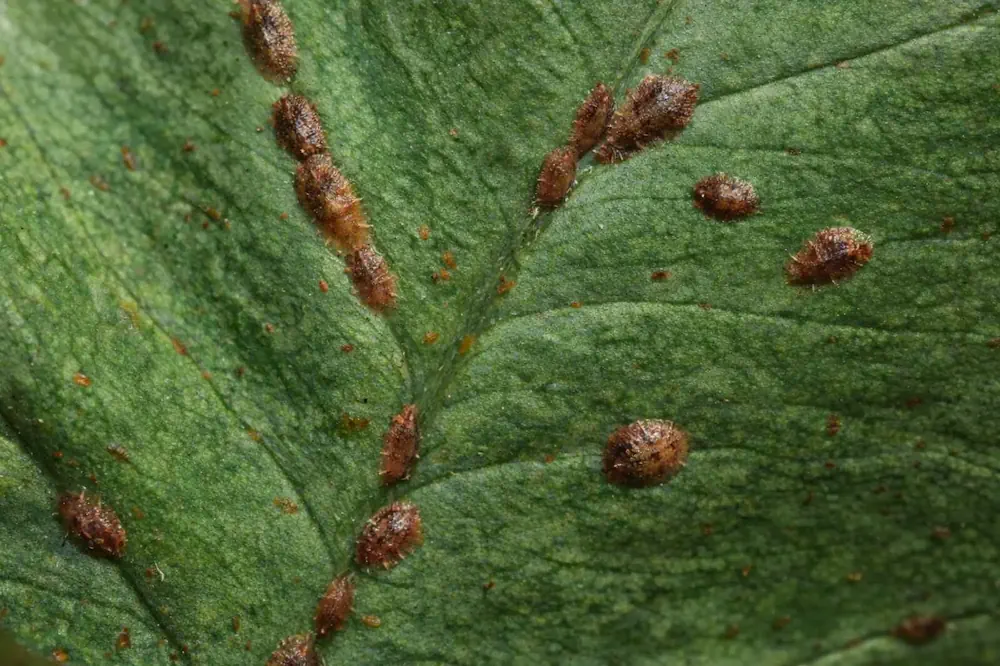
Scale insects bonsai autumn problems demand quick action. You need to spot them early, treat them during the vulnerable stage, and put simple routines in place to stop them returning next year.
Scale insects rank among the most serious autumn bonsai pests in the UK. They attach to bark and branches and feed on sap.
You will see small raised bumps on bark and branch surfaces, usually 1 to 5 mm wide. Young crawlers appear pale yellowish brown. Mature adults turn darker brown or grey and develop a waxy protective shell.
This waxy covering sets them apart from dirt. If you try to flick one off with a fingernail, it resists and feels fixed in place.
Heavy infestations create a rough, barnacle like texture along branches. At that stage, the surface looks uneven and crowded.
Use the white cloth test to confirm. Wipe a branch with a damp white cloth:
You may also notice yellowing leaves or sticky residue from honeydew. In autumn, focus on bark inspections, as many newly settled scale sit along branch junctions and older wood.
Autumn is the critical treatment window for scale. The reason lies in their lifecycle.
In late summer and early autumn, the crawler stage settles onto bark. At this point, the insects have not yet formed a fully hardened wax shell.
Without that thick protective layer, they remain far more vulnerable to treatment. Oils, soaps, and alcohol reach the body more easily and kill a higher percentage.
If you delay until spring, you face:
That means more work and lower success rates.
By treating scale insects bonsai autumn infestations early, you reduce the number that overwinter. You enter spring with a lighter pest load and stronger trees.
Start with targeted physical removal. Dip a cotton bud in isopropyl alcohol and press it directly onto the individual scale. The alcohol dissolves the waxy coating and kills the insect on contact.
For wider infestations, use:
Apply oil thoroughly but avoid waterlogged soil and freezing temperatures. Spray in mild, dry conditions so the solution spreads evenly.
One treatment rarely clears an infestation. Plan for two to three applications, spaced 7 to 10 days apart. This schedule catches newly hatched crawlers that survived the first round.
Inspect between treatments. Remove any remaining visible scale by hand to reduce the overall population quickly.
Prevention lowers the risk of repeat autumn outbreaks.
First, improve air circulation. Avoid overcrowding benches and prune dense growth that restricts airflow. Damp, still conditions encourage pest build up.
Second, quarantine new trees. Keep any new bonsai separate for at least three to four weeks. Inspect bark closely before introducing them to your main collection.
Finally, build a simple inspection routine:
Early detection keeps scale at low levels. Small numbers stay manageable, while established colonies demand far more time and effort to control.
Vine weevil is the most damaging and least visible autumn bonsai pest. The adults mark the leaves, but the larvae feed on roots through autumn and winter, often killing a tree before you see clear warning signs.
In autumn, you need to look for two stages of vine weevil.
Adults are grey to dull black beetles about 9 to 12 mm long. They are nocturnal and hide during the day in soil, leaf litter, moss, or under benches. You may not see them directly, but you will notice their feeding.
Look for:
Notching tells you adults have likely laid eggs in the compost.
The real threat sits below the surface. The larvae are creamy white, C-shaped grubs up to 10 mm long with a light brown head. If you suspect bonsai vine weevil in autumn, gently slide the root ball from the pot and check the root zone. Larvae sit among fine roots, often close to the pot edge.
Adult feeding looks untidy but rarely weakens a healthy bonsai. The larvae cause the real harm.
From autumn through winter, larvae feed on fine feeder roots first. As they grow, they chew into thicker structural roots and even the base of the trunk in severe cases. This damage happens while your tree enters dormancy, so symptoms stay hidden.
By late winter or early spring, you may see:
Heavy infestations can kill a tree outright. Container grown trees are at higher risk, which makes overwintering bonsai pests in the UK a serious concern. A small pot offers limited root mass, so even moderate root loss has a big impact.
Biological nematode treatments work best in September and early October while soil temperatures stay above around 5°C; timing is critical, and the window closes quickly in a UK autumn. For surface and root zone pest control, we stock Maven Skram and Supreme Neem, both of which form part of a broader autumn treatment routine. If you need specific advice on vine weevil treatment options for your tree, get in touch, and we can point you in the right direction.
Early action in autumn gives you the best chance of reducing larval numbers before winter feeding peaks.
If you confirm a light infestation in autumn, consider repotting immediately. Remove as many larvae as possible by hand and wash old compost from the roots. Replace it with fresh, free-draining bonsai mix.
To reduce further risk:
Continue checking trees through winter. Gently test stability in the pot and watch for unexpected wilting. When you focus on how to protect roots through winter, you limit cumulative root loss and give your bonsai a stronger start in spring.

Spider mites and aphids both survive winter as eggs on your bonsai. You cannot eliminate every egg in autumn, but you can reduce numbers and limit the size of next spring’s outbreak.
When you deal with bonsai spider mites in autumn, focus on surfaces rather than leaves. Female two-spotted spider mites lay overwintering eggs in sheltered areas such as:
The eggs appear as extremely small reddish or pale oval dots. Most measure well under 0.5 mm, so you usually need magnification to see them clearly.
In practice, you rarely confirm eggs by sight. Instead, you rely on evidence of summer spider mite activity such as stippled leaves, fine webbing, and dusty foliage. If you saw active mites in late summer, assume eggs now sit in protected bark areas.
These eggs resist many treatments. Their outer shell protects them from most contact insecticides, including common soaps and neem-based sprays. That resistance sets realistic limits on what autumn spraying can achieve.
Bonsai aphids in autumn lay eggs directly on woody growth. You will most often find them:
Unlike spider mite eggs, aphid eggs are easier to spot. They look like small, shiny black oval eggs about 0.5 mm long. On deciduous species such as Japanese maple, check closely around each bud. Aphids frequently choose these tight bud scales for protection.
You can inspect twigs with a hand lens. Eggs often cluster near last season’s soft growth.
If you confirm bonsai aphids autumn eggs across multiple buds, expect a heavier spring hatch. A few isolated eggs usually mean a manageable early infestation. A high density around many buds predicts faster population build-up once temperatures rise.
You cannot rely on standard insecticides to control overwintering eggs. Insecticidal soaps and neem oil have limited effect on eggs, especially once temperatures drop and pests enter dormancy.
Spider mite eggs in particular resist most treatments. Aphid eggs also tolerate many contact sprays.
Dormant horticultural oil applied to bare bark before bud break offers better contact kill rates. The oil works by coating and suffocating exposed eggs. Timing matters. Apply it during full dormancy and follow label rates to avoid damaging delicate bonsai bark.
In many cases, the most cost effective autumn approach is not heavy spraying. You gain more by:
That practical work often lowers spring pressure more reliably than repeated autumn sprays.
You can reduce overwintering egg populations through simple physical steps. Focus on habitat removal rather than chemical control.
Start with bark care:
Next, deal with spider mite remnants. Remove any visible webbing from branch forks and trunk surfaces. Webbing traps debris and protects eggs.
Finally, clear the soil surface. Remove fallen leaves and plant debris from the pot. Aphids and mites can deposit eggs on leaf material that rests against the trunk.
These steps will not eliminate every egg. They can, however, lower the starting population enough to make spring control easier and less urgent.
Autumn does not only bring autumn bonsai pests. It also creates ideal conditions for autumn bonsai fungal disease problems that can carry through winter and reappear in spring.
If you include fungal checks in your regular pest inspection, you reduce long term damage and avoid stronger treatments later.
Autumn creates a specific mix of moisture, temperature, and plant stress that favours fungal growth.
You often see:
Fungi need moisture and organic matter. Autumn gives them both. As leaves age and begin to yellow, their surface tissue weakens. Opportunistic pathogens enter through tiny cracks or old insect damage.
At the same time, you may move trees closer together or under shelter for protection. This reduces air circulation. Damp, still air around foliage allows spores to settle and infect more easily.
Even though growth slows, fungal activity does not stop. That gap creates risk going into dormancy.
During your autumn inspection, look closely at leaves and bark. Focus on visible, defined symptoms rather than vague discolouration.
Powdery mildew
Leaf spot diseases
If you leave fallen leaves on the soil surface, you allow spores to overwinter in the pot.
Canker infections
Cankers can slowly weaken branches over winter while the tree sits dormant.
Start with removal. This is your most effective step.
Do not allow diseased leaves to decompose in the pot. That is how many autumn fungal problems return in spring.
For active infections, use a copper-based fungicide. Copper sprays suit many autumn leaf spots, mildew, and some bark infections. Apply on a dry day and cover both foliage and branch surfaces.
Also adjust your care:
By treating fungal issues before dormancy, you reduce winter stress and limit reinfection when growth resumes in spring.
Not all autumn pests carry the same risk. Use this table as a starting point before your inspection.
| Pest | Overwintering Stage | Risk Level | Best Treatment Window |
|---|---|---|---|
| Vine weevil larvae | Root zone grubs | High, can kill tree | September to October |
| Scale insects | Bark-attached juveniles | High, spreads rapidly | Early to mid autumn |
| Aphid eggs | Bark and bud eggs | Medium, heavy spring hatch | Autumn cleaning and dormant oil |
| Spider mite eggs | Bark crevice eggs | Medium, distorts spring growth | Physical removal and dormant oil |
| Fungal disease | Spores on leaves and soil | Medium, spreads in damp conditions | Remove infected material before dormancy |
Once you finish your inspection for autumn bonsai pests, decide your next step based on what you found. Your response now affects how well your tree enters dormancy.
Use this simple framework:
Timing matters. Treat as early as possible while pests remain active.
After the first hard frosts, effectiveness drops because activity slows and some pests shift into protected overwintering stages.
Remember what happens to bonsai pests in winter. Many do not disappear. Eggs, larvae, or adults may overwinter in bark, soil, or buds.
If you treated the tree in autumn, check it again in late winter before spring growth begins. Look for distorted buds, sticky residue, webbing, or weak new shoots. These signs suggest survivors.
In our experience, the most common autumn pest mistake is treating the inspection as optional because the tree looks fine on the surface. Scale insects and vine weevil larvae cause the most winter damage precisely because they are invisible until the harm is done.
A tree that looks healthy going into October can carry a full generation of scale crawlers on its bark and a root zone already weakened by vine weevil grubs. The inspection takes twenty minutes. The damage it prevents can take a full growing season to recover from.
Do it once, do it methodically, and record what you find. That record makes next year’s inspection faster and your spring management far less reactive.
Miyagi Bonsai stocks a carefully chosen range of autumn pest control supplies suited to UK conditions, including Maven Skram Plant Wash and Maven Skram Mist for treating scale, mites, and other surface pests, Supreme Neem for broader pest and fungal defence, Bonsai Myst, frost and insect protection fleece, and magnifiers for close bark and foliage inspection. The advice in this guide reflects what we stock, use, and see working for our customers throughout every UK autumn. We are rated 5 stars across over 100 Google reviews, and our team is on hand by email and phone if you have any questions about pest identification, treatment timing, or preparing your bonsai for winter. Next working day UK delivery is available on most orders.
The most telling sign is a tree that looks wrong despite correct care; wilting, yellowing, or unexpectedly weak growth going into autumn. Because the larvae feed on roots underground, there are rarely clear surface symptoms until damage is already significant. If your tree rocks slightly when you press it, or lifts more easily than expected, that points to root loss. To confirm, gently slide the root ball from the pot and check the root zone for creamy white, C-shaped grubs with a brown head. Even finding two or three in a small container is reason to act.
It is most likely scale insects, particularly if the coating appears as small raised bumps rather than an even film. Scale attach to bark and develop a protective waxy shell as they feed on sap. They are commonly mistaken for lichen, mineral deposits, or natural bark texture. To check, press a fingernail gently against one of the bumps. If it resists and feels fixed in place, or leaves a faint yellow or orange smear when crushed, it is scale. A white powdery film that spreads across leaves rather than sitting on bark is more likely powdery mildew, which is a fungal issue rather than an insect.
Yes, and autumn is one of the more useful times to apply it. Neem works as both a pest deterrent and a mild fungal defence, which suits the dual threat of insects and damp-weather fungal disease that autumn brings. Apply it during mild, dry conditions and avoid using it immediately before a frost or when temperatures are consistently below around 10°C, as cold reduces its effectiveness and absorption. It has limited impact on overwintering eggs, so treat it as part of a wider routine that includes physical cleaning and inspection rather than a standalone solution.

