
In autumn, you should water your bonsai only when the top layer of soil feels slightly dry, rather than on a fixed schedule.
Check the soil daily, but expect to water less often as temperatures drop. Some trees may need water every few days, while others can go longer depending on species, pot size, and weather.
Autumn changes how you water your bonsai. Cooler air, shorter days, and slower growth all reduce how quickly the soil dries out. If you keep watering as you did in summer, you risk stressed roots and poor winter health.
When you adjust bonsai watering to match the season, you protect roots from rot and help your tree prepare for winter dormancy. A few small changes now make a clear difference in how strong your bonsai looks in spring.
New to bonsai? The most common mistake beginners make in autumn is carrying on as they did in summer. If you only change one thing this season, make it this: expect longer gaps between waterings, and don’t be alarmed by them.
Autumn is when overwatering risk is highest for most bonsai. You stay alert in summer, but in autumn your summer habits often continue while the tree’s needs change quickly and quietly.
Temperature directly affects how fast your bonsai soil dries. As air and soil temperatures fall, evaporation slows even if you do nothing differently.
In July, a free draining mix might dry in 24 hours.
By September, that same mix can stay moist for three to five days.
By October, it may remain damp for seven to ten days, depending on rainfall and sun exposure.
This shift happens because:
Importantly, this slower drying happens independently of how much the tree is drinking. Even if the roots absorb less water, the substrate still loses moisture at a slower rate.
For proper bonsai autumn watering adjustment, stop relying on a fixed schedule. Check the soil 2 to 3 cm deep and water only when it begins to dry.
In summer, your tree pulls water upward through active growth and leaf transpiration. Thousands of leaves release moisture into the air every day.
As autumn progresses, that demand drops sharply.
Deciduous species reduce photosynthesis and begin shedding leaves. By October, active water uptake may fall by 70 to 80 percent compared with July. Evergreen species slow growth too, even if they keep their foliage.
Less leaf surface means:
So while the soil dries more slowly, the tree also needs far less water. This double reduction defines bonsai watering in autumn.
If you continue summer frequency, you supply more water than the tree can use.
Summer feels risky because heat dries soil quickly. In reality, frequent checks and fast evaporation protect you from long term saturation.
Autumn creates a more subtle problem. Two changes happen at the same time:
If you water at the same interval as summer, the soil can remain permanently moist. Roots need oxygen between waterings. Constant moisture fills air spaces in the substrate and restricts oxygen flow.
This condition encourages:
The danger develops slowly, so you may not notice until leaves yellow or growth weakens.
That is why overwatering risk peaks in autumn, not summer. Adjust your frequency early, and let the soil approach dryness before you water again.
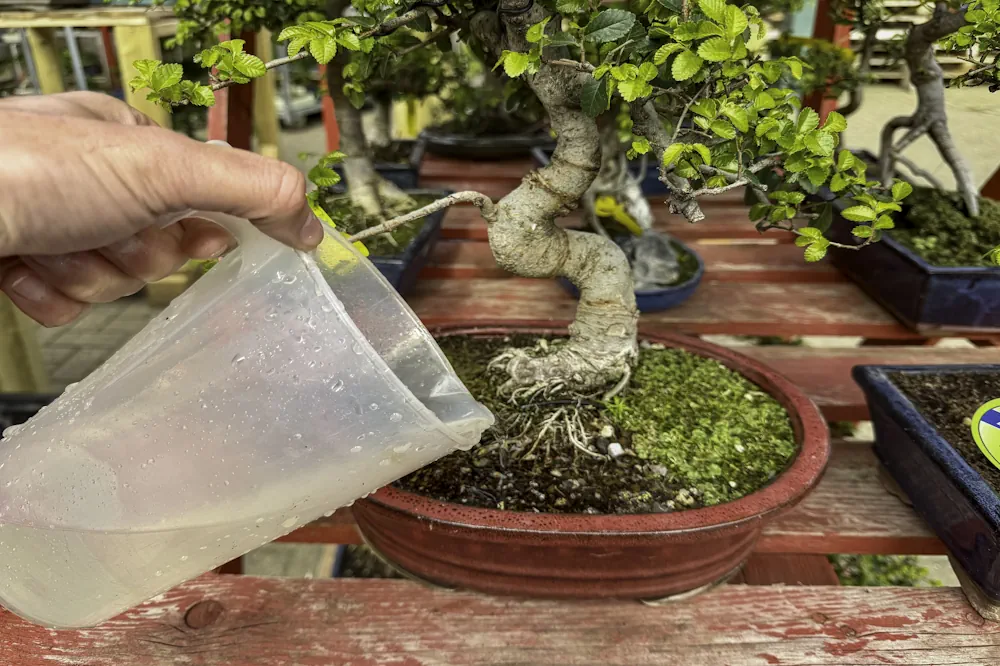
In autumn, your bonsai will not follow the same drying pattern it did in summer. The clearest signals come from how long the soil stays moist, how it feels below the surface, and how different the root zone is from what you see on top.
The clearest indicator that your bonsai watering in autumn needs adjusting is simple: the soil no longer dries at the same speed.
In summer, your tree may have needed water every 1 to 2 days. By late September or October, that same bonsai soil moisture autumn pattern may stretch to three or more days before it reaches the correct dryness level.
Track this change deliberately:
If that number increases week by week, your routine must slow down. Watering on the old schedule will keep roots too wet.
This shift happens because:
Your tree drinks less. Your job is to respond to that reduction, not to the calendar.
The finger and chopstick test in autumn remains your most reliable guide, but you must adjust how you interpret it.
In summer, you might water when the top layer feels dry. In autumn, check deeper. Insert your finger or a wooden chopstick 2 to 3 centimetres into the soil, not just at the surface.
When you pull it out:
Your target shifts slightly in autumn. Allow the soil to dry a little more fully before watering than you would in peak summer. The tree’s demand for constant moisture has reduced.
This method prevents both overwatering and unnecessary caution. You respond to actual root zone conditions, not guesswork.
In summer, a pale and dusty surface usually means the entire pot has dried. In autumn, that assumption often fails.
Cooler air temperatures can dry the top layer quickly while the deeper root zone stays moist for days. Wind can exaggerate this effect.
This makes surface-only checks unreliable in autumn.
You might see:
Yet 2 to 3 centimetres below, the soil can still feel cool and damp.
Because of this, always check at depth before every watering decision. Bonsai soil moisture autumn patterns shift from top-heavy drying to uneven drying.
If you water based only on appearance, you risk keeping roots consistently too wet as temperatures continue to fall.
Autumn watering moves in clear stages. You reduce frequency from summer levels in September, scale back further in October, and water only occasionally as dormancy approaches in November, always guided by soil moisture and UK rainfall.
September usually marks the first clear drop in bonsai watering frequency autumn.
If you watered daily or almost daily in August, you will often reduce to every 2 to 3 days in early September for temperate outdoor species.
Growth slows and transpiration drops as nights cool. The soil stays damp longer, especially after cloudy or wet days.
However, do not switch to a fixed schedule. Instead:
In a warm, dry September, you may still water every other day. In a cool, wet September in the UK, you might reduce sooner. Let conditions decide.
By October, most outdoor deciduous bonsai in the UK need watering every 4 to 7 days.
Leaf drop reduces transpiration sharply. Cooler air slows evaporation from shallow pots.
Rainfall becomes a major factor. UK autumn weather often turns wetter, so outdoor trees may receive enough moisture naturally.
You still need to:
If rainfall keeps the soil consistently damp, skip manual watering. Overwatering in October increases the risk of root problems as uptake slows.
In November, most hardy outdoor bonsai enter full or near dormancy.
Water use drops to a minimum. Many deciduous trees in the UK climate receive enough moisture from natural rainfall alone.
At this stage, bonsai watering frequency autumn often reduces to occasional intervention only. Check soil moisture every 7 to 10 days.
You are looking for one thing: the root ball must never dry out completely.
Outdoor hardy species often benefit from steady autumn rainfall. Indoor tropical bonsai are different. Ficus and other tropical trees continue growing indoors and may still need watering every 4 to 7 days, depending on heating and light.
This is where you clearly see how bonsai watering changes as winter approaches. You move from active management to careful monitoring.
UK autumn is typically wetter, and this directly affects your decisions.
Do not assume rainfall has soaked the root ball. Always confirm:
Trees placed under eaves, balconies, or dense foliage may stay dry even during steady rain. You may need to water these more often than fully exposed bonsai.
Heavy rainfall also raises the risk of waterlogging. Make sure drainage holes stay clear and pots do not sit in standing water.
Autumn watering is less about routine and more about observation. Rain can reduce your workload, but only if the soil actually receives and drains the water properly.
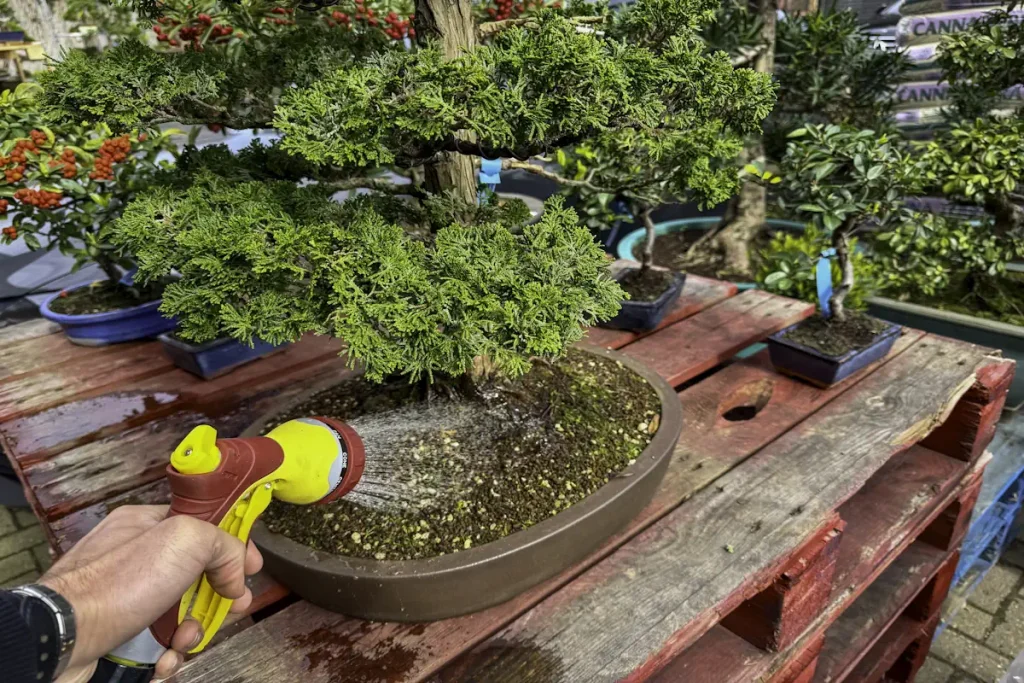
Autumn watering changes do not affect every bonsai in the same way. Deciduous trees, conifers, indoor tropical species, and recently repotted trees all reduce water use at different rates, and you need to adjust your approach for each group.
Deciduous bonsai watering in autumn changes quickly once leaves begin to fall. Japanese maple, Chinese elm, beech, and hornbeam show the most dramatic bonsai water uptake autumn reduction.
As leaves yellow and drop through October, active transpiration slows sharply. By late October, many established trees outdoors may only need watering every 7 to 10 days, sometimes less if rainfall is steady.
However, never allow the root ball to dry out completely. Even in full dormancy, roots remain alive and can suffer damage if soil becomes bone dry.
Focus on:
If you continue summer frequency, you risk waterlogged soil and root rot. These species need a clear reduction, often by half or more compared to August.
Conifers autumn watering requires a more measured adjustment. Junipers and pines keep their foliage year round, so transpiration continues, even in cooler weather.
Water demand still drops, but not as sharply as deciduous species. In typical UK autumn conditions, many conifers move from near daily summer watering to roughly every 4 to 7 days, depending on pot size and mix.
You must stay alert for overwatering. Free draining mixes dry quickly in summer, which trains you to water often. In autumn, lower evaporation means moisture lingers longer around the roots.
Key points for conifers autumn watering:
Unlike maples, pines should not swing between very dry and very wet soil. Aim for evenly moist, never saturated compost.
Indoor tropical species autumn watering follows a different logic. Ficus and similar trees do not enter true dormancy and do not drop leaves in response to UK autumn.
Their reduced water demand comes from lower light levels and cooler indoor temperatures, which slow growth. The change is gradual rather than dramatic.
You may shift from watering every 3 to 4 days in bright summer light to every 5 to 7 days in autumn. Always test the top layer of soil before watering.
Keep in mind:
The same watering reduction that suits a Japanese maple in October would be too extreme for a ficus. Adjust moderately, not drastically.
Recently repotted trees autumn watering needs careful control. A reduced root system cannot absorb or regulate moisture as efficiently as an established one.
After repotting in late summer or early autumn, keep the soil slightly moist but never saturated. Water thoroughly, then allow the surface to begin drying before watering again.
Pay attention to:
You may need smaller, more controlled waterings rather than heavy soakings. Watch the tree, not the calendar. A recently repotted bonsai can dry faster in one case and stay wet longer in another, depending on how much root work you carried out.
Autumn changes how your bonsai uses water. Cooler soil, shorter days, and slower growth increase the bonsai overwatering autumn risk, and mistakes at this stage often go unnoticed until winter damage appears.
In summer, warm soil speeds up root activity. If you overwater then, saturated compost combined with heat creates low oxygen conditions quickly. Root rot can develop fast, and you often see clear symptoms within weeks such as yellowing leaves, soft growth, or black spots.
Autumn works differently.
As temperatures drop through October and November, root growth slows. The tree absorbs less water, yet many growers continue a summer routine. Soil stays consistently moist, sometimes for days at a time.
This creates a slower problem. Fungal pathogens establish gradually in roots that are becoming less active and less able to defend themselves as dormancy approaches. Because the process develops quietly, visible damage often appears late, sometimes not until late winter or early spring.
That delay makes autumn overwatering more dangerous than summer overwatering.
Classic summer signs such as yellowing leaves are less reliable in autumn. Deciduous trees naturally change colour and drop leaves, so you cannot rely on foliage alone.
Instead, focus on the soil and pot:
You may also notice that the top layer looks damp every day, even though temperatures sit below 10°C and growth has slowed.
If the compost never reaches a slightly dry stage between watering, you are likely making one of the most common bonsai autumn watering mistakes.
Act early, before full dormancy sets in.
If you confirm root damage, remove affected roots and repot into fresh, free draining bonsai mix. Do this only if temperatures remain stable and not near freezing.
After adjustment, monitor pot weight and soil moisture through the rest of autumn. You want a clear pattern: water thoroughly, then allow a slight dry period before the next watering. This balanced cycle protects roots before winter arrives.
Small changes in temperature and daylight make bonsai watering in autumn very different from summer. Most problems come from habits that no longer match the tree’s slowing growth and reduced water use.
This is the most common and most damaging of all bonsai autumn watering mistakes.
During summer, you likely checked your trees daily and often watered every day, sometimes twice in hot weather. That routine becomes automatic. When September arrives, you may continue the same frequency even though transpiration has already slowed.
The danger develops gradually.
You will not see immediate leaf drop or dramatic decline. Instead, the soil stays slightly too wet for weeks. Roots receive less oxygen, and fine feeder roots begin to weaken.
By the time yellowing leaves or soft growth appear, root stress has already progressed.
What to do instead:
Do not wait for visible signs of overwatering. In autumn, prevention matters more than correction.
Watering by schedule causes problems in every season, but it becomes especially risky in autumn.
In spring and summer, soil may dry at a fairly predictable rate. In autumn, drying speed changes week by week. A warm spell can dry pots quickly, then a cool, cloudy week slows everything down.
If you water every two or three days regardless of conditions, you will either:
The only reliable guide is actual soil moisture.
Use:
Make watering decisions based solely on moisture, not the calendar. This approach consistently produces better root health and steadier autumn growth.
Autumn rain creates a false sense of security.
You may assume that frequent showers have fully watered your outdoor bonsai. In reality, many trees receive far less water than you think.
This happens when:
A brief shower may only wet the surface. The root zone can remain dry a few centimetres down.
Even in wet weather, check soil moisture manually using the finger or chopstick test covered earlier. Do not rely on surface appearance alone.
Rainfall supports watering in autumn, but it does not replace active monitoring.
The opposite mistake also causes damage.
You often hear that you should reduce watering in autumn. Some growers respond by cutting watering sharply and allowing the soil to dry out almost completely.
That approach stresses roots.
Even if your tree looks dormant, many species remain physiologically active well into autumn. Roots continue to function and store energy. If the soil becomes fully dry, fine roots can die back.
The target is barely moist, not dry.
Reduce frequency gradually as temperatures fall. Keep soil slightly damp between waterings, especially for deciduous species that are still storing energy before winter.
Complete dryness harms roots just as much as constant saturation. Balanced moisture supports healthy root systems through the transition into dormancy.
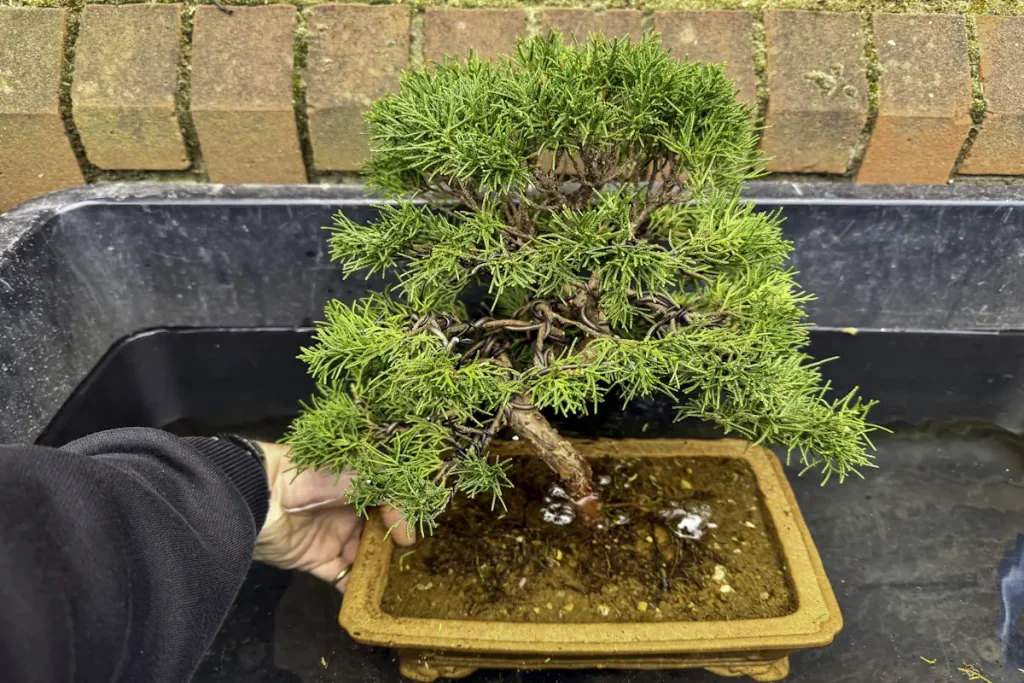
Your approach to bonsai watering in autumn directly shapes how well your tree handles winter dormancy. The goal is simple: guide the soil from active growing moisture levels to a barely moist state that protects roots through the cold months.
As your bonsai moves towards full dormancy, aim for soil that is barely moist at root level, not wet and never bone dry.
Dormant roots still need a small amount of moisture to prevent dehydration. However, saturated soil blocks oxygen, and roots deprived of oxygen weaken quickly in cold conditions. That is when rot begins.
You are aiming for:
In late autumn, begin spacing out watering. Let the top layer dry before watering again, and reduce volume each time. Cooler air and shorter days slow evaporation, so soil stays wet longer. Adjust gradually and check by touch, not by calendar.
This setting the right moisture level going into dormancy creates stable conditions. Roots remain hydrated without sitting in cold, stagnant compost.
Your autumn routine determines the condition of the root system when winter arrives.
If you overwater through September and October, roots often enter dormancy already stressed. Fine feeder roots may begin to rot before you notice any visible problem. Once the tree is dormant, its natural defence response slows. Fungal issues that started in wet autumn soil can then spread quietly through winter.
Common risk factors include:
By contrast, a well-managed bonsai watering dormancy approach keeps roots firm and healthy. Strong roots store energy during autumn. That stored energy drives the first flush of growth in spring.
Healthy winter roots equal stronger spring growth. The link is direct and practical.
The shift from autumn watering to winter care should feel gradual, not sudden.
In early autumn, you still check soil daily. By late autumn, you may check every few days. In deep winter, especially for outdoor hardy species, you water only when the soil becomes almost dry below the surface.
For outdoor temperate bonsai:
For indoor tropical species, growth slows but does not stop. You still water less than in summer, yet more regularly than hardy outdoor trees. Indoor heating can dry soil faster, so always confirm moisture by touch.
This transition from autumn to winter watering prepares you for the minimal winter routine. Continue with your full winter protection plan and seasonal expectations as dormancy settles in, where watering becomes part of broader cold weather management.
In autumn, bonsai watering frequency changes month by month. You should water your bonsai less in autumn than in summer, but not on a fixed schedule. Soil moisture, temperature, wind, and leaf drop all affect what is the right watering routine for bonsai in autumn.
In the UK, September can still feel like late summer. By October and November, cooler days and slower growth reduce water use.
| Species | September | October | November | Key Adjustment Trigger | Important Autumn Watering Note |
|---|---|---|---|---|---|
| Japanese maple | Every 1 to 2 days | Every 2 to 3 days | Every 5 to 7 days | Leaf drop | Reduce frequency once most leaves fall |
| Trident maple | Every 1 to 2 days | Every 2 to 3 days | Every 5 to 7 days | Cooler nights below 10°C | Avoid soggy soil after leaf fall |
| Chinese elm | Every 1 to 2 days | Every 2 to 4 days | Every 5 to 7 days | Slowed growth | Semi evergreen, monitor leaf retention |
| Beech | Every 2 days | Every 3 days | Every 5 to 7 days | Full leaf colour change | Soil stays damp longer after leaf drop |
| Hornbeam | Every 2 days | Every 3 days | Every 5 to 7 days | Leaf fall | Do not let roots dry during transition |
| Juniper | Every 2 to 3 days | Every 3 to 4 days | Every 7 to 10 days | Consistent temps below 8°C | Keep slightly drier but never bone dry |
| Scots pine | Every 2 to 3 days | Every 4 days | Every 7 to 10 days | Needle firmness | Reduce water as growth stops |
| Japanese black pine | Every 2 to 3 days | Every 4 days | Every 7 to 10 days | Cooler, damp weather | Ensure strong drainage |
| Ficus | Every 2 days | Every 3 to 4 days | Every 4 to 7 days | Indoor heating starts | Stable warmth means steadier demand |
| Carmona | Every 2 days | Every 3 to 4 days | Every 4 to 7 days | Reduced light levels | Avoid cold, wet compost |
Autumn bonsai watering is not simply about watering less. You respond to slower growth and slower soil drying as temperatures fall.
When you check soil daily and adjust week by week through September and October, you avoid both root rot from overwatering and stress from letting the root ball dry too far before winter.
Miyagi Bonsai stocks a carefully chosen range of bonsai care supplies suited to UK autumn and winter conditions, including free-draining bonsai soil mixes formulated to prevent waterlogging as temperatures drop, alongside moisture meters, chopsticks and tools for accurate soil testing, and species-specific guidance for deciduous, conifer, and indoor tropical trees. The watering advice in this guide reflects what we stock, use, and see working for our customers through every UK autumn. We are rated 5 stars across over 100 Google reviews, and our team is on hand by email and phone if you have any questions about autumn watering, species care, or preparing your bonsai for winter dormancy. Next working day UK delivery is available on most orders.
The honest answer is that it depends on your specific tree, species, pot size and local conditions; but as a general guide, most temperate outdoor deciduous bonsai reduce from daily or near-daily summer watering to every two to three days in September, every four to seven days in October, and very occasional watering in November when natural rainfall often provides sufficient moisture. The most reliable approach is to check soil moisture at depth every two to three days and water when the soil is approaching dryness rather than following a fixed schedule, as the rate of soil drying changes week by week through autumn.
Two things are happening simultaneously in autumn that cause soil to stay moist for longer. First, dropping temperatures slow the rate of evaporation from the soil surface significantly — the same soil mix that dried in twenty four hours in July may take five to seven days to reach the same dryness level in October. Second, as deciduous trees reduce and eventually stop their leaf-driven transpiration through autumn, their active water demand drops dramatically. The combination of slower evaporation and reduced uptake means soil stays moist for much longer without any change in watering frequency, which is why continuing summer watering habits into autumn creates overwatering problems.
No, the soil should never be allowed to dry completely, even through full dormancy. The target through late autumn and winter is barely moist rather than wet or dry, providing the humidity that dormant roots need without the oxygen deprivation that wet soil causes. For outdoor hardy deciduous species in the UK, the typically wet autumn climate often provides adequate natural moisture without supplemental watering from November onwards, but the soil should still be checked every seven to ten days to confirm it has not dried out completely, particularly for trees in sheltered positions that may not receive adequate natural rainfall.

