
Most bonsai that lose leaves in autumn or winter are dormant, not dead. If branches are flexible and show green under the bark, your bonsai is alive. Brittle branches, brown cambium, and rotting roots usually indicate death.
Which situation applies to you?
If in doubt, always run the scratch test before taking any action. Green tissue under the bark means the tree is alive, regardless of how it looks from the outside.
It’s a common worry for many bonsai owners to ask, “is my bonsai dead or just dormant?” Understanding whether your bonsai tree is truly dead or simply experiencing natural dormancy is essential for its care and survival. With over 40 years of combined experience at Miyagi Bonsai, we’ve answered this question for countless species, from Ulmus parvifolia and Acer palmatum to classic junipers.
Knowing the signs, moisture levels, leaf changes and root health is crucial to tell the difference between a dormant and a dead tree. This guide covers the clear symptoms to look for, how to use the scratch test and root inspection to confirm tree condition, and when to intervene versus when to wait for spring growth.
Bonsai dormancy is a natural process where the tree temporarily slows or stops growth to conserve energy, particularly during colder months. It functions similarly to hibernation and is a normal and healthy part of the seasonal cycle for most temperate species.
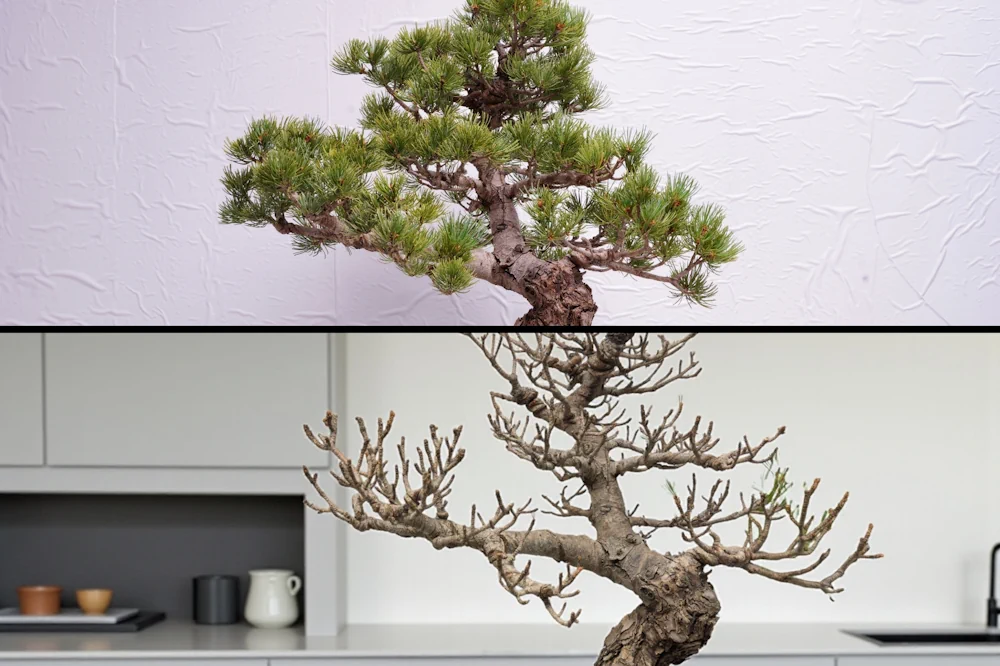
Dormancy is triggered by shorter daylight hours and temperatures falling below around 10°C.
Dormancy behaviour varies significantly by species. Deciduous trees such as Japanese Maple and Elm lose all their leaves in autumn, while evergreens like Juniper and Pine only slow their growth. Tropical species such as Ficus rarely enter true dormancy at all.
A dead bonsai tree is one that is no longer alive and cannot regenerate or recover. Unlike dormancy, there is no seasonal rest or hope for revival. Once dead, the bonsai will not grow back, even with the best care.

Clear signs a bonsai may be dead include:
Common reasons bonsai trees die include underwatering, overwatering, poor drainage, or root rot caused by fungal infections. Pests and extreme temperatures also play a part. If roots are mushy or have a foul smell, root rot is likely the cause.
Lime sulphur is sometimes used on deadwood to preserve it as a decorative feature, but it will not revive a dead tree. Defoliation is a technique for healthy living trees to encourage new growth; it will not help a tree that has already died.
If you’re still unsure, pause here and try the scratch test before reading on. If the tissue under the bark is green, your bonsai is alive and likely dormant. If it’s brown and dry, continue reading to confirm other signs.
A healthy bonsai responds to proper watering with at least a slight lift in appearance within days, or within weeks if recently stressed. If the tree remains limp with no new shoots and the soil either stays permanently soggy or dries out unusually quickly, this signals a problem. Over several weeks with no visible change or growth, the tree may be dead rather than dormant.
Leaf drop is natural for some species in winter, but if all leaves fall and none return by spring or during a period of warmth, there is cause for concern. If the tree continues to be bare while other plants begin to push out new shoots, this usually means the roots or internal tissues are no longer supporting growth.
A living bonsai typically shows new buds or leaves even after a stressful event. When weeks pass with no sign of new growth in species known for resilience, the tree may not be dormant; it may be dead.
Here’s a quick list to check:
Branch flexibility is a reliable health indicator. Live branches should flex without snapping cleanly, particularly younger shoots. Branches that are dry, break easily and show no green tissue inside indicate death.
Test by gently bending small twigs; if they snap and appear brown or grey inside, this is a strong sign the tree is no longer alive. Test carefully to avoid unnecessary damage if any sections may still be living.
Brittleness Checklist:
| Branch Condition | What It Means |
|---|---|
| Flexible, damp | Likely alive |
| Brittle, snaps | Likely dead |
| Green interior | Confirmed living |
| Brown/grey inside | Tree tissue is dead |
The scratch test is the most reliable way to check whether a bonsai is alive. Using a fingernail or a blunt knife, scratch a small area of bark on a branch or the trunk to reveal the cambium layer beneath. Green and moist tissue means the tree is alive.
Brown, dry or flaky tissue means that the section is dead. Testing in several areas helps confirm whether the damage is localised or widespread.
Tip: Scratch on different branches to verify whether the dead tissue is localised or widespread.
Root health is crucial for bonsai vitality. Carefully remove the tree from its pot to inspect the roots.
Warning signs include:
Roots like this show the effects of rot, usually caused by prolonged overwatering or poor drainage. In almost every case, when roots reach this state, recovery is highly unlikely.
The appearance of white mould, dark mildew, or persistent fungal growths on the trunk, branches, or surface of the soil signals trouble. Even after correcting humidity or watering issues, if these fungi remain and cover the same areas repeatedly, the tree may have already lost its ability to resist infection.
Powdery mildew, fuzzy mould or black sooty patches not only indicate a dead or dying tree but also create risks for neighbouring plants.
Common types you might see:
A living bonsai can typically resist or recover from minor pests. But when a tree is overwhelmed by severe infestations, such as scale insects, mealybugs, or spider mites, it can be drained of all life.
If insects have been treated repeatedly with no improvement and the tree shows no new growth even after pests are removed, the bonsai is likely already dead. Dead trees easily become breeding grounds for continued pest activity since no natural defences remain.
Healthy bonsai bark generally looks consistent for each species. If we notice that the bark has become unusually wrinkled, shrivelled, or is cracking in strange patterns without any sign of fresh injury, this is concerning.
Odd discolouration like blackened areas, large flakes peeling away, or sudden, patchy changes in bark colour are often signs of tissues that have died. These symptoms are particularly significant if seen alongside any of the other indicators above. Bark that feels papery, hollow or unnaturally soft is another indicator that the tree is not dormant but dead.
When a bonsai enters dormancy, specific and observable changes take place. A tree at rest can be reliably distinguished from one that is truly dead by checking a range of visual and physical indicators.
Seasonal leaf drop is entirely normal for deciduous bonsai, especially as autumn arrives. Maples, elms and hornbeams routinely lose all their leaves as outdoor temperatures drop. This process can come as a shock, but it rarely signals a problem in itself.
Local climate and species should always be considered when assessing seasonal timing. Some trees drop their leaves earlier or later, depending on their genetic makeup and where they are grown. For instance, a Japanese maple in the UK may drop leaves as early as October, while others hold on through November.
If leaf loss matches the normal timing for the species and growing zone, there is no cause for concern. Green stems or swelling buds still present are strong indicators the tree is simply dormant, not dead.
One of the most effective ways to tell if a bonsai is dormant is by gently bending smaller branches. Dormant branches will usually flex without snapping and feel slightly springy to the touch. Brittle, dry branches that break easily could signal trouble.
Healthy, living trees keep a firm, solid trunk and strong bark even when dormant. Separation, peeling or spongy areas on the trunk are red flags. Healthy, tight bark indicates the tree is maintaining internal moisture and life. Checking several branches rather than a single spot gives a more accurate assessment. A robust main trunk is a strong indicator the tree is dormant rather than dead.
Dormant bonsai should be free from active pest issues. That means no visible signs of insects, webbing, sticky residue (called honeydew), or black sooty mould. Spotting these can indicate a health problem and may contribute to further stress if not dealt with.
Inspect both upper and lower leaf surfaces, even on trees that have dropped their leaves. Also, check branch junctions and the trunk base. Any holes, tunnels, or frass (sawdust-like material) can mean borers or other pests are present, which is a sign of active decline, not healthy dormancy.
Clean, undamaged bark and soil surface are expected in a dormant but healthy tree. Address any visible problems early to prevent lasting damage.
The scratch test is the most direct way to check for life in a dormant bonsai. Gently scrape a small spot on a young branch or twig with a fingernail or sterilised blade. If the underlying cambium layer is a vibrant, moist green, that branch is alive.
Dry, brown, or grey tissue beneath the bark suggests that part of the tree may be dead.
Test in several areas. If the base and main branches show green under the bark, the tree is most likely dormant rather than dead. Avoid overdoing the test; repeated scratching can open the tree to disease.
When possible, examining the roots is another way to determine dormancy versus decline. Healthy bonsai roots are usually firm, resilient, and a light tan or white in colour. They should not be mushy, swollen, or emit a foul smell.
Gently remove some soil at the edge of the pot to check the condition of key surface roots. Any soft, blackened, or slimy roots (often a sign of root rot) are not a good sign and point to decay rather than dormancy.
Roots may not be actively growing during dormancy, but they should remain healthy and tightly bound to the soil.
Dormant trees retain small indicators of potential life despite stopping visible growth. Small, tight buds along branches or tiny green tips held in stasis through winter are normal for temperate species.
Slight swelling at bud sites or nodes as temperatures rise suggests the tree is preparing to resume growth.
Recording changes over time helps distinguish a tree at rest from one in decline. Any sign of expanding buds as temperatures rise is good confirmation of dormancy.
As bonsai trees enter dormancy, subtle shifts in bark colour or texture are often visible. Slight dulling or deepening of colour is expected during colder months for species like beech, elm, or maple.
Comparing the tree’s current appearance to photos taken in previous seasons helps identify normal variation versus concerning changes. Regular photo records allow us to spot normal variations against more concerning changes such as cracking, peeling, or sudden dark spots.
A healthy, dormant bonsai usually maintains intact, disease-free bark. Any drastic alterations outside typical seasonal patterns should prompt closer inspection to rule out issues like fungal infection or UV damage.
Temperature and day length are key external cues that trigger bonsai dormancy. In the UK and other temperate regions, outdoor bonsai usually stop growing as temperatures drop below 10°C (50°F) and daylight hours shorten in late autumn.
Keeping a hardy outdoor species indoors in a consistently warm and well-lit position year-round prevents proper dormancy and weakens the tree over time. A cold, natural winter is essential for the health and seasonal rhythms of most outdoor bonsai.
Monitoring temperature trends and tracking weather conditions each year helps predict and support the resting phase accurately.
Start with the scratch test. It takes ten seconds and gives a definitive answer regardless of how the tree looks from the outside. Green and moist beneath the bark means the tree is alive. From there, check root condition, branch flexibility and seasonal timing to build a complete picture.
If the tree shows green cambium but has been struggling, focus on correcting the most likely underlying cause, usually watering or drainage, before attempting any other intervention.
Miyagi Bonsai stocks a carefully chosen range of bonsai trees and care accessories, with next working day UK delivery available on most orders. If you are unsure whether your tree is alive and want a second opinion, our team is on hand by email and phone; send photos, and we will help you assess the situation. We are rated 5 stars across over 100 Google reviews and have helped countless growers diagnose and recover struggling trees.
When a bonsai stops growing or loses its leaves, it’s natural to wonder whether it’s dormant or truly dead. These frequently asked questions address the most common concerns bonsai owners have, from identifying signs of life to understanding seasonal dormancy and recovery potential. Each answer is designed to give clear, practical guidance based on real bonsai care experience.
The easiest way to check is the scratch test. Gently scratch a small section of bark with your fingernail. If the layer underneath is green and moist, the bonsai is still alive and likely dormant. If the tissue is dry and brown throughout the branch, that section of the tree is dead.
A dormant bonsai may lose its leaves, stop producing new growth, and appear inactive during colder months. However, the branches remain flexible and the buds stay intact. Deciduous species such as maple or elm naturally enter dormancy in winter and resume growth once temperatures rise in spring.
Sometimes a bonsai that appears dead is actually stressed or dormant. If the roots and cambium layer are still alive, improving care can help recovery. Place the tree in appropriate light, water carefully, and avoid heavy pruning or fertilising until new growth begins.
A bonsai without leaves may simply be entering its natural dormant period, particularly if it is a deciduous species. Seasonal leaf drop is normal in autumn and winter. However, sudden leaf loss during the growing season can indicate stress caused by watering issues, poor light, or environmental changes.
During dormancy, bonsai trees require less water and no fertiliser. The soil should be kept slightly moist but not constantly wet. Outdoor temperate species benefit from natural winter conditions, while indoor tropical bonsai should still receive bright light and stable temperatures.
The cambium layer is the thin green tissue just beneath the bark that transports nutrients and water through the tree. If this layer appears green and moist when lightly scratched, the branch is alive. Brown, dry cambium usually indicates that the branch or tree has died.

