

1 in stock
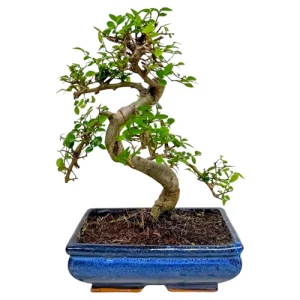

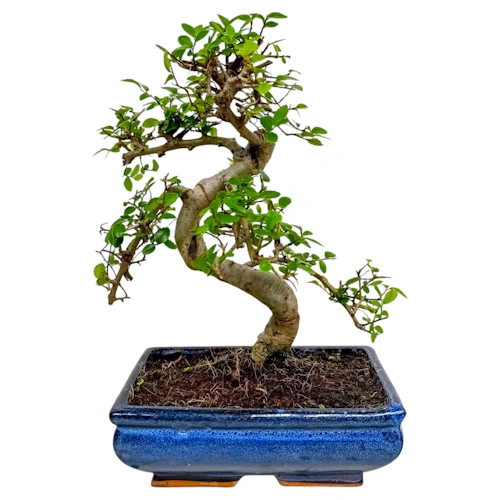
The Chinese Elm bonsai tree (Ulmus parvifolia) is a popular choice for beginners thanks to its adaptability and resilience in a wide range of conditions. As a semi-evergreen species, it can thrive both indoors and outdoors, making it a versatile addition to any space. It is known for its small, slightly serrated leaves and distinctive grey bark, which add character and charm throughout the seasons.
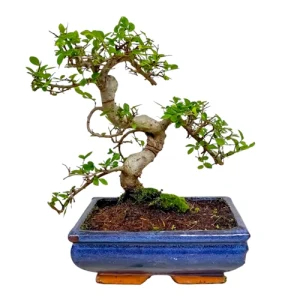
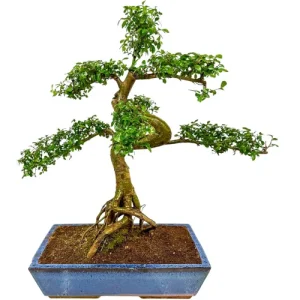
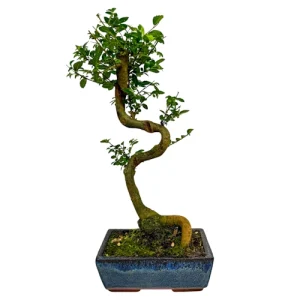
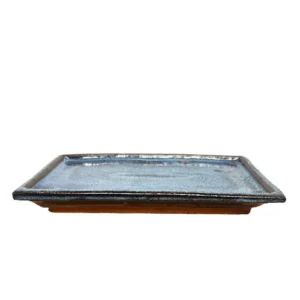
This particular tree stands approximately 32cm tall and is elegantly presented in a blue ceramic bonsai pot measuring 12cm depth and 18cm width. Its compact size and graceful shape make it perfect for desks, windowsills, or shelves adding a calming, natural aesthetic to any space.
| Height | Depth | Width | |
|---|---|---|---|
| Bonsai Tree | 32cm | 20cm | 22cm |
| Pot | 6cm | 12cm | 18cm |
| Trees’s Age | 8 Years Old | ||
| Type of Tree | Semi-Evergreen |
Please Note: Measurements given are approximate. Depending on the season, the appearance of the tree may vary. The tree that you receive may differ in size and shape to the photo if it has grown or been pruned since.
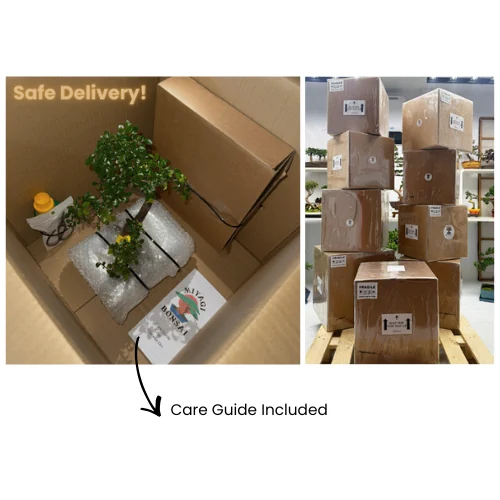
 Free UK Delivery (1–3 Working Days) Delivered Healthy and Ready to Display Securely Packed for Safe Delivery Beginner-Friendly and Easy to Care For Includes Simple Care Guides Semi-Evergreen Bonsai Tree Clear Returns & Delivery Policy – Read FAQs
Indoors
Place your Chinese Elm on a bright windowsill in a cool room, away from direct heat sources. While it can live indoors year-round, moving it outside during warm summer months can promote stronger growth and overall health. Chinese Elms grown indoors year-round gradually adapt to their environment and may retain their foliage throughout the year. Over time, they adjust to the stable indoor conditions and often reduce their leaf-drop cycle in the winter.
Outdoors
Chinese Elms can be kept outdoors year-round and are hardy enough to tolerate light frosts. In colder climates or during severe frost, move the tree to a protected, frost-free area such as an unheated greenhouse, cold frame, or bring it indoors. If kept outdoors through winter, it may lose its leaves but will regrow them in spring.
Watering
No strict schedule, watering needs vary based on climate, soil, airflow, and pot size.
We recommend using the submersion method, which we’ve detailed on our Best Way to Water a Bonsai Tree blog post.
Feeding
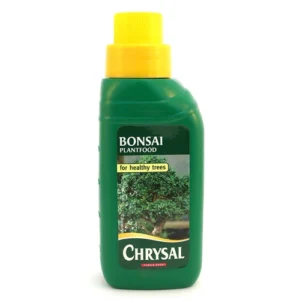
Indoors – Feed weekly or fortnightly from March to October with Chrysal Liquid Bonsai Feed (2 ml per litre of water). Add directly to the water during submersion.
Outdoors – Use Naruko Slow Release Fertiliser, either sprinkled on the soil or placed in a fertiliser baskets.
Regular pruning keeps your bonsai healthy, compact, and aesthetically pleasing. During the growing season (March–September), trim back new shoots once they grow beyond 3–4 leaves, leaving the two closest leaves intact.
Wiring is best done during late autumn, when the tree’s growth naturally slows. Use wire that is approximately the same thickness as the branch. This helps gently shape and refine your bonsai’s structure over time.
Check out our Bonsai Pruning and Wiring Services.
Repot in early spring with a well-draining bonsai soil mix.
Check out our Bonsai Tree Repotting Services.
Take a look at our Chinese Elm Bonsai Care Guide page for a more in-depth guide on looking after your new tree.