Chinese Elm bonsai can be kept indoors or outdoors year-round, making it a very adaptable tree. When kept indoors, place it in a bright position where it receives at least a few hours of natural light per day, such as near a south- or east-facing window. Avoid placing it directly above or next to a radiator or heat source, as this can dry out the tree and the surrounding air. If kept outdoors, the tree will enjoy fresh air and seasonal changes, but it must be protected from frost. If temperatures drop below 5°C, bring the tree indoors or place it in a greenhouse or sheltered area, ideally shielded from rain, as wet soil freezing can severely damage or kill the roots.
Chinese Elm prefers to be kept evenly moist, but not soggy. The watering schedule depends on pot size, sunlight exposure, and indoor conditions such as warmth and humidity. As a general rule, water when the top inch of soil feels dry, which should be a minimum of once or two times a week, depending on conditions. During the leafless winter period, especially if the tree is adjusting to indoor life, it may require slightly less frequent watering, but it still must be checked and watered minimum once a week. Never allow the soil to completely dry out, as this can quickly harm the roots.
If you are a first-time bonsai owner, another way to water is by submerging the entire pot in water until the bubbles stop. If you choose this method, be aware that your bonsai may not need watering for another two to four days, but this will depend on the factors mentioned above, such as soil type, pot size and climate.
The Chinese elm also benefits from higher humidity levels. This can be achieved by using a mister to spray the leaves, as well as placing a gravel tray under the pot to create a more humid microclimate around the tree.
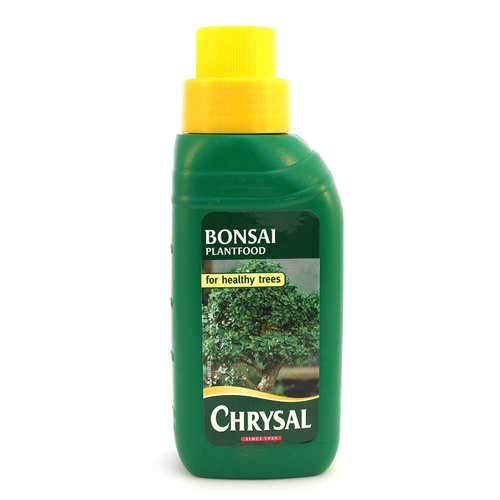
Feed your Chinese Elm regularly during its active growing season, typically from spring to early autumn, every 2–4 weeks. You can start adding Chrysal Liquid Bonsai Feed to your water from March until October. Use Naruko Fertiliser Slow Release Bonsai Feed once every one to two months.
This species responds very well to regular pruning, which helps maintain shape and promotes ramification. Allow new shoots to grow 4–6 leaves, then prune back to 2–3 leaves. This will encourage dense, compact growth and smaller leaves over time. Structural or hard pruning is best done in early spring before new growth begins. Wiring can be done throughout the growing season to shape branches, as the wood is relatively pliable, but it’s important to check regularly for wire marks and remove the wire within a few months to avoid scarring.
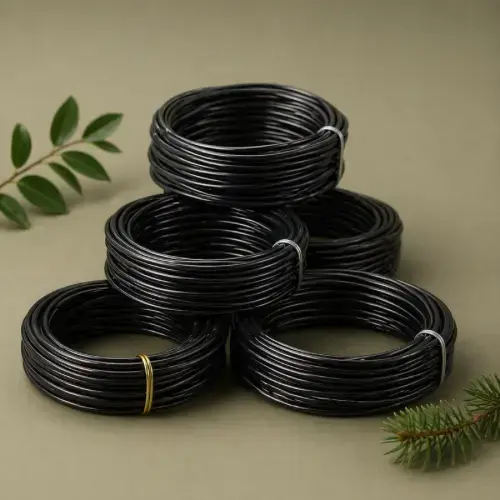
Training your bonsai using wiring is best done during the late autumn dormancy period and the Chinese elm is especially rewarding to work with. We recommend using wires with a thickness that matches the thickness of the branch: if the wire you choose is too thick, you will damage the bark. If it is too thin, it won’t be effective.
Repotting should be done every 2–3 years, depending on the age and root development of the tree. The best time to repot is in early spring, just as the tree exits dormancy. Use a well-draining bonsai soil mix, such as one based on akadama, pumice, and lava rock, or a quality bonsai soil available from your local supplier. When repotting, prune back the roots by about one-third if necessary and place the tree in a slightly larger or refreshed pot with fresh soil. After repotting, keep the tree out of direct sun and wind for a week or two while it re-establishes.
Trees that are ready for repotting will require root pruning, a suitable new pot and appropriate soil mix.
When repotting, do not cut back the root mass by a large amount, and choose a well-draining soil mix that has a neutral or slightly higher PH value of 5-6, but not over 7. We tend to use a mixture of different speciality bonsai soils on our trees. Every species is different, so please contact us for free soil-mix advice or to take advantage of our repotting service.
Ulmus Parvifolia
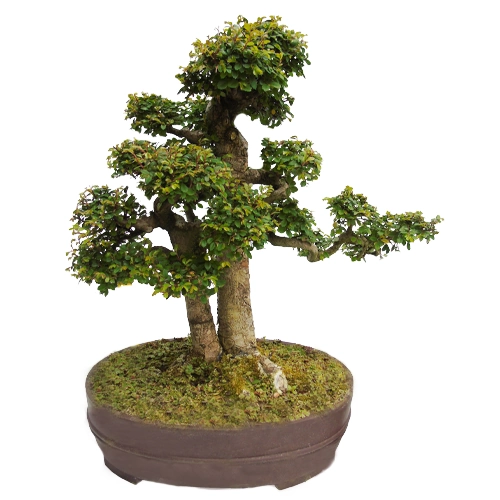
Bonsai make for a one-of-a-kind indoor plant offering elegance, nature and art all in one minute form. Across an array of exquisite and erudite species, they all demand their own specific care and cultivation needs in order for their beauty to flourish. We have an extensive library of care guides for indoor bonsai trees so you can make an informed and considered choice. It’s not about selecting the perfect bonsai, it’s about selecting the perfect bonsai for you.
Yes, Chinese Elm Bonsai are one of the best choices for beginners, as they are easy to care for, resilient, and tolerant of mistakes. They can be kept indoors or outdoors, depending on the season and the temperature. They also respond well to pruning and wiring, which allows you to shape them according to your preference.
Your Chinese Elm Bonsai needs plenty of bright, indirect sunlight to thrive. If you keep it indoors, place it near a sunny window, but avoid direct sunlight that can scorch the leaves. If you keep it outdoors, choose a spot that gets morning or afternoon sun, but not midday sun. You can also move it to a shaded area during the hottest hours of the day.
You can propagate your Chinese Elm Bonsai by taking cuttings or by air-layering. Cuttings are small pieces of stem or branch that are planted in moist soil and kept in a humid environment until they develop roots. Air-layering is a technique that involves making a cut in the bark, wrapping it with moist sphagnum moss and plastic, and cutting it off when roots appear. Both methods are best done in spring or summer, when the tree is actively growing.
The most common pests and diseases that affect your Chinese Elm Bonsai Tree care are spider mites, scale insects, aphids, mealybugs, fungal infections, and bacterial infections. You can prevent and treat these problems by keeping your tree healthy, clean, and well-ventilated. You can also use organic or chemical pesticides and fungicides, but make sure to follow the instructions and apply them sparingly.
There are several possible reasons why the leaves of your Chinese Elm Bonsai are turning yellow and falling off. One reason is that the tree is going through a natural process of leaf shedding, which happens in autumn or winter, depending on the climate. Another reason is that the tree is stressed by overwatering, underwatering, overfertilizing, underfertilizing, or temperature changes. A third reason is that the tree is infected by a pest or a disease, which can cause leaf spots, wilting, or curling. To identify and solve the problem, you should check the soil, the roots, the branches, and the leaves for any signs of damage or disease. You should also adjust the watering, fertilising, and lighting accordingly.
Black spots on your Chinese Elm Bonsai leaves are usually a sign of a fungal infection, such as anthracnose or black spot. These infections are caused by spores that land on the leaves and germinate in moist conditions. They can spread quickly and affect the health and appearance of your tree. To prevent and treat fungal infections, you should keep your tree in a well-ventilated area, avoid wetting the leaves when watering, remove any infected leaves and branches, and apply a fungicide spray or a homemade solution of baking soda and water.