
Bonsai leaves change colour in autumn because shorter days and cooler temperatures slow chlorophyll production, revealing the red, orange, and yellow pigments already present in the leaves.
As light levels drop, your miniature trees begin a natural process called senescence. They seal off each leaf, draw nutrients back into the trunk and roots, and prepare for winter dormancy.
You notice your bonsai leaves turning yellow, orange, or red as autumn arrives, and you wonder if something is wrong. In most cases, nothing is wrong at all. Seasonal colour change forms a normal part of the life cycle of many deciduous bonsai trees.
When you understand this shift, you can tell the difference between healthy autumn colour and stress. You can also adjust feeding, light, and watering to encourage stronger colour next season.
This guide draws on established UK bonsai practice and is written for growers managing deciduous, conifer, and tropical species in British growing conditions. Whether you are watching your first bonsai change colour in autumn or want to understand why display quality varies year to year, the guidance here applies across experience levels.
One of the most rewarding sights in autumn is watching your bonsai leaves changing colour. The shift from green to yellow, orange, or red follows clear biological signals that prepare the tree for winter.
As autumn approaches, daylight hours shorten. Special light-sensitive cells in your bonsai’s leaves detect this change in photoperiod. That signal tells the tree to begin shutting down leaf activity and prepare for dormancy.
This happens reliably each year, even if early autumn stays mild. Temperature influences intensity, but photoperiod starts the process.
Cooler nights, especially when temperatures drop below about 10°C, strengthen the response. These cooler conditions:
Together, shorter days and cool nights trigger the internal changes behind bonsai leaves changing colour in autumn.
During the growing season, chlorophyll dominates. It absorbs red and blue light, making leaves appear green.
In autumn, your bonsai begins active chlorophyll breakdown. This is not decay. It is a controlled process called senescence.
The tree dismantles chlorophyll molecules and withdraws valuable nutrients, especially nitrogen and magnesium, back into the trunk and roots. This step supports survival through winter.
As chlorophyll fades, it no longer masks other pigments. The green disappears because the tree stops producing it and breaks down what remains.
This stage of bonsai chlorophyll breakdown in autumn shows that your tree is managing resources carefully before leaf drop, not declining in health.
Once green fades, other pigments become visible. Some were already present. Others form in response to autumn conditions.
Carotenoids produce yellow and orange tones. These pigments exist in leaves all season but remain hidden beneath chlorophyll. When green fades, they appear.
Anthocyanins create red and purple colours. Unlike carotenoids, your bonsai produces these during autumn.
Anthocyanin production increases when you have:
This explains why bonsai anthocyanin autumn colour often looks stronger after sunny days followed by chilly evenings.
If autumn stays warm or cloudy, reds may look duller. If light is strong and nights are cool, colours intensify.
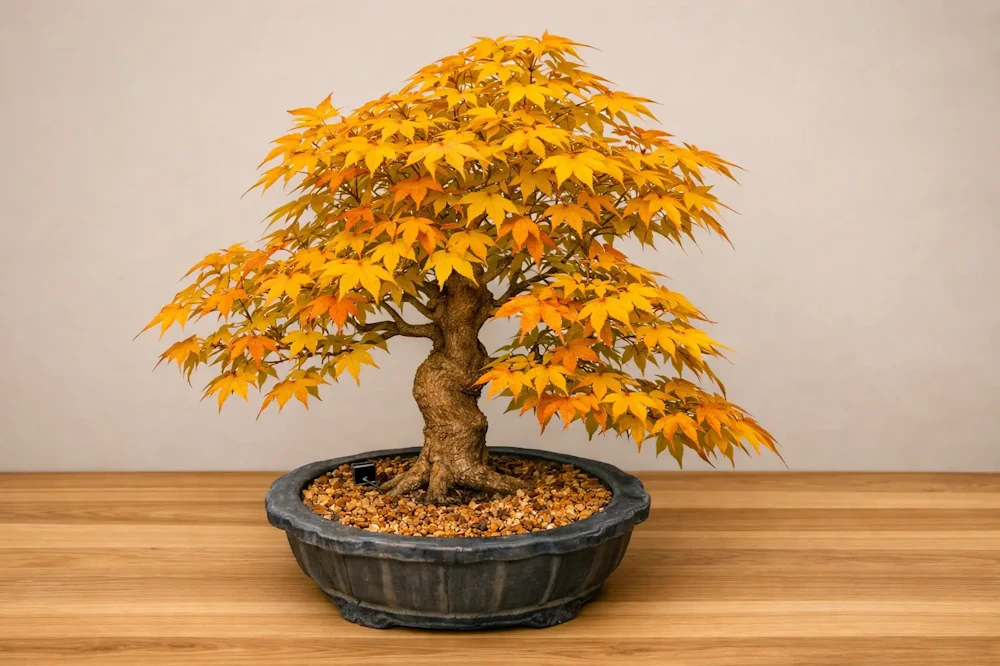
Healthy bonsai autumn colour in the UK follows a clear pattern. You see gradual change, species-specific tones, and a clean leaf drop rather than sudden browning or patchy dieback.
A healthy bonsai seasonal colour change begins subtly.
First, you notice a slight dulling of the leaf surface. The glossy green softens as chlorophyll production slows and begins to break down in response to shorter days and cooler nights.
Next, small hints of yellow or orange appear at the leaf margins and tips. This often starts unevenly but spreads steadily. Over one to three weeks, depending on species and weather, colour develops across the full leaf surface.
At peak display, the entire canopy can shift tone:
The colour looks even and deliberate, not blotchy or scorched.
Finally, the leaf weakens at its attachment point. It drops cleanly once the separation layer forms at the base. You should not see large areas of blackening or shrivelling before fall. Clean drop is a key sign of a healthy process.
Not all bonsai produce the same level of drama. Species choice matters.
These differences are normal and genetic.
Even within the same species, colour quality can change from year to year. The same Japanese maple may glow crimson one autumn and show a more muted red the next.
Light exposure also affects intensity. Trees in full sun during the colour change period usually show stronger tones than those kept in shade. Good health through spring and summer supports a more even and confident display.
Weather patterns play a major role in why some years produce better colour than others.
The best displays usually follow:
Cool nights slow chlorophyll production while allowing other pigments to show clearly. That contrast creates brighter reds and oranges.
By contrast, colour often looks flat in years with:
In the UK, a mild and overcast autumn often leads to more muted tones. When you understand these factors, you can judge your bonsai autumn colour with confidence and recognise when the tree is simply responding to the season rather than showing signs of a problem.
Different deciduous bonsai species show very different autumn colours. Some produce intense reds, while others shift to warm golds or soft yellows before leaf drop.
Knowing what your tree should do helps you judge its health and enjoy its seasonal change.
If you want strong bonsai autumn red leaves, Japanese maple bonsai autumn colour sets the standard. Depending on the variety, you can see:
Red-leaved cultivars often deliver the most reliable reds, especially if they already show burgundy tones through summer. Green varieties can turn vivid scarlet or orange, but results vary with weather and feeding.
To bring out the best colour, focus on:
In the UK, colour usually begins in October. Leaves often peak for one to three weeks before dropping. A sudden cold snap can shorten the display.
When your bonsai leaves turn red in autumn, that is normal senescence. It is one of the strongest examples of deciduous bonsai autumn colour UK growers can expect.
Trident maple offers a steadier but slightly less dramatic show than Japanese maple. You usually see warm orange, amber, and golden yellow tones rather than deep crimson.
The main strength of Trident Maple is consistency. Even in average seasons, it tends to colour well.
In UK conditions, colour often starts slightly later than Japanese maple. It can also hold its leaves longer, sometimes keeping bright foliage into late October or early November.
You may notice:
Trident maple suits growers who want dependable bonsai autumn foliage colour without relying on perfect weather.
Chinese elm gives a softer display. Instead of red, you typically see pale yellow to buttery gold before leaf fall.
This change may seem modest compared to maples, but it still signals a healthy tree. A gradual fade from green to yellow shows that the tree is entering dormancy correctly.
Outdoor Chinese elms in the UK usually drop all leaves once nights cool consistently. Indoor specimens in mild conditions may:
Do not expect strong bonsai autumn red leaves from this species. Appreciate its clean yellow tone and fine twig structure once bare.
Beech and hornbeam produce warm golden brown shades rather than bright reds or oranges. The colour often shifts from green to yellow, then to tan or copper brown.
This muted palette suits their smooth bark and fine branching.
One key feature is marcescence. Many beech and hornbeam bonsai keep their dry brown leaves through winter, especially on younger branches.
You may see:
This retained foliage is normal. It is part of the species charm, not a care issue.
For deciduous bonsai autumn colour UK growers who prefer subtle tones, beech and hornbeam provide a long lasting display.
Larch stands apart as a deciduous conifer. In autumn, its soft green needles turn clear golden yellow before falling.
The change often happens quickly. Within one to two weeks, the tree can move from green to bright gold to completely bare.
You should expect:
Because the needles are fine, the golden effect looks dense and luminous for a short period.
Once bare, larch shows one of the most elegant winter outlines in bonsai. The contrast between autumn colour and stark winter structure is part of its appeal.
Zelkova offers warm orange and soft red tones, often later in the season than maples. In the UK, you may see colour deepen in late October or even early November.
The leaves are small, so the overall effect appears tight and refined.
Typical colours include:
Zelkova rarely produces the intense crimson of Japanese maple. Instead, it gives a balanced, compact display that suits broom-style bonsai.
If you want reliable bonsai autumn foliage colour without extreme swings, zelkova is a steady performer with warm seasonal tones.
Field maple is one of the most commonly grown native bonsai species in the UK and colours reliably each autumn. Expect clear yellow to warm orange tones, often appearing from mid-October onwards.
The display is understated compared to Japanese maple but consistent. Field maple tolerates a wide range of UK growing conditions, making it a practical choice for growers who want dependable seasonal colour without specialist care.
Stewartia produces some of the most complex autumn colour of any bonsai species, mixing red, purple, and orange tones across the same leaf. In the UK, colour typically develops in October and can be striking in sunny, open positions.
It is a specialist species. Stewartia requires acid soil, consistent moisture, and careful positioning; it does not tolerate drought or alkaline conditions well. Growers who invest in the correct growing medium are rewarded with outstanding autumn display and attractive bark through winter.
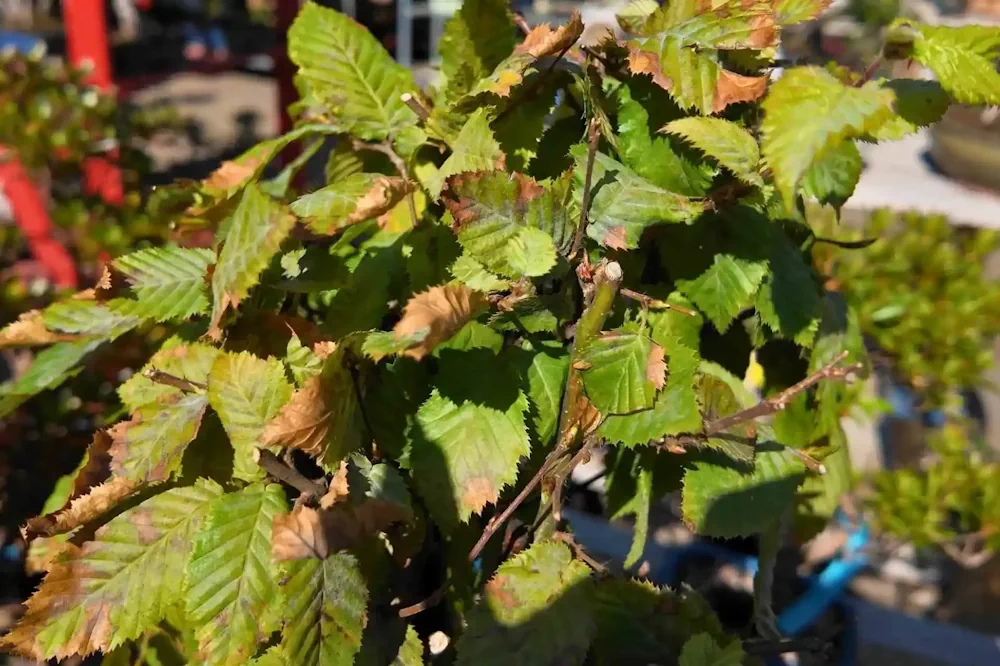
You can usually tell the difference by looking at colour quality, timing, and leaf texture. Whether this is your first autumn with a bonsai or you are comparing several trees side by side, the same three clues apply. When you combine them, you can decide if your bonsai colour change is normal or a problem.
Healthy autumn colour looks rich and even. You often see clear yellows, oranges, or reds spread across the whole leaf surface, sometimes with more than one tone in the same leaf.
This happens because chlorophyll breaks down as days shorten and temperatures cool. The remaining pigments show through, so the colour appears warm and balanced rather than dull.
Stress colour looks different. Watch for:
In bonsai autumn colour vs stress colour comparisons, healthy leaves usually stay supple for a while. Stress leaves often feel dry, brittle, limp, or weak before they drop.
If the colour looks faded, patchy, or damaged instead of vibrant and even, suspect a problem.
Timing is often the most reliable test.
In the UK, normal autumn colour usually begins in September or October. Shorter days and cooler nights trigger senescence, the natural process that leads to leaf drop.
If your bonsai starts turning yellow or brown in mid-summer or early August, that is unlikely to be seasonal. Stress colour can appear at any time of year, especially during heatwaves, heavy rain, or after repotting.
Also look at recent care:
If the colour shift follows an environmental change rather than a seasonal one, treat it as a warning sign. When timing aligns with autumn conditions, the change is usually normal for deciduous bonsai.
Healthy autumn colour tends to start on the outer canopy and older leaves. It then progresses evenly across the tree.
Leaves often change from the edges inward, but the shift looks balanced rather than damaged. The entire bonsai moves through the process together.
Stress colour often appears in specific vulnerable areas:
Distribution gives you context. If only one branch shows yellowing while the rest remains deep green, look for a localised issue such as root problems on that side of the pot.
Even progression suggests seasonal change. Irregular spread suggests stress.
| Feature | Healthy Autumn Colour | Stress Related Colour |
|---|---|---|
| Timing (UK) | September to October | Any time, often summer |
| Colour Quality | Warm yellow, orange, red | Pale yellow, dull brown, blotchy |
| Distribution | Even across canopy | Patchy or localised |
| Leaf Texture | Soft at first, drops naturally | Crispy, limp, or damaged |
| Soil Condition | Generally stable moisture | Often too wet, too dry, or nutrient poor |
Start with timing, then study colour quality, then check texture and soil. Those three checks give you a clear and practical diagnostic framework.
Strong light, cool nights, balanced feeding, and the right species all shape bonsai autumn colour in the UK. When you manage these four factors well, you give your trees the best chance to produce clean yellows, oranges, and deep reds.
Light is the single most important factor for intense red and purple tones in bonsai leaves turning red in autumn.
Red pigments called anthocyanins develop during the colour change period, and they rely on light energy. Bright autumn sun encourages stronger pigment production, which leads to richer reds and clearer purples.
Move your deciduous bonsai into the brightest position you can provide from early September onwards. In the UK, this often means:
Even a small increase in direct sun can noticeably improve colour quality. Trees kept in dull or shaded spots often show washed-out reds and early leaf drop.
If you grow on benches, check that taller trees are not blocking light. Small adjustments can make a visible difference within weeks.
You often hear that cool nights produce the best reds. That is accurate.
The most intense colours develop when you get warm, sunny days followed by cool nights below 7°C. This temperature shift supports anthocyanin formation while slowing chlorophyll breakdown in a way that deepens colour.
Ideal autumn conditions look like this:
| Daytime | Night-time | Result |
|---|---|---|
| Sunny and mild | Below 7°C | Strong red and purple tones |
| Mild and cloudy | Above 10°C | Dull, weak colour |
In the UK, you cannot control the weather, but you can avoid reducing the effect. Do not bring hardy deciduous bonsai indoors too early. Sheltering them from every cool night often reduces colour intensity.
Keep them outside until leaf fall, protecting only from severe frost once the display has finished.
Watering and feeding through summer directly affect autumn colour quality.
Trees that suffer drought stress during hot spells often show muted, patchy colour. Leaves may brown at the edges instead of turning clean yellow or red. Keep watering consistent throughout summer so the tree enters autumn healthy, not weakened.
Feeding matters just as much.
Excess nitrogen encourages lush green growth and can delay or suppress anthocyanin production. Balanced, moderate feeding supports steady growth and better pigment development.
When you manage watering and feeding well, you improve both leaf health and colour clarity.
Some species consistently deliver better bonsai autumn colour in UK conditions.
Reliable performers include:
When choosing a tree, look beyond the label. Select specimens with:
Individual variation matters. Two maples of the same variety can colour differently depending on genetics and past care.
If autumn display is a priority for you, choose species known for reliable reds and oranges, then manage light, temperature, watering and feeding with care.
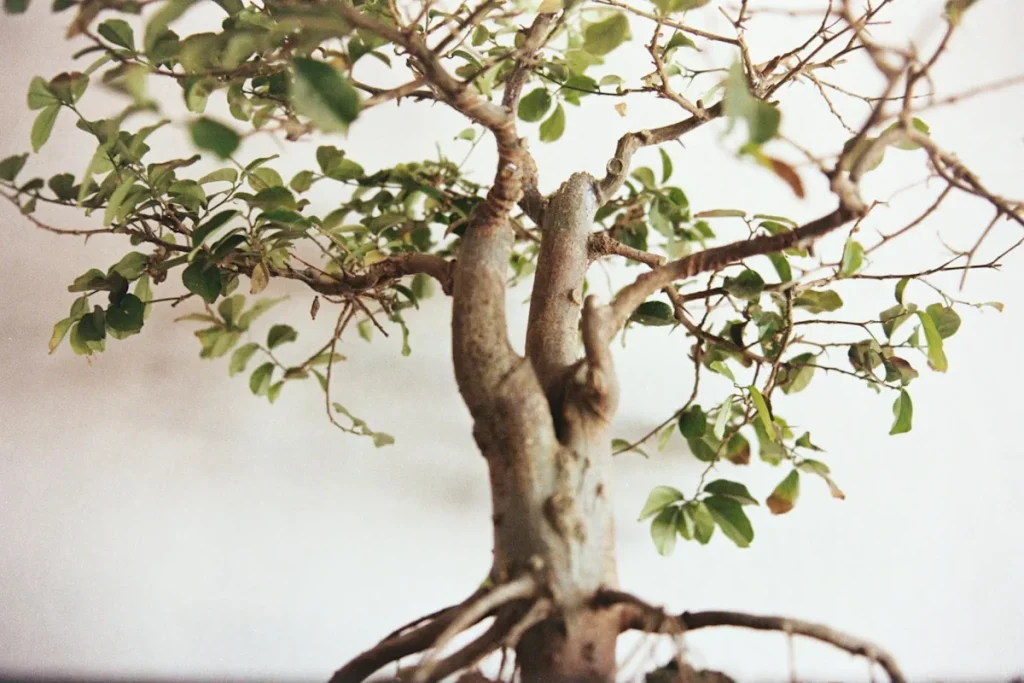
Once your bonsai leaves changing colour autumn display reaches its peak, the process does not stop. The colour fades, the leaves detach, and the tree shifts fully into winter preparation.
After the brightest reds, oranges, or yellows, the leaf tissue continues to weaken at the base. A protective layer forms where the leaf stalk meets the twig, slowly cutting off transport of nutrients and sugars.
You will notice a clear sequence:
For Japanese maples, this can happen over 1 to 3 weeks. Chinese elm may hold leaves slightly longer. Beech often turns copper and can retain some dried leaves into early winter.
Healthy leaf drop looks tidy. The scars at the nodes appear clean and sealed, not torn or blackened. Leaves fall gradually, not all at once due to stress.
When your bonsai seasonal colour change is strong and even, leaf drop usually follows in a complete and orderly way. Weak or patchy colour often leads to uneven drop, with some leaves clinging or falling early while still green.
When the last leaves fall, you finally see the full branch structure. This is one of the most important viewing moments in your bonsai calendar.
Look closely at:
Without foliage, flaws stand out. Inverse taper, bar branches, or overly straight sections become obvious.
At the same time, good structure becomes clear. You can assess spacing, ramification, and balance without distraction. Many growers schedule pruning decisions after leaf drop because the structure is fully exposed.
The bare winter silhouette reveals whether your work during the growing season built fine branching or just surface growth.
Strong autumn colour usually signals that your tree managed the growing season well. When chlorophyll breaks down cleanly, other pigments show clearly. That only happens if the tree built adequate reserves.
A tree that produces rich autumn colour has usually:
During autumn, deciduous bonsai move sugars and nutrients from leaves into woody tissues. Good colour suggests this transfer is happening efficiently.
You can view this as a feedback loop. When you water correctly, feed appropriately, and avoid late soft growth, you often get better colour. That better colour shows the tree is ready for dormancy and positioned for strong spring growth.
When you see bonsai leaves changing colour in autumn, you are usually looking at a healthy deciduous cycle. Shorter days and cooler nights reduce chlorophyll, which reveals yellow, orange and red pigments already in the leaf.
If you are asking, “Why are my bonsai leaves turning red in autumn?” the answer is often simple. In maples and similar species, red tones develop naturally as sugars concentrate in the leaf during cool, bright conditions.
In the UK climate, most deciduous bonsai autumn colour appears from late September to early November. Timing varies by species, location, and how you managed feeding and light during summer.
| Species | Primary Autumn Colours | Typical UK Timing | Peak Colour Conditions | Leaf Drop |
|---|---|---|---|---|
| Japanese Maple | Scarlet, crimson, orange | Late Sept to Oct | Cool nights, sunny days, moderate feeding | Drops cleanly |
| Trident Maple | Orange, red, yellow | Oct | Full sun in autumn, balanced summer growth | Drops cleanly |
| Chinese Elm | Yellow, orange, sometimes red | Oct to Nov | Bright light, not overfed with nitrogen | May retain some leaves |
| Beech | Copper, golden brown | Oct | Cool early autumn nights | Often retains dry leaves |
| Hornbeam | Yellow to pale gold | Oct | Consistent moisture, good light | Some leaves retained |
| Larch | Clear yellow | Oct | Full sun, well-drained soil | Drops needles fully |
| Zelkova | Yellow, orange, red | Oct | Strong summer growth, good light | Drops cleanly |
| Field Maple | Yellow to warm orange | Oct | Open position, not shaded | Drops cleanly |
| Stewartia | Red, purple, orange mix | Oct | Sunny autumn position; needs acid soil (specialist species) | Drops cleanly |
Deciduous bonsai autumn colour UK displays are one of the most rewarding parts of growing these trees. Strong colour usually reflects balanced feeding, good light, and healthy growth earlier in the season.
When you understand what normal bonsai autumn foliage colour looks like for each species, you can enjoy the display with confidence and quickly spot the rare cases where colour signals stress rather than seasonal change.
In our experience, the most common autumn colour mistake is expecting a strong display without the conditions that produce one. Cool nights, bright autumn sun, and disciplined feeding from mid-summer onwards are what drive deep reds and clean oranges. If colour looks flat or muted, the answer is almost always in how the tree was managed between May and September rather than anything you can correct in October. Focus on the growing season, let the tree experience natural autumn conditions, and the display tends to look after itself.
Miyagi Bonsai stocks a carefully chosen range of deciduous bonsai trees known for strong autumn colour, including Japanese Maple, Trident Maple, and Zelkova, alongside autumn fertilisers and care supplies suited to UK growing conditions, with next working day UK delivery available on most orders. The products and recommendations in this guide reflect what we stock, use, and see working for our customers every day. We are rated 5 stars across over 100 Google reviews, and our team is on hand by email and phone if you have any questions about autumn colour, species selection, or seasonal bonsai care.
Yes, and most of it happens during the growing season rather than in autumn itself. The key factors are light, feeding discipline, and consistent watering. Avoid high nitrogen fertiliser from mid-summer onwards, as excess nitrogen suppresses anthocyanin production and keeps leaves greener for longer. Keep the tree in the brightest position available through summer and into early autumn. Water consistently so the tree never suffers drought stress, which leads to patchy, muted colour. In autumn, keep hardy deciduous species outside so they experience cool nights naturally. Those conditions, repeated each year, tend to produce noticeably stronger colour over time.
It depends on the species. If you grow an evergreen such as juniper, pine, or ficus, no autumn colour change is completely normal. If you grow a deciduous species such as maple or elm and it stayed green without dropping leaves, the most likely causes are insufficient cooling, excess nitrogen late in the season, or the tree being kept too warm indoors. Deciduous bonsai need shortening days and cool nights to trigger senescence. A tree kept in a heated room or sheltered from natural temperature drop may not receive the signal it needs to begin the process. Move it to a naturally cooler, brighter outdoor position next autumn and adjust late season feeding.

