
Most temperate bonsai enter dormancy in late autumn as daylight shortens and temperatures consistently fall, usually between October and December in the UK.
During this period, the tree slows growth, conserves energy, and prepares for spring. Tropical bonsai differ, as they do not need a cold dormant period and may grow year-round indoors with stable warmth and light.
You might worry when your bonsai drops its leaves or stops growing, but in many cases, it simply prepares for dormancy. Bonsai do not follow a fixed calendar date. They respond to changes in light and temperature in their environment.
This guide draws on established UK bonsai practice and is written for growers managing deciduous, conifer, and tropical species in British growing conditions. Whether you are new to winter bonsai care or want to understand dormancy more precisely across a mixed collection, the guidance here applies across experience levels.
Dormancy is a controlled seasonal slowdown that allows temperate bonsai to survive winter and grow strongly in spring. Growth stops, energy moves into root storage, and buds complete their development for the following season. Tropical species such as Ficus do not enter true dormancy and may grow year-round with stable warmth and light indoors.
For a detailed explanation of the biology behind dormancy, including how temperature and light cycles trigger the process and what happens inside the tree during winter rest, see The Science of Bonsai Dormancy.
If you are unsure whether your bonsai is dormant or has died, the fastest check is the scratch test; see Is My Bonsai Dead or Dormant? for a full diagnostic guide.

In the UK, bonsai dormancy timing follows shortening day length first and falling temperatures second. Most temperate species reach full dormancy by November, stay dormant through winter, and begin to wake in late February or March, with clear regional differences between Scotland and southern England.
August
Day length drops below the level that triggers early physiological changes in sensitive species. Growth slows, but trees still look active.
September
Photoperiod and cooler nights combine. Deciduous trees such as maple, elm, and hornbeam reduce growth. Fertiliser uptake slows.
October
Leaf colour change and leaf drop begin on most deciduous species. Root activity continues but at a lower rate. Conifers like pine and juniper grow slowly. Chinese elm is the exception here; it often retains some foliage into late autumn and enters only partial dormancy rather than the full metabolic shutdown seen in maple or beech.
November
Most temperate bonsai reach full dormancy. Deciduous trees stand bare. Evergreens stop extending shoots. Chinese elm may still carry some leaves, especially in milder southern areas; partial leaf retention through November is normal for this species and does not indicate poor health.
December to February
Trees remain dormant. Water needs drop, but roots must not dry out.
Late February to March
Longer days and mild spells trigger swelling buds. Early species begin to break dormancy.
Tropical bonsai kept indoors, such as Ficus, do not enter true dormancy.
Regional variation Scotland vs southern England matters more than many growers expect.
In Scotland, dormancy often begins two to four weeks earlier. Cooler nights arrive sooner, and shorter days at higher latitude reinforce the signal. You may see clear slowdown by early September and full dormancy by late October or early November.
In the Midlands, expect something in between. Dormancy usually progresses through late September and October.
In southern England, especially coastal areas, warmer autumns can delay full dormancy until mid or even late November.
Use these as starting points:
Always watch your tree more closely than the calendar.
Why do some years produce earlier or later dormancy?
A warm, prolonged autumn can delay complete dormancy. Even when day length shortens correctly from August onward, mild temperatures slow the final transition. Trees may hold leaves well into November.
An early cold snap can accelerate dormancy. A sharp drop in temperature in early September can push deciduous species into rapid leaf colour change and early leaf fall, even before photoperiod alone would have triggered it.
Extreme heat above roughly 32 to 35°C in late summer can also cause a short pause in growth, sometimes described as temporary dormancy. This usually reverses once temperatures normalise.
Growers who observe bud swelling, leaf drop, and growth rate each year manage bonsai dormancy timing in the UK more accurately than those who follow fixed dates.
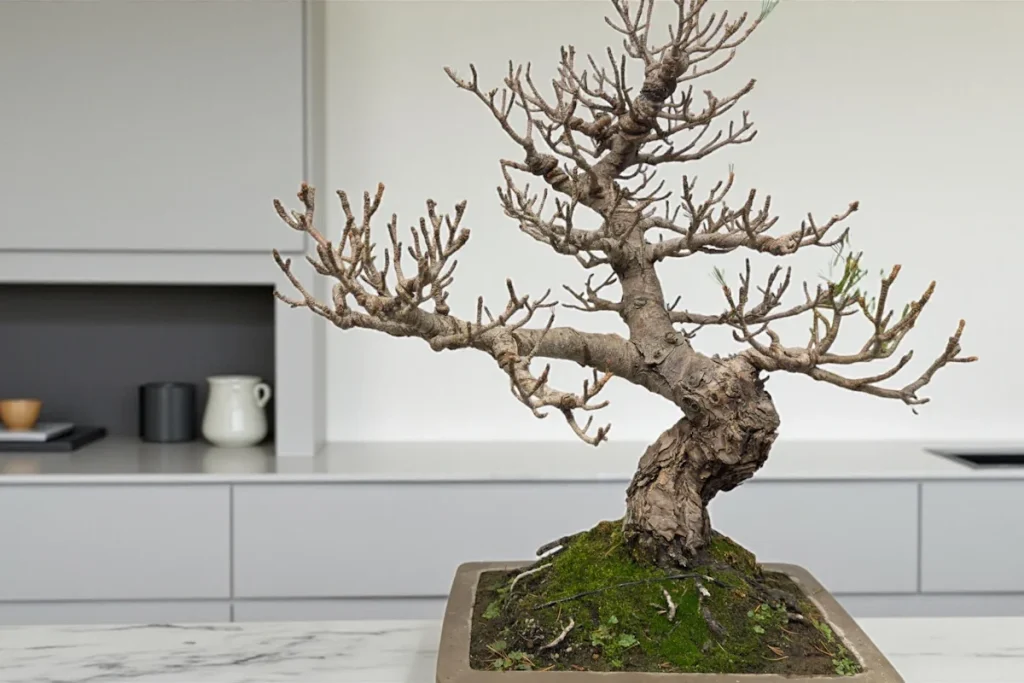
You can track bonsai going dormant signs by watching growth slow, colours shift, and water use drop. The transition happens in stages, especially in autumn, and each stage gives clear signals if you know what to look for.
The first sign your bonsai is entering dormancy is slower extension growth at the shoot tips. New shoots stop lengthening, and fresh leaves appear smaller or stop forming altogether.
In deciduous species such as Japanese maple, leaf colour begins to fade as chlorophyll breaks down. Greens look duller, then shift to yellow, orange, or red. Leaf texture may feel slightly drier and less glossy.
You may also notice reduced water uptake. Soil that dried within hours during summer may now stay moist for a full day or longer. This happens because the tree’s metabolic rate starts to decline as temperatures fall below about 10°C and daylight shortens.
These early autumn changes are your first reliable clues.
As dormancy progresses, all extension growth stops. No new shoots appear, and existing tips harden and turn woody at the base.
Colour change spreads across the canopy in deciduous trees. Leaf drop begins, often gradually over several weeks. Evergreens do not lose all foliage, but growth still halts and needles or leaves may look firmer and darker.
Water use drops further. In practical terms:
This stage confirms dormancy is progressing normally. Reduced uptake and stopped growth are key bonsai dormancy signs autumn growers should expect rather than try to correct.
A fully dormant deciduous bonsai stands bare, with clear buds visible at the tips of branches. These buds are small, tight, and firm. They hold next season’s growth in a resting state.
Branches feel solid and flexible, not brittle. The trunk remains firm, and bark stays intact without shrivelling.
Water uptake becomes minimal. Soil dries very slowly between waterings, especially in cool outdoor conditions. You should never keep it waterlogged, but you will water far less than in summer.
Pruning or feeding at this stage produces no growth response. The tree conserves energy and waits for rising temperatures and longer days before reactivating.
If you want to confirm the tree is alive during this period, the scratch test in ‘Is My Bonsai Dead or Dormant?’ takes ten seconds and gives a definitive answer.
Different bonsai species enter dormancy at different times and with different intensity. Knowing when and how deeply your tree rests helps you adjust watering, feeding, and winter protection correctly.
Japanese maple and beech rank among the earliest temperate species to begin their dormancy transition in the UK. You may see the first signs as early as late August, with full dormancy usually reached by October.
These species respond strongly to shortening day length. Photoperiod changes trigger hormonal shifts that slow shoot growth and prepare buds for winter.
In Japanese maple, you will notice:
Beech follows a similar pattern, though some dry leaves may cling to branches into winter.
Once fully dormant, both species show strong cold hardiness. A healthy, established maple or beech in a pot can tolerate temperatures well below freezing, provided the roots stay protected from prolonged frost. Because they enter dormancy early and deeply, avoid late feeding or heavy pruning after summer.
Chinese elm shows very different bonsai dormancy species differences. It usually enters dormancy later than maple or beech, and the rest period is often incomplete.
Outdoors in the UK, you may see:
However, many trees keep part of their foliage. This reflects a partial dormancy, not the full metabolic shutdown seen in earlier deciduous bonsai dormancy timing.
Indoors, Chinese elm often remains semi-active. You might see occasional new shoots during winter, especially in warm rooms with steady light.
Because of this partial state:
Its dormancy timing sits between hardy deciduous trees and true tropical species. Adjust care accordingly.
Juniper and pine enter dormancy without leaf drop or dramatic colour change. This makes their winter state harder to judge.
You will not see bare branches. Instead, look for:
Internally, growth hormones decrease, and root activity slows. Photosynthesis continues at a low level during mild spells, but structural growth pauses.
Pine sets its buds before winter. These buds stay compact and closed until spring warmth returns. Juniper consolidates energy into existing foliage rather than producing new tips.
Because conifers do not signal dormancy visually in obvious ways, you must observe growth patterns closely. Do not assume green foliage means active growth.
Ficus, Carmona, and other tropical species do not enter true seasonal dormancy. Their native climates rely more on wet and dry cycles than cold winters or shrinking daylight.
When you grow them indoors in the UK, they may show:
This is a reduced growth phase, not full dormancy. Leaves stay on the tree, and metabolic activity continues.
Because indoor tropical species do not go fully dormant:
Their winter care differs fundamentally from hardy temperate species. Treat them as active plants with slower winter growth, not as trees requiring cold rest.
As your bonsai enters dormancy, shift from active growth care to steady maintenance. Reduce water and feed gradually, keep the tree outdoors, and avoid actions that trigger new growth or stress the roots.
During the transition, your tree’s water uptake drops before the soil stops drying quickly. That gap creates the biggest risk in bonsai entering dormancy care.
Continue to check soil moisture daily, especially in early autumn. In a mild bonsai dormancy UK autumn, warm days can still dry the surface even though roots absorb less water.
Adjust in stages:
If you water at summer frequency, roots can sit in wet compost while uptake slows. This often leads to root rot during the transition period.
As leaf drop increases and new growth stops, you should notice the soil staying damp for longer. Let that slower drying guide you. You are not keeping the tree hydrated for growth now. You are simply preventing the root ball from drying out completely.
Feeding and transition to no feed should follow visible changes, not a calendar date. When growth slows and leaves begin to yellow or firm up, start reducing fertiliser strength.
Move from regular feeding to:
Do not continue feeding at summer rates. Nitrogen at this stage pushes soft late growth that the tree cannot harden before winter.
Your final feed should coincide with clear dormancy signals such as leaf drop in deciduous species or halted extension growth in evergreens. For detailed timing guidance, see the dedicated post on when to stop feeding bonsai.
Once dormancy sets in, stop feeding entirely. The roots cannot process nutrients effectively, and unused fertiliser can accumulate in the soil.
Keep temperate bonsai outdoors throughout the transition. Light levels and falling temperatures trigger natural dormancy processes.
Bringing your tree indoors disrupts:
Instead, move the tree to a sheltered outdoor position. Choose a spot protected from strong wind and heavy rain but still exposed to natural light.
In the UK, you usually implement frost protection once consistent night frosts appear. Use fleece, cold frames, or position pots against a wall. Do not move the tree into a heated room.
Indoor warmth can break dormancy too early. That weakens the tree and reduces spring vigour.
Many problems come from trying to prevent dormancy. Trees need this rest period.
Avoid these common mistakes:
Heavy pruning encourages late growth that cannot mature before cold weather. Repotting disturbs roots at a time when the tree cannot produce new root growth to recover.
If you focus on gradual reduction rather than sudden change, your tree will move into dormancy in a stable and healthy way.

During the bonsai dormancy process, visible growth stops while internal systems shift to protection and energy storage. You need to recognise what normal winter behaviour looks like, how to monitor a dormant tree through winter, and when to be concerned versus when to wait.
When your bonsai is fully dormant, you will not see new shoots, swelling leaves, or extension growth. A deciduous tree will stand bare for weeks or months. This stillness is normal.
Water uptake drops sharply. Outdoor deciduous bonsai often need watering only very infrequently in winter, sometimes every 10 to 21 days, depending on rainfall and temperature. The soil should never stay soaked, but it will dry much more slowly than in summer.
Dormancy buds at the shoot tips should remain:
These buds hold next season’s growth in miniature. Their firmness tells you more about health than the lack of leaves.
Remember that what happens to bonsai during dormancy is mostly internal. Roots remain alive. Energy sits stored as starch in the trunk and roots. Outward appearance alone tells you very little about true vitality.
Monitoring a dormant tree through winter is simple and low effort. You focus on protection and basic checks, not intervention.
Follow a steady routine:
Check soil moisture every 7 to 10 days.
Water only when the soil is approaching dryness, not on a schedule.
Confirm frost protection remains effective.
Use an unheated garage, cold frame, or sheltered outdoor position. Roots need protection from deep freezing, even though the top growth looks inactive.
Inspect bark and branch tips monthly.
Look for cracking, discolouration, or pest activity.
If you feel unsure about viability, use the scratch test. Lightly scrape a small area of bark. Green and moist tissue underneath means the tree is alive but resting.
Avoid feeding. Do not try to restart growth by moving the tree into warmth. Let the natural cycle finish.
A bare deciduous bonsai that shows no change for months is almost always healthy and dormant. Waiting is usually correct.
Investigate further if you notice:
These signs point to stress, not normal dormancy.
Consider common causes:
In most cases, mild delay is not a problem. Act only if growth continues deep into winter without any sign of slowing, especially in temperate species that require a proper cold rest.
When do bonsai enter dormancy? It depends on species and local climate.
In the UK, most temperate bonsai begin slowing down in October to November as daylight shortens. Full dormancy usually settles in by late November to December, with visible signs such as leaf drop, bud set, and reduced water use.
Bonsai dormancy species differences matter more than calendar dates. Tropical trees rarely enter true dormancy and instead show reduced growth under low light.
Below is a concise UK-focused reference.
| Species | Dormancy Type | Typical UK Dormancy Start | Typical Full Dormancy | Key Visible Signs | Important Winter Care Note |
|---|---|---|---|---|---|
| Japanese maple | Full deciduous | Oct | Nov to Dec | Leaf colour change, full leaf drop, tight buds | Protect roots from hard frost after leaf fall |
| Trident maple | Full deciduous | Oct | Nov | Rapid leaf drop, dormant buds | Avoid waterlogging in winter rain |
| Chinese elm | Partial semi evergreen | Oct to Nov | Dec in colder areas | Partial leaf drop or full drop outdoors | Keep cold but frost protected if leafless |
| Beech | Full deciduous | Oct | Nov | Brown leaves may cling, firm buds | Shelter from strong drying winds |
| Hornbeam | Full deciduous | Oct | Nov | Yellow leaves then drop | Maintain light soil moisture |
| Larch | Full deciduous conifer | Oct | Nov | Needles yellow and fall | Full cold rest required |
| Zelkova | Full deciduous | Oct | Nov | Fine twig outline visible after leaf drop | Protect shallow roots from freeze |
| Juniper | Internal conifer | Oct | Dec | Slight bronzing, no active tips | Keep outdoors, avoid warm indoor storage |
| Scots pine | Internal conifer | Oct | Dec | Candles set, darker needles | Do not overwater in cold soil |
| Japanese black pine | Internal conifer | Oct | Dec | Buds firm, growth stopped | Ensure good drainage in winter |
| Ficus | Tropical reduced growth | Nov | No true dormancy | Slower growth, possible leaf drop indoors | Provide maximum light and steady warmth |
| Carmona | Tropical reduced growth | Nov | No true dormancy | Reduced flowering, slower growth | Avoid cold draughts below 15°C |
When do bonsai go dormant in the UK? For most outdoor species, expect a late autumn slowdown and winter rest from November through February.
If you learn to read your tree’s signals instead of relying only on dates, you make better winter care choices. Dormancy is not decline. It is a planned and essential resting phase that supports strong spring growth.
In our experience, the most common dormancy mistake is treating stillness as a problem. A bare deciduous bonsai standing unchanged through December and January is almost always healthy. The growers who intervene, moving trees indoors, applying feed, or pruning to stimulate growth, are the ones who cause the damage that shows up in spring. Reduce inputs, maintain basic monitoring, protect roots from hard frost, and let the natural cycle complete. Dormancy is not the difficult part of bonsai care. Leaving the tree alone when it needs rest is.
Miyagi Bonsai stocks a carefully chosen range of temperate and tropical bonsai trees suited to UK growing conditions, including species such as Japanese Maple, Chinese Elm, Juniper, and Ficus, alongside winter care supplies and frost protection, with next working day UK delivery available on most orders. The products and recommendations in this guide reflect what we stock, use, and see working for our customers every day. We are rated 5 stars across over 100 Google reviews, and our team is on hand by email and phone if you have any questions about dormancy timing, species behaviour, or winter bonsai care.
The most important thing is not to force it. Dormancy ends naturally as day length increases and temperatures rise; usually from late February in southern England and March onwards further north. Keep the tree in its sheltered outdoor position and let warming conditions do the work. Once you see buds beginning to swell, resume checking soil moisture more regularly and prepare to restart feeding at half strength once the first leaves open. Avoid moving the tree into warmth to accelerate the process. Forcing early bud break leaves fresh shoots vulnerable to late frosts, which are common across the UK in March and April.
For most temperate species, late dormancy, just as buds begin to swell in late winter or very early spring, is actually the ideal repotting window, not mid-winter. Repotting while the tree is fully dormant and the soil is cold risks root damage without the active growth needed for recovery. Wait until you see the first signs of bud movement, typically February to March, depending on species and region, then repot before leaves open. Japanese maple is an exception and benefits from slightly later repotting once buds show green. For species-specific timing, refer to the repotting timing guide.

