
Yes, bonsai can still grow in autumn, but the type, timing, and strength of that growth determine whether it is normal or a warning sign.
You notice fresh shoots on your bonsai in autumn and start to wonder if something is wrong. Growth usually slows as days shorten and temperatures drop, yet many trees continue to push out new leaves for a while.
Deciduous species often store energy and may show light late growth during early autumn, especially after a warm spell. Some evergreens and indoor bonsai keep growing longer because they do not experience sharp seasonal changes. Strong, soft shoots late in the season, however, can leave hardy outdoor bonsai exposed to frost damage if they fail to harden in time.
This guide draws on established UK bonsai practice and is written for growers managing deciduous, conifer, and tropical species in British growing conditions. Whether you are seeing unexpected autumn growth for the first time or trying to understand why a particular tree keeps pushing shoots late in the season, the guidance here applies across experience levels.
Late autumn growth can be completely normal, or it can signal a problem. The difference depends on your species, the type of growth you see, and the conditions driving it.
In many cases, bonsai still growing in autumn is normal.
Some species naturally produce a second flush of growth in early autumn. Chinese elm, for example, often pushes new shoots in September or October as part of its semi-evergreen cycle. If temperatures remain mild, this late activity is expected.
Young trees in active development also grow longer into the season than mature, refined bonsai. You encourage strong extension growth to build trunks and branches, so continued growth into early autumn is not unusual.
A single late flush on a healthy deciduous tree in early September is rarely a concern if:
In these situations, you are simply seeing normal seasonal adjustment rather than a bonsai growth autumn normal or problem scenario.
Late autumn growth becomes concerning when it interferes with dormancy.
If your temperate deciduous bonsai continues pushing soft, long shoots in October or November, pay attention. Large, thin leaves and long internodes suggest the tree is not preparing for winter properly.
Common triggers include:
Deciduous species rely on shorter days and cooler nights to enter dormancy. If those signals are disrupted, your tree may keep growing when it should be hardening off.
This can leave tender shoots vulnerable to frost damage and weaken spring performance.
Before you intervene, assess four key factors. Whether you are managing your first bonsai or comparing behaviour across several trees, these checks apply in every case:
Species
Is it a Chinese elm or another species known for autumn flushes? Or a strictly temperate maple that should be slowing down?
Type of growth
Feeding history
Did you apply high nitrogen fertiliser in late summer or early autumn?
Placement conditions
Is your tree outdoors with natural light and cooling nights, or indoors under steady warmth and artificial light?
When you check these points together, you can decide whether your bonsai still growing in autumn is harmless seasonal growth or a sign you need to adjust care.
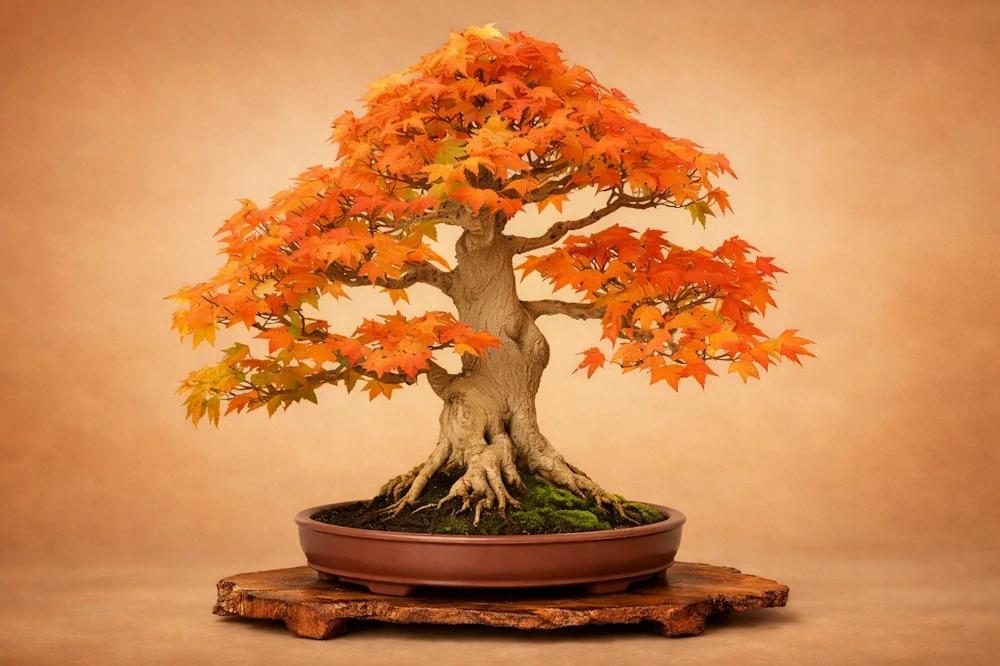
If your bonsai is still pushing out shoots in October, you are not alone. In the UK, late growth usually links to feeding, temperature, light exposure, or normal species behaviour rather than a serious problem.
Many deciduous bonsai produce a natural second flush of growth in late summer or early September. This is common in maples, elms, hornbeam and beech.
This growth uses stored energy built up earlier in the year. It is not usually triggered by new feeding or sudden warmth.
You can spot a natural second flush by these signs:
If the growth started in late August or early September and already looks compact, it is likely normal.
In most cases, you do not need to intervene. The tree will shut down as daylight and temperatures continue to drop.
This is the most common cause of problematic bonsai late-season growth.
If you continue high nitrogen feeding into September or October, you encourage the tree to keep producing soft shoots. Nitrogen drives cell division and shoot extension, even when day length begins to shorten.
Many growers simply keep their spring and summer routine going. That is where issues start.
Look for these clear signs of bonsai nitrogen late growth:
This type of growth does not stop within a couple of weeks. It keeps going as long as nutrients and warmth remain available.
In the UK, you should reduce or switch to low nitrogen fertiliser by late summer. Otherwise, you delay hardening and increase the risk of winter damage.
UK autumns vary a lot from year to year. Some seasons stay above 15 to 18°C through much of September and even October.
Temperature plays a major role in dormancy. While shortening days trigger internal changes, cooler nights help complete the shutdown process.
If your bonsai sits outside in sustained warmth, it may continue light extension growth. This is especially common in:
A delay of one to three weeks is normal during a mild autumn. Concern rises only if strong extension growth continues into late October or November in southern parts of the UK.
In this case, temperature is likely overriding the usual seasonal slowdown rather than poor care.
Photoperiod refers to day length. Trees use it as a reliable seasonal signal.
If you keep your bonsai indoors under artificial light or in a bright, heated room, you may disrupt this signal. This issue explains many cases of bonsai photoperiod growth autumn problems.
Common scenarios include:
Temperate species such as maples, larch and hornbeam are especially sensitive. They need clear shortening daylight and cooler nights to prepare for dormancy.
To correct this, move the tree outdoors or into an unheated, naturally lit space. Let it experience real dusk and cooler night temperatures.
Some bonsai species simply grow later into the season. This is normal and not a sign of poor care.
For example:
These species respond differently to temperature and day length. In mild southern UK conditions, limited growth into October can fall within the normal range.
Before adjusting your care, check whether your species typically grows later than others. Matching behaviour to species traits prevents unnecessary pruning or feeding changes.
When your bonsai is still growing in autumn, especially in October or November in the UK, it signals a mismatch between the tree and the season. Hardy temperate species need time to slow down, harden off, and store energy before winter.
New shoots start as soft, bright green tissue with high water content. At this stage, cells contain thin walls and flexible fibres.
To survive winter, that soft extension growth must:
This hardening process takes several weeks of shortening days and gradually cooling temperatures. It cannot happen overnight.
If your bonsai is not stopping growth in autumn and pushes new shoots in late October, those shoots may have only two to four weeks before the first hard frost. In many parts of the UK, night temperatures can drop below 0°C by November.
That is not enough time for full hardening. Soft tissue freezes easily because water inside the cells expands. Ice crystals rupture cell walls, and the shoot dies back.
Frost damage rarely stops at the tip. When late growth freezes, the tree dies back to the nearest hardened node.
This matters because:
If those buds fail, your tree must activate dormant buds lower down the branch. That takes time and energy.
You then see delayed bud break in spring, uneven growth, or long gaps in branch structure. On refined bonsai, this can set development back by a full growing season.
Instead of building ramification, you spend spring repairing frost damage caused by unseasonal autumn growth.
Producing new leaves and shoots in autumn is not free. Your tree uses stored carbohydrates to fuel that growth.
At this stage of the year, it should be:
If your bonsai still growing in autumn keeps extending shoots, it diverts energy away from storage.
A tree that stops active growth in September enters dormancy with fuller reserves. One that continues into late autumn enters winter with less stored energy.
Lower reserves mean weaker spring growth. Bud break may be lighter, leaf size may reduce, and overall vigour declines. Over several seasons, repeated unseasonal growth can noticeably reduce strength in hardy species.

If your bonsai is still growing in autumn, you need to remove the triggers that keep it active. Focus on fertiliser, light exposure, temperature, and avoid actions that accidentally extend the growing season.
Nitrogen drives soft, leafy growth. If late growth is fertiliser driven, stopping nitrogen feeding immediately is the single most effective step you can take.
Check what you have been using. Any feed high in the first number of the NPK ratio, such as 10-10-10 or similar, will encourage extension growth. Stop applying it at once.
In most cases, you should see growth slow within 10 to 21 days. New shoots will stop extending, and tips will begin to firm up rather than staying soft and bright green.
If you recently applied a strong liquid feed, flush the soil thoroughly with clean water two to three times over the following week. This helps dilute residual nitrogen salts in the substrate. Do this only if drainage is good and temperatures are still mild, and allow the soil to drain fully between each flush.
Avoid replacing it with more fertiliser. If needed, switch to a low nitrogen autumn formula such as 0-10-10, but only while night temperatures remain above about 15°C.
Day length is a primary dormancy trigger for temperate bonsai. If your bonsai is still growing in autumn, check its light exposure.
Trees kept indoors under artificial light often miss the natural shortening of daylight. Even room lighting in the evening can delay dormancy signals.
Place temperate species outdoors where they receive natural sunrise and sunset. Avoid porch lights or security lights that stay on after dark.
Within two to four weeks of proper natural photoperiod, most deciduous species will slow growth. You may see leaves begin to harden, colour, or gradually reduce extension.
Position the tree in full natural light for at least 6 hours daily. Do not extend light artificially to “help” it. You want shortening days, not longer ones.
Tropical species differ. They do not rely on dormancy in the same way, so focus mainly on temperature and feeding control for those.
Temperature works with day length to shut growth down.
For most temperate species, consistent temperatures between 5°C and 15°C encourage the shift towards dormancy.
In a typical UK garden, place your bonsai in an open but sheltered spot. A north or east facing area works well as it avoids late afternoon warmth.
Do not rush to protect it indoors unless frost becomes severe. Mild autumn chills help harden new growth.
Balance cooling with protection. If you have very soft, late shoots, shield the tree from early heavy frost until tissue firms up. Use fleece overnight if needed, but remove it during the day.
When cooler nights combine with shorter days, growth usually stops within a few weeks. Buds set, and extension growth ceases.
When a bonsai is still growing in autumn, avoid reactions that make it worse.
Do not heavily prune fresh shoots. Hard pruning can stimulate more growth, especially if temperatures remain mild.
Do not continue feeding to “strengthen” soft growth. More nitrogen only prolongs the problem.
Do not bring outdoor temperate trees into a warm house. You remove both the cooling and photoperiod signals needed for dormancy.
Also, avoid overwatering. Excess moisture combined with warmth keeps roots active and can delay the shutdown process.
Stay patient. Remove growth triggers methodically and allow the tree to respond to natural seasonal cues.
Some bonsai continue active growth well into autumn, and that does not automatically signal a problem. Species type, growing environment, and recent work all affect how long your tree keeps producing new shoots.
Chinese elm often causes confusion in bonsai autumn growth explained discussions. It is semi-evergreen, which means it can hold leaves longer and continue modest growth after other deciduous trees slow down.
Normal Chinese elm late-season activity looks like this:
You may also see a light bonsai second flush autumn growth if the tree stayed strong through summer. This flush should be compact, not long and soft.
Outdoor Chinese elms usually slow once temperatures drop consistently into single digits. Indoor specimens, especially those kept warm and bright, may continue growing steadily.
Be concerned if you see:
That often signals low light or excess nitrogen, not healthy late growth.
Ficus and other tropical species do not follow temperate seasonal rules. If you keep them indoors in stable warmth and good light, indoor bonsai growing in autumn is normal and expected.
In fact, many ficus will:
This growth is healthy if leaves stay compact and internodes remain short. Strong light is key.
Problematic growth looks different. Watch for:
That usually means low light rather than seasonal confusion. Move the tree closer to a bright window or improve lighting rather than trying to force dormancy.
Conifers behave differently from deciduous species in autumn. Juniper and pine do not produce a natural second flush or semi-evergreen extension cycle. By October, both should have largely ceased new growth and begun internal preparation for winter.
If you see fresh extension on juniper or pine in autumn, the cause is almost always one of two things: nitrogen fed too late into the season, or a position that is too warm and sheltered from the natural temperature drop.
Normal autumn behaviour for conifers looks like this:
Problematic autumn growth looks different. Watch for bright green, soft new tips extending beyond the existing foliage pads on juniper, or candles pushing on pine outside the expected seasonal window.
If you see this, stop feeding immediately and move the tree to a fully open outdoor position with natural light and cooling nights. Do not bring it indoors. Conifers need genuine cold exposure to complete their seasonal cycle correctly.
Newly acquired or repotted trees often show disrupted cycles. This includes trees moved from a nursery greenhouse to your garden, or those recently repotted in late summer.
You might notice:
This happens because the tree responds to changed conditions. Different light levels, watering routines, and root disturbance can temporarily reset its rhythm.
In most cases, this disruption settles within one growing season. Focus on:
Normal seasonal cycling usually resumes by the following spring.
Young trees in development follow different rules from refined show bonsai. If you grow a sapling or pre-bonsai in a larger pot, you should expect stronger and longer growth into autumn.
These trees aim to:
Late growth on young material often remains vigorous until temperatures drop sharply. This is not a fault. It supports faster development.
You only need to step in if growth stays soft when frost approaches. Otherwise, let the tree run. Suppressing healthy late growth on a development tree can slow progress without real benefit.

Late shoots that stay soft into autumn need careful judgement. You need to decide whether they can harden naturally or whether frost protection is necessary to prevent avoidable damage.
Start with a simple physical check.
Use your fingers to gently bend the base of the new shoot. If it feels firm and resists bending, hardening has started. If it feels soft and flexible all the way down, it is still vulnerable.
You can also use the thumbnail test. Lightly press your nail into the base of the shoot:
Next, look at colour and texture.
Now consider timing. In the UK, first frost often arrives:
| Region | Typical First Frost |
|---|---|
| Northern Scotland | Late September to early October |
| Midlands and North England | October |
| Southern England | Late October to November |
If your bonsai late growth in autumn UK conditions appears in mid-October in the Midlands, you likely have limited time for full hardening. If frost is forecast within two weeks and shoots remain soft, assume they will not fully ripen in time.
Delayed bonsai dormancy in autumn often follows warm Septembers. In that case, monitor forecasts daily and reassess firmness every few days.
Unhardened shoots can suffer damage at around 0°C to -2°C. Hardened growth tolerates lower temperatures depending on species, but soft tips cannot.
Provide protection when:
Use temporary measures that reduce exposure without stopping dormancy.
Suitable options include:
Return the bonsai outdoors during mild days. This matters. Trees need gradual cooling to complete natural hardening and enter proper dormancy. Permanent indoor placement in a warm room can delay dormancy further and weaken the tree.
If frost blackens or wilts soft tips, do not rush to prune.
Damaged shoots often act as a buffer. They protect the node and inner tissue below from further cold. Removing them too early can expose living tissue to additional frost.
Leave damaged tips in place through winter.
In early spring, once buds begin to swell, reassess:
At that point, prune back to the first healthy node. Then direct spring growth into strong replacement shoots. Adjust feeding and positioning to balance the tree if one side lost more growth than the other.
This approach keeps winter stress low and sets you up for controlled recovery in the next growing season.
If your bonsai is still growing in autumn, pause before you panic. Some late growth is normal and species specific. Other times it signals excess nitrogen, warm positioning, or disrupted light cues.
Use this 60 second check to decide.
| Growth type and appearance | Species | Likely cause | Normal or problem? | Recommended action |
|---|---|---|---|---|
| Small, tight leaves; slow consolidation in September | Chinese elm | Semi evergreen habit; mild UK autumn | Normal | Maintain consistent watering and stop high nitrogen feed |
| Large, soft extension shoots in October | Japanese maple | Late nitrogen feeding or warm sheltered spot | Problem | Stop feeding immediately; move to cooler outdoor position |
| Any fresh extension growth in October | Juniper or pine | Overfeeding or excessive warmth | Not expected | Review feeding; ensure full outdoor exposure and natural light cycle |
| Steady leaf and shoot growth indoors | Ficus | Tropical species with no dormancy | Normal | Provide strong light; avoid overwatering |
| Soft, sappy extension growth in November | Any temperate species | Delayed dormancy from feeding or artificial light | Concerning | Stop feeding; ensure correct photoperiod outdoors; protect from frost |
If you are asking, should my bonsai still be growing in October UK, the answer depends on species and conditions.
Most cases of bonsai late growth autumn UK come from late nitrogen feeding in August or September, or from keeping trees too warm.
Identify the cause first. Then adjust feeding and positioning rather than applying a blanket fix. Growers who reduce nitrogen by early autumn rarely face problematic late season growth.
In our experience, the most common late autumn growth mistake is misreading it as a sign that the tree needs more intervention. Growers prune, feed, or move trees indoors, and each of those actions often makes things worse. Late growth in autumn almost always traces back to one or two simple causes: nitrogen fed too late, a position too warm or too bright, or a species that simply grows later than expected. Identify the cause, remove it, and let the tree respond to natural conditions. In most cases, growth slows within a few weeks, and the tree enters dormancy on its own terms.
Miyagi Bonsai stocks a carefully chosen range of bonsai trees, autumn fertilisers, and frost protection supplies suited to UK seasonal care, including deciduous species such as Japanese Maple, Chinese Elm, and Trident Maple, with next working day UK delivery available on most orders. The products and recommendations in this guide reflect what we stock, use, and see working for our customers every day. We are rated 5 stars across over 100 Google reviews, and our team is on hand by email and phone if you have any questions about late-season growth, species behaviour, or preparing your bonsai for winter.
Light tidying is fine, but avoid heavy pruning as a way to stop late growth. Hard pruning in autumn can stimulate more extension shoots, particularly if temperatures remain mild and nitrogen is still present in the soil. It also removes tissue that may be acting as a buffer against early frost. The more effective approach is to remove the triggers driving the growth; stop nitrogen feeding immediately, move the tree to a cooler outdoor position, and ensure it receives natural shortening daylight rather than artificial light in the evening. Once those conditions change, growth usually slows within two to three weeks without needing to cut anything.
In most cases, yes. Frost damage on late soft shoots is unpleasant but rarely fatal to a healthy tree. Leave blackened or wilted tips in place through winter rather than cutting them immediately. They protect the living node below from further cold. In early spring, once buds begin to swell, scratch the bark lightly with your nail. Green tissue underneath means it is alive. Prune back to the first healthy node at that point and let the tree direct new growth into replacement shoots. Recovery is usually strong if the rest of the tree entered winter in good condition.

