
Most November problems come from watering to a schedule instead of checking the compost, and from bringing hardy trees into a warm house where they cannot properly rest.
November is the month your bonsai stops asking much of you and starts asking for the right kind of attention. Outdoor trees are winding down into dormancy. Indoor trees are meeting central heating for the first time since spring, and the weather swings between mild wet spells and a sudden overnight frost.
Treat this as a transition month. Your temperate trees (maples, elms, pines, junipers) belong outside, where the cold triggers the rest they need. Your tropical trees (ficus, Fukien tea, indoor-grown Chinese elm) belong in a bright, stable spot away from radiators.
Good bonsai care in November UK conditions rests on observation: a finger in the soil, a look at the buds, a glance at the forecast before a cold snap arrives.
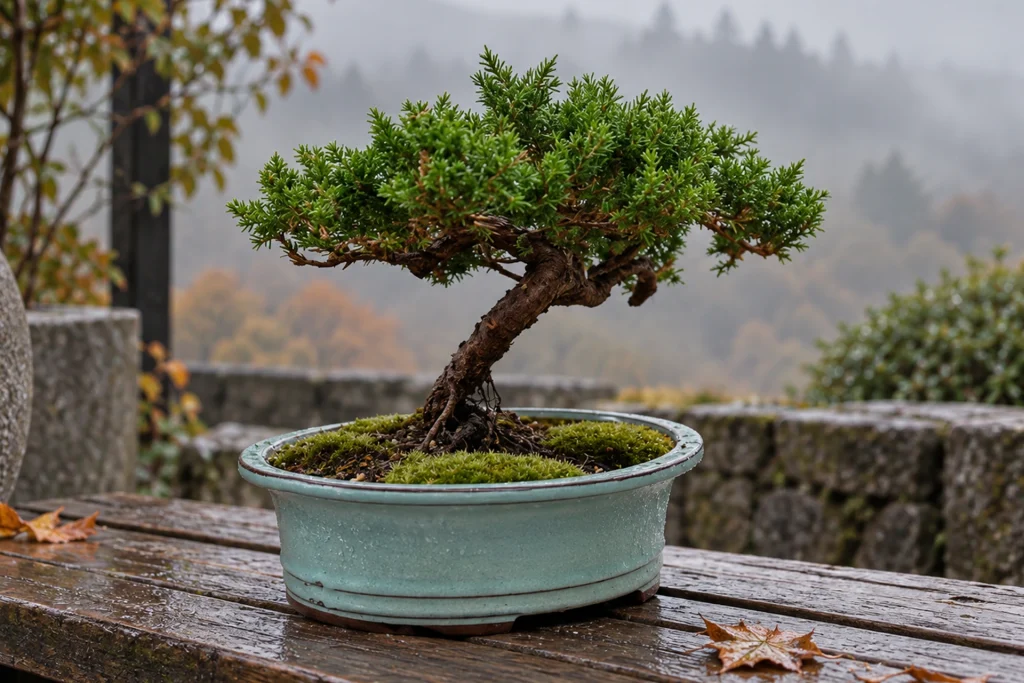
Outdoor bonsai enter or deepen dormancy this month: deciduous trees finish dropping their leaves, extension growth stops entirely, and sap movement slows to a trickle. Evergreens such as pine and juniper keep their foliage but also throttle back, so a juniper that looks unchanged since September is behaving exactly as expected. Below, you will find the difference between healthy dormancy and a tree in trouble, plus the practical side of frost protection in a British winter.
Japanese maples are the ones that put on a show and then go bare within a fortnight, sometimes after a single windy night. Chinese elm grown outdoors is less predictable: some hold a proportion of their leaves well into winter, some drop everything. Both behaviours are normal.
Larch turns butter-yellow and sheds, which surprises people who assume conifers are evergreen. Pines hold their needles but will shed some of the older interior ones, which is worth clearing off the soil surface so damp litter does not sit against the trunk.
Healthy bare branches stay supple, which is the quickest way to tell a dormant bonsai from a dying one. Bend a thin twig gently: it should flex and spring back, and a light scratch with a thumbnail reveals green cambium underneath. Brittle twigs that snap dry, with brown tissue below the bark, indicate dieback.
Look at the buds too. A dormant deciduous bonsai carries plump, firm buds along its branches, already formed for spring. Shrivelled or absent buds on a branch are a better warning sign than bare wood on its own.
On evergreens, watch for foliage turning grey-brown from the tips inwards, or a juniper going dull and crispy to the touch. Yellowing scattered through the interior of a pine or a shedding of old needles is routine autumn tidying by the tree.
Fine surface roots that are dark, soft or sour-smelling point to root problems from prolonged wet, which matters more in a wet November than a cold one.
Temperate species are built for cold, and the roots are the vulnerable part, since a bonsai pot offers a fraction of the insulation that garden soil does. Whether a specific tree can stay outside all winter depends on species and how sheltered your garden is.
Many growers move trees off exposed benches into a sheltered spot before the first hard frosts: against a north or east-facing wall, into an unheated greenhouse or cold frame, or grouped together at ground level with the pots packed around.
Conditions vary enormously by region. A grower in Cornwall and one in the Cairngorms will reach for winter protection at different points, and a walled town garden holds warmth that an open rural plot does not.
Hardiness also varies by species. Scots pine, larch and yew shrug off cold that a delicate satsuki azalea or a refined trident maple would resent, and grafted or recently repotted trees deserve more caution whatever they are.
Two practical points from experience. Wind desiccates foliage and dries compost faster than frost does, so shelter often does more good than cover. And repeated freeze-thaw cycles, which the UK produces in abundance, stress roots more than one steady cold spell, so consistency of placement beats fussing a tree in and out.
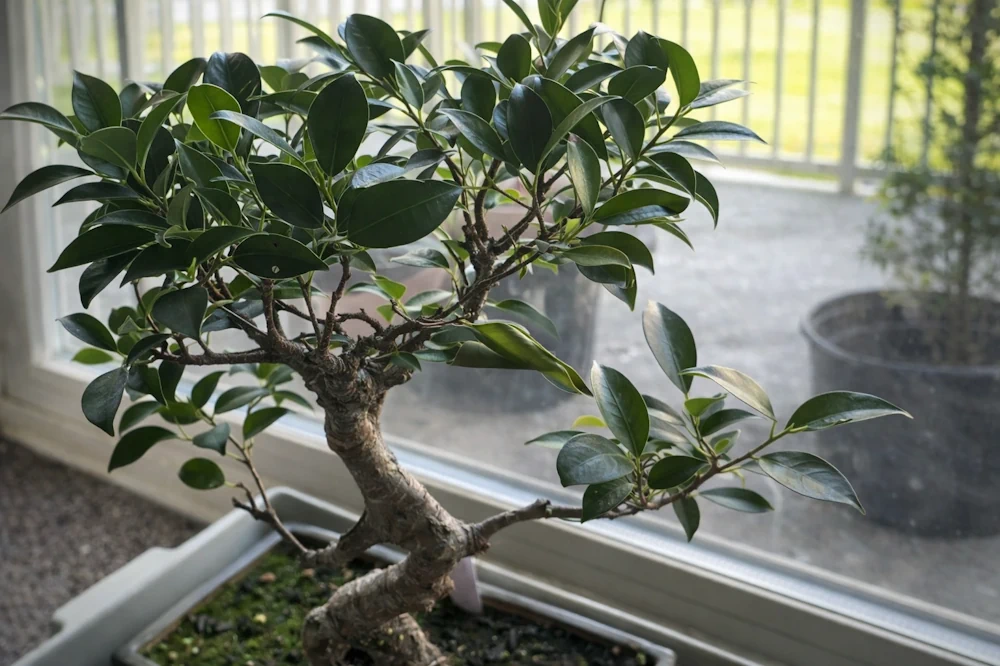
Indoor bonsai slow down in November without going dormant: growth continues at a reduced rate while daylight drops to a few usable hours and central heating strips moisture from the air. Tropical and subtropical species (ficus, Fukien tea, indoor Chinese elm, jade) respond to this combination with slower shoot extension, some leaf loss, and a compost surface that dries far quicker than it did in October. What follows covers the stress signs specific to heated rooms, and the placement and lighting tweaks worth considering.
Indoor bonsai are rather like houseplants, tropical or semi-tropical species needing lots of light, constant temperature and regular watering. That word “constant” carries the weight in November. A room swings from 21°C at 7pm to 13°C by dawn.
Ficus in particular dislikes being moved. A tree shuffled from a summer spot outdoors to a windowsill often sheds a flush of leaves within a fortnight, then settles and pushes new ones.
Sudden leaf drop clustered on one side of the tree usually points to a draught from a door or a single-glazed window, or at hot, dry air from a radiator or vent directly below. Normal seasonal slowdown looks even: a few older interior leaves yellowing and falling over several weeks, with the canopy otherwise intact.
Crisp brown leaf edges while the compost stays damp suggest low humidity, not thirst. A few humidity tips for winter such as a humidity tray (with a shallow portion of gravel; optional) help, as does grouping trees together.
Pale, stretched new shoots with widely spaced leaves mean the tree is reaching for light. Sticky leaves, fine webbing in the leaf axils or small white specks point at scale, spider mite or mealybug, all of which thrive in warm dry rooms and multiply quickly once the heating is on.
Moving a tree closer to the brightest window is the single most useful change in November, when a south or west-facing sill gives noticeably more usable light than an interior table. Keep a few centimetres between foliage and cold glass overnight.
A radiator beneath a windowsill creates a rising column of dry heat straight through the canopy. Shifting the tree sideways, or resting the pot on a thicker insulating board, softens that.
Grow lights are optional and worth considering if your window aspect is poor. Which grow lights suit indoor bonsai varies by budget and tree, but a simple LED plant light on a timer for eight to ten hours keeps a ficus or elm ticking over through the darkest weeks.
Watering frequency drops in November for nearly every tree you own, but for opposite reasons indoors and out. An outdoor bonsai in winter dormancy draws very little water, and rain plus low evaporation can keep the compost wet for days. An indoor ficus sitting in a heated room may dry out faster than it did in September. Check the soil directly every time; a fixed schedule will catch you out in both directions.
The finger test is enough: push a fingertip a centimetre into the compost. Damp and cool means wait. Dry and crumbly means water thoroughly until it runs from the drainage holes. A cheap moisture meter helps if your soil is a coarse akadama-based mix that looks dry on top while holding water below.
Cold, wet, slow-draining compost is where root rot starts. Dormant roots take up almost nothing, so any water you add sits there.
Tilt pots slightly so rain drains off, keep trees off flat paving where water pools, and take a hard look at any tree still in shop-bought organic compost that holds water like a sponge. Sheltering trees under a bench, a greenhouse edge or a sheet of bubble wrap suspended above (not wrapped tightly around) keeps the worst of a wet spell off.
One caution: frozen compost cannot release water to the roots, so a tree exposed to drying wind during a hard frost can dehydrate while sitting in ice. Water before a freeze, not during it.
Heated rooms dry small pots surprisingly quickly. A ficus near a radiator can need water every second or third day in November, while the same tree on a cool porch might go a week.
Worth checking more often than you think necessary for the first fortnight after the heating goes on, until you learn the new rhythm. Rainwater from a butt suits bonsai better than hard tap water, and should be brought up to room temperature before it goes on a warm indoor tree.
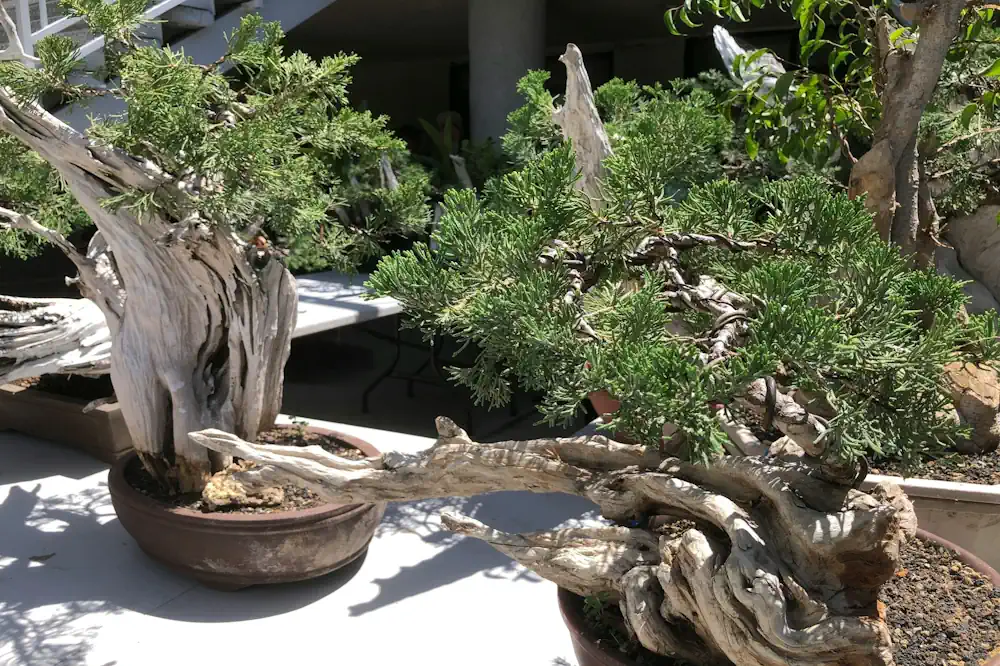
November suits light structural work on dormant trees and general tidying; it suits nothing that asks a tree to recover or regrow. With leaves off deciduous trees, branch structure is visible in a way it never is in summer, which makes this a productive month for wiring and assessment. Timing varies with species and individual vigour, so read your tree before reaching for the tools.
Japanese maples need particular care. In our experience, structural cuts on pot-grown maple heal best once the tree is fully dormant and before sap begins to rise. Cutting earlier in autumn, or in cold, wet weather, risks dieback on thin bark, while cutting as sap rises can cause heavy bleeding.
Azaleas sit outside the standard calendar: they set flower buds in late summer, so pruning now costs you next year’s display. If a tree has had a hard year (a pest attack, a late repot, weak growth), do less than this list suggests. Vigour, not the date, decides what a tree can take.
Match what you can see on your bench or windowsill to one of the four pictures below. Most trees in the UK this month fall cleanly into one, and the answer to “is my bonsai dormant in November” usually becomes obvious once you have checked buds and twig flexibility rather than leaves alone.
Bare or nearly bare, plump firm buds along the branches, twigs that flex rather than snap. Nothing to do beyond sheltering the pot, keeping the soil surface clear and checking the compost every few days for waterlogging.
Foliage intact, colour holding, no visible extension growth since late summer. Some interior needle shed on pines is part of the picture. Treat it as the deciduous case for watering and shelter, and take the chance to do light pruning or deadwood work.
Growing slowly, perhaps shedding a few older leaves, compost drying faster than last month. Check placement relative to radiators and draughts, and watch for crisp leaf margins that signal dry air rather than thirst.
Brittle twigs that snap dry, no green under a thumbnail scratch, shrivelled buds, grey-brown evergreen foliage, sour-smelling soil, or one-sided leaf loss indoors. None of these is a crisis in itself. Move the tree somewhere sheltered, stop watering until the compost dries, and reassess in a week or two before doing anything drastic.
Start with a slow walk round your collection with a notebook. Check each tree’s dormancy status (buds, twig flex, foliage colour), then push a finger into every pot and note which are wet, which are dry and which are draining badly.
From there, your November priorities are short:
Useful things to have to hand for this bonsai November checklist include frost fleece, sheeting or a cold frame for outdoor trees, a humidity tray for anything living in a heated room, a moisture meter if your compost is hard to read, and lime sulphur if deadwood is on your list. Do those four jobs and your trees will need very little from you until the days start lengthening again.
Miyagi Bonsai stocks a carefully chosen range of supplies to support your bonsai through November and into winter, including frost sheeting and humidity trays for trees adjusting to heated rooms, alongside moisture meters, and free-draining bonsai soil mixes for any trees showing drainage problems before the wet months set in. The products and recommendations in this guide reflect what we stock, use and see working for our customers every day. We are rated 5 stars across over 100 Google reviews, and our team is on hand by email and phone if you have any questions about winter positioning, frost protection, or indoor bonsai care through the darker months. Next working day UK delivery is available on most orders.
It depends entirely on the species. Hardy temperate trees; maples, junipers, pines, elms, larch, should stay outside all November. They need natural cold to enter proper dormancy, and bringing them into a warm house prevents that rest cycle and weakens them over winter.
Tropical and subtropical species; ficus, Fukien tea, jade; must come inside before overnight temperatures drop consistently below 10°C, which in most parts of the UK means they should already be indoors by early November. The mistake most growers make is applying the same rule to every tree. Check the species first, then decide.
Almost certainly not, if the tree is a deciduous species. Japanese maple, Chinese elm, hornbeam, larch, and beech all lose their leaves in autumn as part of a normal dormancy cycle. To confirm the tree is alive, bend a thin twig gently; it should flex rather than snap dry, and scratch a small area of bark with your thumbnail.
Green, moist tissue underneath means the tree is dormant and healthy. Firm, evenly spaced buds along the branches are the clearest sign that it has entered dormancy correctly. Only brown, dry tissue under the scratch test and no visible buds on multiple branches are genuine cause for concern.
Check before you water rather than assuming it needs it. Push a fingertip about a centimetre into the compost; if it feels damp and cool, wait. If it feels dry and crumbly, water thoroughly until it drains from the holes. In November, dormant outdoor trees draw very little moisture from the soil, and a week without rain does not automatically mean the pot has dried out. Pots in sheltered positions, or trees whose soil retains moisture well, can stay damp for ten days or more. The soil condition, not the calendar, is the only reliable guide at this time of year.

